
Best RC Car for Beginners Under 150: HAIBOXING vs Everest-10
Compare the best RC car for beginners under 150, featuring HAIBOXING 18859 and Redcat Everest-10 for versatile and crawler driving styles.
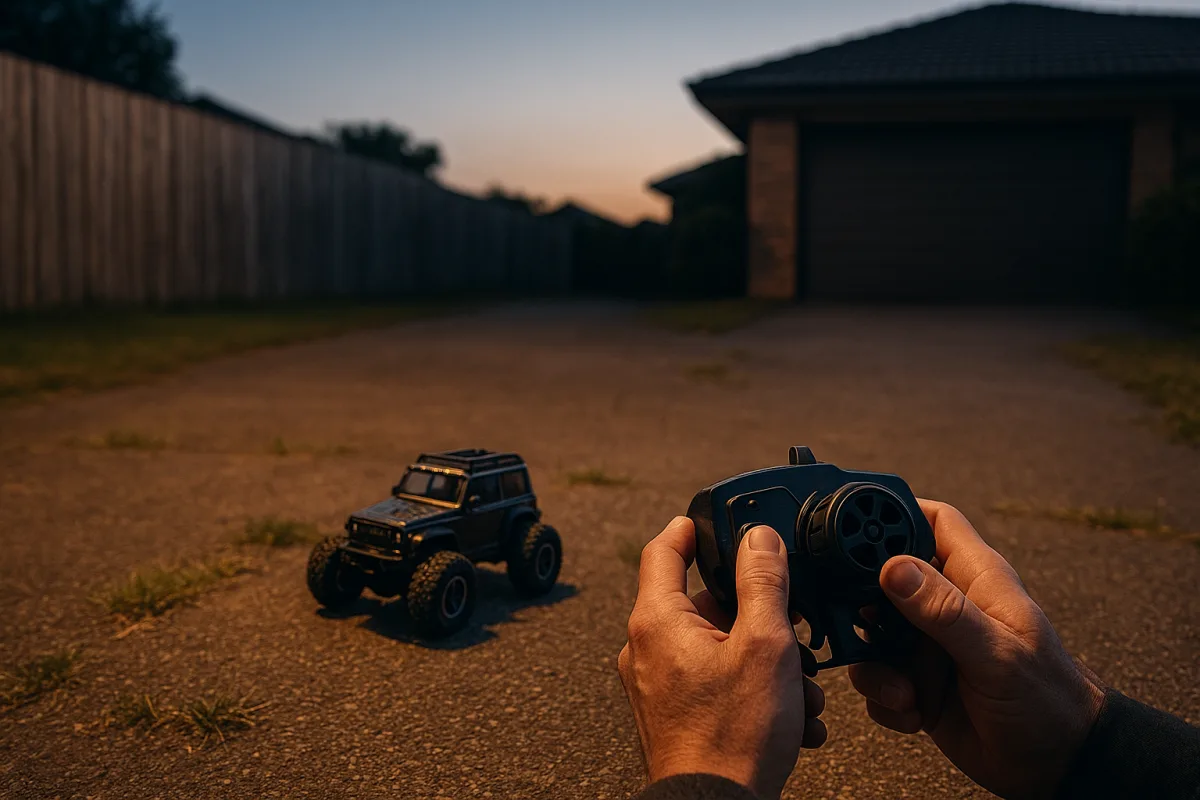
The choice: HAIBOXING 18859 versus Redcat Racing Everest-10
For a genuinely new RC driver looking below the usual hobby-grade entry point, I would choose the HAIBOXING 1:18 All Terrain 18859 over the Redcat Racing Everest-10 Crawler as the more versatile first car.
That is not a knock on the Everest-10. It is a crawler, and crawlers are supposed to be slow, deliberate and composed over obstacles. The problem is that many first-time buyers mean “an RC car for the yard” when they say beginner car.
The HAIBOXING 18859 is an entry-level 1:18 all-terrain truck aimed at that broader job. Its reported low-speed mode and two included batteries make more sense for learning basic steering, braking and throttle control. [8]
The Redcat Racing Everest-10 is also entry-level, but it serves a narrower kind of beginner. Its dual-motor 4WD layout is intended for controlled crawling over rocks, roots and built obstacles, not high-speed passes across a field. [12]
I have not run either model, and this is not a fabricated hands-on review. The decision here rests on the published specifications and positioning in the research brief, not on claims that one survives more crashes or has better long-term parts support.
Head-to-head comparison
| Criteria | HAIBOXING 1:18 All Terrain 18859 | Redcat Racing Everest-10 Crawler |
|---|---|---|
| Class and scale | 1:18 all-terrain RC car, positioned as an entry-level general-purpose model. | Entry-level 4WD crawler, built around slow obstacle driving rather than speed. |
| Best use | Driveways, packed dirt, short grass and casual backyard running. | Rocks, roots, ramps and deliberately chosen crawling lines. |
| Power character | Beginner-oriented all-terrain performance, with a reported low-speed mode. [8] | Dual-motor 4WD crawling setup, intended to make low-speed control the point of the drive. [12] |
| Learning curve | Better for learning the usual RC basics: proportional steering, throttle modulation, braking and recovering from a loose surface. | Better for learning precision inputs, tire placement and patience, but less representative of a typical fast RC truck. |
| Included running equipment | Reportedly includes two batteries, which matters because one pack rarely feels like enough on a first day out. [8] | The supplied brief identifies the drivetrain and crawling purpose, but does not establish included battery count or charger specification. |
| Speed suitability | The low-speed mode is a real beginner-friendly feature, assuming the buyer uses it rather than immediately selecting full power. [8] | Naturally suited to low-speed use. It is the safer choice where space is tight and obstacles are available. |
| Terrain limits | “All-terrain” does not mean invulnerable. Long wet grass, standing water, deep mud and large skatepark-style jumps can still break a budget truck. | Less suitable for open-field speed runs, loose high-speed turns and jump-heavy bashing. |
| Waterproof expectations | Do not assume full waterproofing from a budget RTR label. Splash resistance is not permission to submerge the electronics. [9] | The same warning applies. A crawler may encounter water more often, but that does not make full submersion safe. |
| Upgrade direction | Sensible first spending is likely tires, a compatible battery change or a stronger steering servo if a specific weakness appears. [11] | Crawler-specific upgrades can include tires, shocks and brass weight, but brass should be used to improve planted climbing traction, not fitted automatically. [11] |
| Where it falls down | It is not a substitute for a larger 1:10 basher, a race buggy or a brushless 3S machine. Small scale limits how well it handles rough, deep terrain. | It can feel too slow for a buyer expecting speed, rooster tails and jumps. Its specialist nature can make it the wrong first RC for general family use. |
| Overall beginner verdict | The better default recommendation for a first RC car. | The better recommendation only for a beginner who already knows crawling is the activity they want. |
Why the HAIBOXING is the broader beginner pick
A first car needs to create driving time, not just create a specification sheet. Two batteries help because runtime is always model-, battery- and driving-style-dependent. LiPo setups commonly offer roughly 20 to 35 minutes, while NiMH packs often land nearer 15 to 20 minutes, but those are estimates, not promises. [5]
The HAIBOXING 18859’s low-speed mode matters more than a big claimed mph number. A new driver needs room to learn that steering input at speed has a delay, and that full throttle while turning is usually how a truck barrel-rolls.
Its reported 4.5-star average across more than 10,000 reviews is encouraging as a market signal, though ratings are not a teardown, durability test or guarantee of parts availability. [8] I would treat that as reassurance, not proof.
The 1:18 scale is also a compromise worth understanding. It is easier to store and usually easier to carry than a 1:10 truck, but smaller wheels and less ground clearance make tall grass, ruts and chunky gravel feel much bigger.
Most handling complaints at this level should not trigger an upgrade spree. Check that the wheel nuts are snug, the steering trim is centered, the shocks are not leaking and the tires are seated before deciding the car needs expensive parts.
Why the Everest-10 can still be the right answer
The Redcat Racing Everest-10 Crawler is the better first RC for a person who enjoys the slow part. A crawling route can be a few garden rocks, landscape timbers and roots, provided it is safe and permission is clear.
Its dual-motor 4WD system is designed around low-speed control rather than maximum speed. [12] That changes what “good driving” means: choose a line, place a front tire, avoid lifting the chassis and use tiny throttle inputs.
That pace can be excellent for younger or more cautious new drivers. There is less need for a large open area, and a missed steering input usually produces a stall or rollover rather than a full-speed collision.
Still, do not buy a crawler because it sounds automatically tougher. Budget RC cars are not equally durable, fully waterproof or identically supplied as ready-to-run packages. Confirm what battery, charger and radio gear are actually included with the listing. [9]
If the truck later needs help climbing, crawler tires are generally a more logical first change than chasing motor power. Brass can lower the centre of gravity, but it adds mass, and adding weight without a clear traction problem is not tuning.
How the rest of the field fits around this decision
The HAIBOXING 18859 and Everest-10 are the two sensible finalists for this particular decision. The other listed models are not bad by default, but they suit different jobs, power expectations or budgets.
The Hosim 9125 1:10 4WD Monster Truck is another entry-level general-basher option for drivers wanting a larger truck with independent suspension and reported waterproof electronics. [8] It suits backyard terrain and gravel paths, but waterproof electronics should still not be treated as submersion-proof.
The MJX H16H V3 with GPS is an entry-level 1:16 option for beginners who value tracking features alongside a reported 45 km/h top speed. [2] GPS is a useful feature for some buyers, but it does not replace learning a low-speed control routine.
The MJX GPS RC Truck is also entry-level and aimed at children aged eight and above. It suits younger drivers seeking a user-friendly truck, but a parent should still verify battery handling, charging supervision and the actual contents of the package. [8]
The WIAORCHI 1/14 Brushless Truggy sits in the mid-range group and suits an enthusiast seeking speed and durability. It is reported to exceed 50 mph on 3S power and to use a waterproof metal chassis. [8] That is a lot of car for a first timer.
The MJX Hyper Go 14210 is a mid-range 4WD brushless model for drivers specifically seeking high-speed running. Its reported top speed is about 45 mph. [19] It suits a driver with room, discipline and a reason to want brushless performance, not someone buying their first casual backyard RC.
The VIRCAS 1/12 Brushless RC Car is another mid-range compact speed option. It is reported to reach 50 mph, with a brushless motor, metal gears, spare parts and tools. [13] It suits a buyer who values performance hardware, although speed raises the cost of every driving mistake.
The WLtoys 124008 belongs in the mid-range group and suits a beginner who specifically wants brushless technology from the start. [15] It is one of the examples showing that brushless equipment is appearing near the entry-level threshold, even though brushed motors remain more common below it. [7]
The MJX 16207 is a mid-range performance-oriented model with a reported 45 km/h top speed. [8] It suits a driver prioritising speed in a relatively budget-conscious package, but it does not displace a low-speed truck or crawler as the safer default recommendation.
The WLtoys 124019 is a mid-range 4WD car with a metal chassis and a reported 60 km/h top speed. [8] It suits a buyer seeking a performance-and-value balance, but it falls outside a strict under-150 budget, so it should not be presented as the answer to this exact buying question.
The Redcat Ridgerock is the mid-range crawler choice for a hobbyist who wants upgrade potential and a parts ecosystem over time. [14] It suits someone committed to crawling, while the Everest-10 remains the simpler entry-level crawler direction in this field.
Battery, motor and upgrade reality
Brushed motors still dominate truly budget beginner RC cars. They offer moderate speed and lower efficiency than brushless systems, and their brushes eventually wear, but brushed power is not automatically a flaw for a new driver. [7]
Brushless power generally brings more efficiency and more potential speed, but the system can require compatible electronic speed control, motor and battery choices. A motor upgrade is rarely just a motor purchase. [7][16]
If an RTR arrives with NiMH packs, moving to a compatible LiPo battery can improve runtime and punch. That only makes sense after confirming the ESC’s voltage limits, battery connector, physical tray dimensions and charger compatibility. [5][16]
Do not select a LiPo from capacity alone. Voltage, cell count and discharge rating all matter. A 3S pack can transform acceleration and top speed compared with 2S, but it can also turn a manageable beginner truck into a much harder car to drive. [6]
For the HAIBOXING, I would run it stock first, use its low-speed setting and inspect the drivetrain after impacts. For the Everest-10, I would first improve technique and tires before adding brass or changing shock setup.
Who each option suits
Choose the HAIBOXING 1:18 All Terrain 18859 if the buyer wants one affordable, general-purpose first RC for driveways, dirt, short grass and casual bashing. Its reported two-battery package and low-speed mode fit the learning stage well. [8]
Choose the Redcat Racing Everest-10 Crawler if the buyer wants slow, deliberate obstacle driving and has rocks, roots or simple crawling features available. Its dual-motor 4WD crawler layout suits precision rather than speed. [12]
Choose neither as the default if the real goal is 45 mph-plus brushless running. The WIAORCHI 1/14 Brushless Truggy, MJX Hyper Go 14210, VIRCAS 1/12 Brushless RC Car and WLtoys 124008 better match that goal, but they demand more space and more throttle discipline. [8][13][15][19]
Frequently Asked Questions
What is the best RC car for beginners under $150?
The HAIBOXING 1:18 All Terrain 18859 is recommended as the best all-round beginner RC car under $150. It handles driveway runs, short grass, and low-speed learning well, and includes features like a low-speed mode and two batteries, which are helpful for new drivers.
Which RC car is better for a beginner: HAIBOXING 18859 or Redcat Everest-10?
For most beginners, the HAIBOXING 18859 is the better choice due to its versatility and suitability for general backyard driving. The Redcat Everest-10 is better suited for beginners specifically interested in slow, technical rock crawling and obstacle navigation rather than speed or jumps.
Are there beginner-friendly RC cars with low-speed modes under $150?
Yes, the HAIBOXING 18859 includes a reported low-speed mode, which is a useful feature for beginners learning throttle control and steering timing. This makes it a more beginner-friendly option compared to models without such a mode.
Do beginner RC cars under $150 come with batteries included?
The HAIBOXING 18859 reportedly comes with two batteries, which is beneficial for longer driving sessions. However, the Redcat Everest-10’s battery and charger inclusion is not clearly specified, so buyers should verify what is included before purchase.
What terrain can beginner RC cars under $150 handle?
Beginner RC cars like the HAIBOXING 18859 can handle driveways, packed dirt, and short grass but are not suited for long wet grass, standing water, deep mud, or large jumps. The Redcat Everest-10 crawler is designed for slow, deliberate driving over rocks, roots, and obstacles but is not ideal for open-field speed runs or jumps.
How we researched this
This article was assembled from 19 cited references.
Nothing here is based on hands-on testing. Where a figure or finding appears, it belongs to the source cited beside it, and the writing says so rather than implying otherwise. Every source is listed below so you can check it.
Sources
- Best Beginner RC Car 2026: 4WD, Brushless & Budget Picks Tested – FUNYAT
- MJX HYPER GO H16H V3 Upgraded 1/16 RC Car GPS Module | bometoys
- Redcat Racing Volcano EPX PRO 4WD Monster Truck RTR - Silver
- Best RC Cars for Beginners (2026) — Top Picks Compared | RC Car Compare
- How Long Do RC Car Batteries Last: Complete Guide to Runtime, Lifespan & Optimization Tips | EuroRC.com
- RC Drift Car Battery Basics - Understanding 1S, 2S, 3S and C-Ratings | RC Drift Parts Upgrade Guides
- Brushed vs Brushless RC Motors — What's the Difference? (2026 Guide) | RC Cars Guide
- 10 Best RC Cars Under $150 (September 2026) Expert Reviews
- How to Pick an RC Car: Size, Power, RTR vs Kit, and Budget – RaceNRCs
- Best Budget Rc Cars - 2026 Reviews - Hobby Hustler
- Best First Upgrades for an RTR RC Car – Friendly Hobbies
- Redcat Racing Everest-10 Crawler
- VIRCAS 1/12 Brushless RC Car
- Redcat Ridgerock
- Wltoys 124008 RTR 1/12 2.4G 4WD 3S Brushless RC Car 60km/h Off-Road
- How to Choose the Best Battery for RC Car: A Complete Buying Guide
- RC Model Shop | Brushed vs Brushless Motors Explained
- Are Kmart RC Cars Worth Buying? Honest Review | Techtonic Hobbies
- MJX Hyper Go 14210
Related Articles
Best RC Car for Beginners Under 100: Top Entry-Level Picks
Discover the best RC car for beginners under 100 with detailed comparisons, battery tips, and beginner-friendly features to help you choose right.
Beginner RC Car Comparison Under 200: Crawler vs Off-Road
Compare beginner RC cars under 200 to find the best crawler or 4WD off-road model with setup and tuning tips for new drivers.
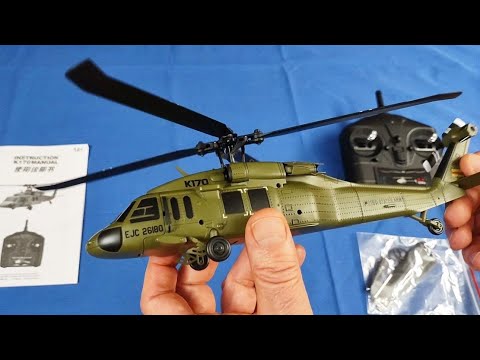
XK K170 UH-60L RC Helicopter Review: Detailed 4-Channel Model for Beginners
Discover the XK K170 UH-60L RC helicopter: a detailed, 4-channel model with 6G stabilization and altitude hold. Powered by a brushless motor, this plastic beauty offers mode 1 and mode 2 control, automatic takeoff, and spare parts. Perfect for beginners, but caution indoors due to fragility.
How to Set Up RC Car for Beginners: Complete Starter Guide
Learn how to set up your RC car for beginners with tips on battery, tires, suspension, and motor for a smooth first drive.