
Best RC Car for Racing: Arrma Limitless V2 vs Traxxas XO-1
Compare the best RC car for racing with detailed setup, tuning, batteries, motors, and kit choices for high-speed 1/7 scale brushless RC cars.
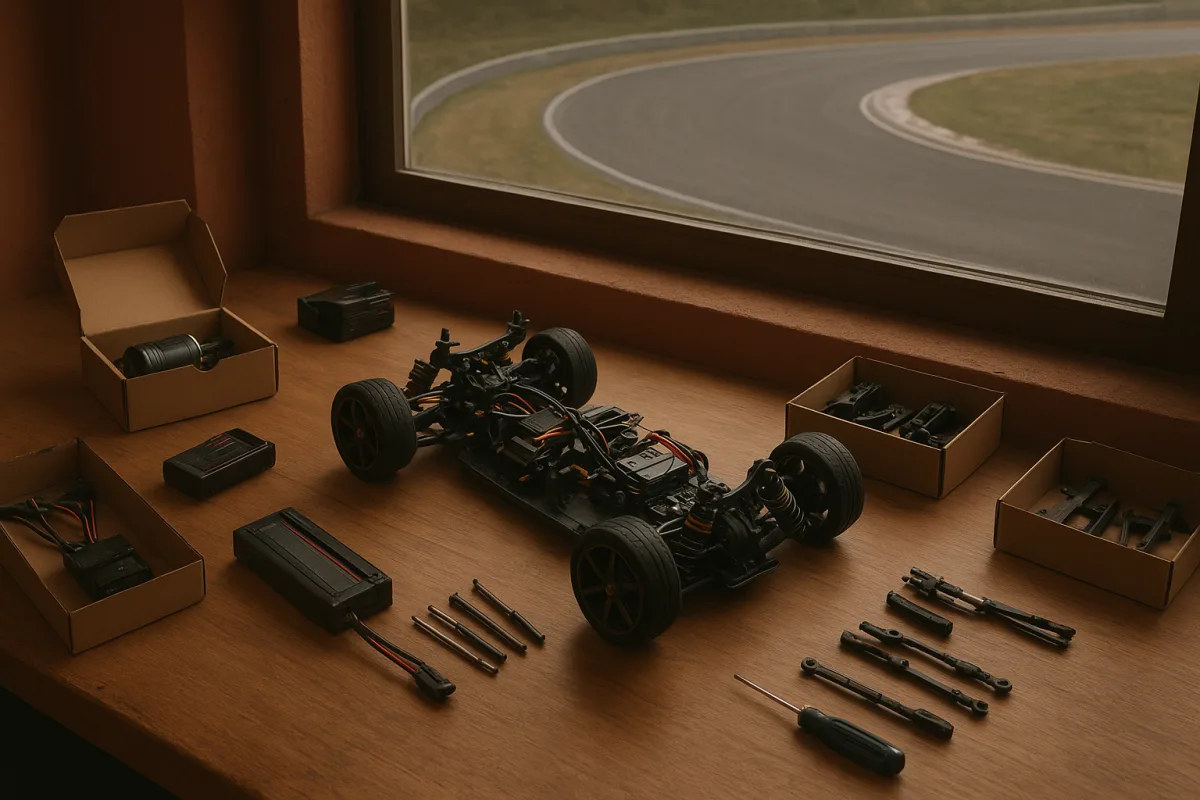
Choosing Between the Arrma Limitless V2 and Traxxas XO-1: Which RC Car Wins in Competitive Racing?
When you’re serious about RC racing, picking the right car boils down to what you want to do on the track and how much wrench-time you’re ready to invest. The market for high-speed, high-performance RC cars in 2026 offers some remarkable machines, but two models stand out for speed enthusiasts aiming to push the limits: the Arrma Limitless V2 and the Traxxas XO-1. Both are 1/7 scale, 4WD brushless touring cars engineered for blistering pace, with top speeds north of 100 mph, but they approach the racing experience from different angles.
I haven’t run either of these myself, so this breakdown leans on detailed specs, community feedback, and tuning principles that apply across high-end brushless RC cars. The goal is to get you thinking straight about which one suits your needs, your setup style, and the kind of racing you want to do.
Scale, Class, and General Purpose
Both the Arrma Limitless V2 and Traxxas XO-1 share the 1/7 scale, 4WD brushless touring car class, which means they’re designed for high-speed asphalt or smooth dirt tracks with a focus on straight-line velocity and handling at speed.
Arrma Limitless V2: This is a premium-level rolling chassis designed for builders who want to pick and choose their own electronics, ESCs, motors, batteries, to tailor power delivery and handling. It’s marketed toward speed run enthusiasts aiming for the absolute fastest machine on wheels, with reported top speeds over 110 mph. The bare chassis approach means you’ll be sorting out your own motor KV, gearing, and LiPo packs.
Traxxas XO-1: Also premium, but this car comes ready-to-run (RTR) with factory-installed electronics optimized for hitting 100+ mph out of the box. It’s built for enthusiasts who want blistering speed without the hassle of piecing together components. The XO-1’s electronics are proprietary, so it’s less customizable but highly reliable as a system.
In terms of racing class, both cars fit into the extreme speed touring scene rather than traditional 1/10 scale buggy or truggy classes. This means setup focus will be on gearing ratios suited for top-end speed, suspension tuned for high-speed stability, and battery packs that can sustain high current draw without voltage sag.
Powertrain and Motor Specs
At these speeds, brushless motors are non-negotiable for efficiency and durability. Both cars use brushless setups, but the approach differs:
Limitless V2: Requires you to select a brushless motor, often in the 3,500-4,500 KV range for 1/7 scale touring, depending on your gearing and battery voltage. The rolling chassis allows for custom ESCs with adjustable timing and throttle curves. This flexibility can help optimize acceleration versus top speed trade-offs but demands that you understand motor timing, ESC calibration, and gearing choices (spur and pinion gears usually at 64-pitch for smooth power delivery). You’ll want to monitor motor temps carefully; running above 180°F (82°C) risks damage, so gearing should balance heat and speed.
XO-1: Comes with a matched brushless motor and ESC combo optimized at the factory for the included 6S LiPo battery packs (22.2V nominal). The motor KV is tuned for maximum top-end speed while maintaining manageable temps out of the box. This sealed system means less tinkering but also fewer tuning options.
Both cars expect 2S to 6S LiPo packs, but the XO-1 is explicitly designed around 6S to hit its top speed, while the Limitless V2’s flexibility means you can run 2S, 3S, or even 4S/6S depending on your gearing and ESC. Battery capacity around 5,000mAh is typical for balance between runtime and weight, but be aware that C-ratings on these LiPos are often inflated in marketing, real-world continuous discharge rates may be lower, so plan your setup accordingly to avoid voltage sag during acceleration [4][6].
Chassis, Suspension, and Handling
At 100+ mph, handling becomes as critical as raw power. Here’s where setup nuances matter, and expensive parts won’t fix poor tuning.
Limitless V2: Its chassis is designed for speed runs and drag-style racing, with a low center of gravity and wide stance. The suspension geometry favors stability at high speeds but may require careful tuning of shock oil viscosity and droop settings to handle track bumps without upsetting balance. For example, using 30-40 wt shock oil with 4-5 mm droop is common on similar 1/7 scale touring cars running asphalt or carpet. The rolling chassis approach means you can experiment with different shock springs and oils to dial in cornering grip versus straight-line stability.
XO-1: The suspension is tuned at the factory for a balance of high-speed stability and predictable cornering. Its shocks often run medium weight oil (around 35 wt) with ride height set slightly higher (~6 mm) to accommodate minor track irregularities. Because it’s RTR, there’s less scope for deep tuning without aftermarket parts, but it’s a solid baseline for drivers who want quick setup out of the box. The XO-1’s chassis design prioritizes aerodynamic efficiency and tire contact patch consistency under hard acceleration.
Neither car is designed for off-road or loose dirt, so tires and suspension settings reflect that; expect slick or semi-slick tires sized around 1.9 inches diameter. Tire compound choice depends on track surface, soft foams for indoor carpet, medium to hard rubber for asphalt, but regional climate and track availability influence this heavily, and there’s no hard 2026 data on regional variations, just community practices [7][8].
Tires and Traction
Tire selection is critical and often overlooked by newcomers chasing speed.
The Limitless V2, being a rolling chassis, lets you run any tire you want. For indoor carpet, 1.9-inch soft foam tires with 5-6 mm ride height and 4-5 mm droop work well. On asphalt, 1.9-inch slicks in medium compound with 6-7 mm ride height and 5-6 mm droop give good grip and durability. Dirt isn’t really in the cards for either car, but rally tread tires in soft compound with slightly higher ride height (~8-9 mm) and droop (~5-6 mm) are typical for loose surfaces.
The XO-1 ships with factory-matched tires designed for asphalt and paved tracks. While these are fine for initial racing, competitive racers often swap to higher-grip foam or rubber tires matched to track conditions. The XO-1’s chassis and suspension can handle such tire upgrades but remember that tire compound and size affect gearing and powertrain load, so expect to tune spur/pinion gear ratios accordingly.
Maintenance and Reliability
High-performance RC cars need regular upkeep, especially at these speeds.
Both cars demand cleaning and inspection after every run to clear dust and debris, check for loose screws, and inspect bearings and gear mesh. Every 3-5 runs, check gear mesh tightness and service bearings. Every 5-10 runs, refresh shock oil and lubricate moving parts. Differential fluid service every 20-30 runs keeps drivetrain smooth [9][10].
The Limitless V2 may require more maintenance involvement since you’re choosing your own electronics and components; you’ll need to monitor motor temperatures and ESC calibration yourself. This gives you control but demands attention to detail.
The XO-1’s integrated electronics reduce tuning errors like mismatched motor-to-ESC ratings, but the higher factory power means wear can be more rapid, especially on bearings and gears, if you push it hard without maintenance.
Price Positioning and Suitability
Neither car is cheap, but they cater to slightly different racer profiles.
The Arrma Limitless V2 is premium but somewhat more affordable than the top-tier Traxxas XO-1. It suits drivers who want to invest time into selecting and tuning motors, ESCs, and batteries, essentially building a custom speed machine. It’s ideal if you enjoy wrenching and understand brushless motor timing, gearing trade-offs, and battery management.
The Traxxas XO-1 sits at a higher price point and targets racers who want an out-of-the-box screaming speed machine with minimal setup hassle. It’s less flexible for component upgrades but delivers consistent performance for those focused on racing rather than tuning.
Where Each Falls Down
Arrma Limitless V2: The flip side of customization is complexity. If you’re new or want to race immediately, the setup burden can be a hurdle. Getting gearing right (spur and pinion, typically 64-pitch) and selecting appropriate motor KV and battery voltage is critical, mistakes here cause overheating, poor acceleration, or reduced top speed. Plus, the rolling chassis means initial investment in electronics is needed, pushing up total cost.
Traxxas XO-1: While convenient, the proprietary electronics limit tuning scope. If you want to swap in a different ESC or experiment with higher KV motors, you’re out of luck without significant modifications. Also, the RTR setup is heavier due to integrated components, which can slightly hamper handling finesse compared to a well-tuned custom Limitless V2 build.
The Honest Verdict
These two are neck and neck for top-tier 1/7 scale high-speed racing. The Arrma Limitless V2 suits racers who want full control over setup, gearing, and electronics, and who have the time and knowledge to tune shocks (30-40 wt oil), select motor KV (3,500-4,500), and optimize LiPo battery packs (5,000mAh, 2S, 6S). It rewards wrenching and custom tuning with potentially higher top speed and better handling balance.
The Traxxas XO-1 appeals to racers who want plug-and-play extreme speed with reliable, factory-optimized electronics and suspension. It’s less flexible but great if you want to hit the track fast without fuss. Its 6S power system means instant high power, but less room to tweak.
Neither car is a guaranteed winner in every scenario. Track conditions, your tuning skills, and racing style make a big difference. Most handling problems at these speeds come from setup errors, shock oil weight, droop settings, tire compound, gearing, rather than parts upgrades. The expensive option isn’t always better unless paired with setup know-how.
Where the Others Fit
For context, some other competitive options in different classes or price points:
Arrma Vendetta 3S BLX: Mid-range 1/8 scale 4WD brushless touring, faster than typical 1/10s (~70 mph), good for balanced performance and affordability.
Traxxas Stampede 4X4 VXL: Mid-range 1/10 scale 4WD brushless monster truck, built for off-road durability and 60 mph top speed.
Traxxas Rustler 4X4 VXL and Slash 4X4 VXL: Mid-range versatile 1/10 scale models suitable for mixed terrain and short course racing, with balanced speed and handling.
Traxxas Maxx Slash 6S and E-Revo 2.0 VXL: Premium 1/8 to 1/5 scale monster trucks with extreme power and advanced suspension, for serious off-road racing.
Each has its place depending on scale, terrain, and racing style, but for pure speed runs and high-speed touring on smooth surfaces, the Limitless V2 and XO-1 are the headline contenders.
Final Setup Tips Regardless of Choice
Pay close attention to gear ratios: For high-speed, use a larger pinion gear to increase top speed but watch for motor overheating.
Tune shock oil viscosity and droop to match your track surface and driving style.
Use LiPo batteries with realistic C-ratings and capacity around 5,000mAh to balance power and runtime.
Don’t skimp on regular maintenance; clean, lubricate, and check bearings and diffs to keep drivetrain efficiency high.
Avoid chasing speed alone, handling wins races. A well-balanced setup beats brute force.
In sum, if you want ultimate customization and have the tuning chops, go for the Arrma Limitless V2. If you want a ready-to-race beast that’s fast and reliable with minimal setup fuss, the Traxxas XO-1 is your ride. Both represent the cutting edge of 1/7 scale high-speed RC touring in 2026, and neither will disappoint when setup right [1][2][3][4][6][9].
Frequently Asked Questions
Which is the best RC car for competitive racing?
The Arrma Limitless V2 and Traxxas XO-1 are top contenders in the 1/7 scale, 4WD brushless touring car class for competitive racing. The Limitless V2 offers more customization for builders wanting to tailor electronics and gearing for speeds over 110 mph, while the XO-1 provides a ready-to-run system optimized for reliable 100+ mph performance. The best choice depends on your preference for customization versus convenience.
What are the differences between Arrma Limitless V2 and Traxxas XO-1?
The Limitless V2 is a rolling chassis requiring you to select your own brushless motor, ESC, and batteries, allowing for flexible tuning and potentially higher top speeds (110+ mph). The XO-1 is a ready-to-run car with factory-matched electronics and motor optimized for 6S LiPo packs, offering less customization but out-of-the-box reliability and ease of use. Suspension tuning and tire options are also more customizable on the Limitless V2.
How to choose the best brushless motor for RC racing cars?
For 1/7 scale touring cars like the Limitless V2, brushless motors in the 3,500-4,500 KV range are typical, depending on your gearing and battery voltage. It’s important to balance motor KV with gearing to avoid overheating, keeping motor temperatures below 180°F (82°C). Matching the ESC and motor amperage ratings and calibrating ESC timing and throttle curves are also key for optimal performance.
What setup is ideal for 1/7 scale RC racing cars?
Ideal setups focus on gearing ratios suited for top speed, suspension tuned for high-speed stability, and battery packs that sustain high current without voltage sag. For suspension, shock oil viscosity around 30-40 wt with 4-5 mm droop is common on asphalt or carpet tracks. Tire size is typically 1.9 inches diameter, with compound choice depending on track surface and conditions.
How do tire choices affect RC car racing performance?
Tire selection critically impacts grip and handling. Soft foam tires around 1.9 inches diameter are preferred for indoor carpet tracks, while medium to hard compound slick tires suit asphalt surfaces. Ride height and droop settings vary with tire choice, affecting traction and stability; for example, 5-6 mm ride height and 4-5 mm droop work well with soft foam on carpet. Dirt or loose surfaces require different tread patterns and higher ride height, but these cars are not optimized for off-road use.
Sources
- Best Brushless RC Cars (2026), Top Picks Compared | RC Car Compare
- Best RC Cars (2026), Top 9 | Gavler
- RC Cars & Trucks Kits | Horizon Hobby
- Brushed vs Brushless RC Motors, What's the Difference? (2026 Guide) | RC Cars Guide
- What is Brushless RC? Complete Guide to Motors & Performance - Xrccars
- Brushless RC Cars - RCexplained
- Tires for Carpet Racing • for RC Beginners.
- RC Tyre Compounds: A Guide to Grip, Speed & Control | Hearns Hobbies
- How to Maintain Your RC Car After Every Run | Speed World Raceway
- RC Car Maintenance Checklist: A Practical Guide to Keeping Your Vehicle Fast, Reliable, and Ready to Run -
- RC Car Maintenance and Cleaning: A Beginner's Guide, RC Models Hub
- RC Brushless Motor Tuning Guide: Rotor, Timing, Gearing | So Dialed
- RC Motors & ESCs, Complete Guide for Beginners and Upgraders | TECH1RC
- RC Car Spur Gear Selection Guide 2026: Expert Tips for Perfect Gear Ratio Selection - HobbyGradeRC.com
- How To Make An RC Car Faster: Proven Upgrades & Tips
- RC Touring Car Race Setup
Related Articles

Ultimate RC Car Unboxing: Speed, Durability, and Challenges
Kevin Talbot unboxes a new RC car, testing its speed, durability, and handling. The team gears up for speed tests, challenges, and comparisons with other models in the same price range. Viewers are invited to participate in giveaways and contests to win RC cars.
Ultimate RC Desert Racer Build: Mini Indoor Thrills & Giveaways
Explore the world of remote-controlled desert racing with Kevin Talbot as he assembles a mini racer for indoor fun. Witness intricate builds, upgrades, and thrilling tabletop races, all while getting a chance to win exciting RC car giveaways. Subscribe for more RC car excitement!
Best RC Car for Off Road: ARRMA Granite vs Traxxas Slash
Compare the best RC car for off road use: ARRMA Granite vs Traxxas Slash. Get expert advice on terrain fit, battery, and maintenance.
Best RC Car Type for Beginners: Choosing the Right Model
Discover the best RC car type for beginners, including scale, chassis, motor, and battery choices to fit your terrain and skill level.