
RC Car Battery Safety Rules
Learn essential RC car battery safety rules including charging, handling, and voltage limits to race safely and comply with regulations.
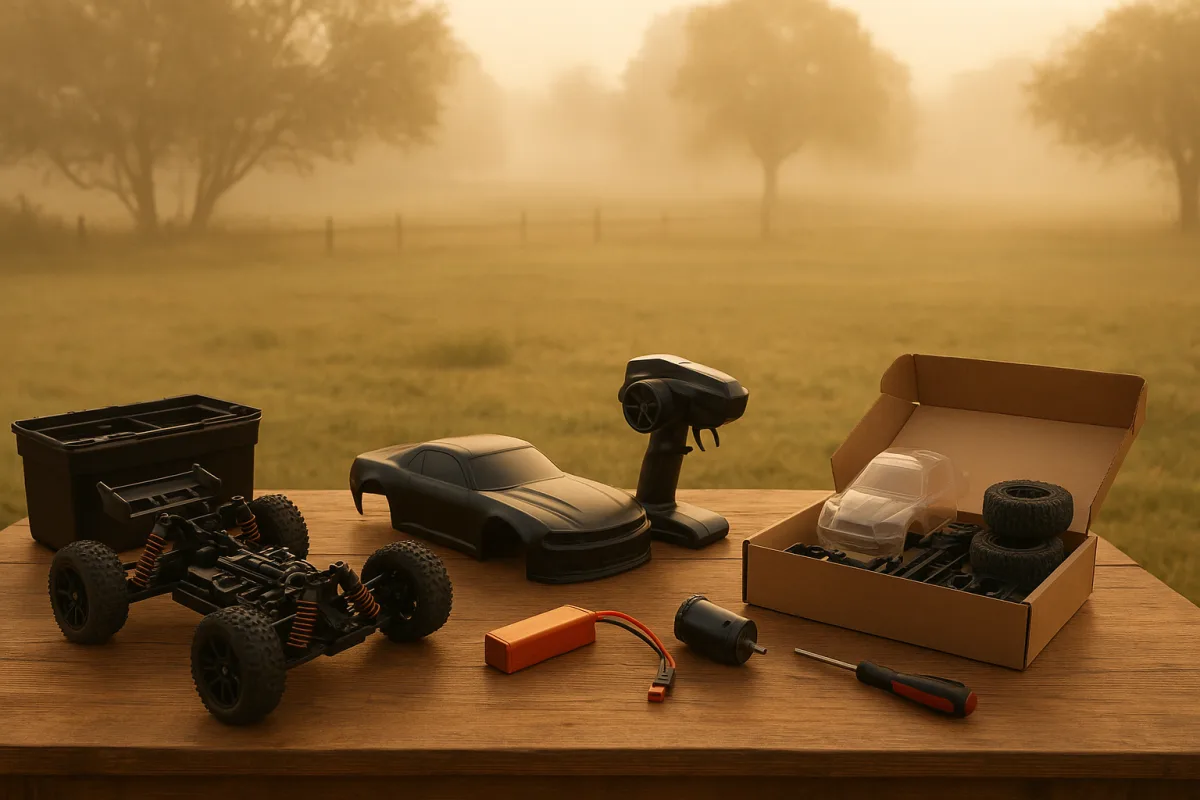
The LiPo bag on your pit table
The LiPo sack beside your charger is the most visible part of RC racing safety compliance. It holds a battery during charging and storage, when a damaged cell, wrong program, or overcharge can turn an ordinary race pack into the event’s biggest hazard.[4][6]
Safety rules come from several layers. IFMAR governs international competition, EFRA covers Europe, ROAR covers North America, BRCA administers much of organized racing in the United Kingdom, and FEMCA represents Asia.[7]
There is no single worldwide rulebook that makes every RC race identical. Your club’s event rules, the sanctioning body, the class, and sometimes the venue’s insurance conditions decide what equipment is legal and how safely it must be handled.[1][7]
For a new racer, battery compliance is the system to understand first. It connects technical inspection, motor rules, charging discipline, fire planning, track access, and the simple fact that an unsafe pack can stop your day before qualifying starts.
Voltage limits are safety limits
A LiPo battery’s cell count sets its voltage. A 2S LiPo has two cells in series and reaches 8.4 volts fully charged, while a 4S pack reaches 16.8 volts, double the voltage and a much greater electrical and drivetrain load.[4][7]
EFRA, IFMAR, and BRCA generally limit electric on-road and off-road classes to 2S LiPo packs, or 8.4 volts fully charged. These organizations also commonly use 540-size motor limits for their electric classes.[3][7]
ROAR uses a similar 2S ceiling for 1/10-scale classes. North American 1/8 off-road classes can allow up to 4S, or 16.8 volts, with 540- or 550-size motor requirements depending on the class.[3][7]
That difference catches out racers who assume battery labels tell the whole story. A 4S hardcase pack can be perfectly appropriate for a ROAR-spec 1/8 buggy or truggy class, yet fail inspection at an event following a 2S international-style rule set.[7]
Motor limits work alongside battery limits. Higher voltage can spin a motor harder, raise current demand, increase temperatures, and load gears, ESCs, connectors, and tires. The approved cell count, motor size, and motor turns or Kv must all match the class rules.[3]
Do not treat a bigger battery as a safety upgrade because it has more capacity or a higher C-rating. Capacity tells you roughly how long it can run, while C-rating describes discharge capability. Neither makes an otherwise illegal voltage legal.[3][5]
We would confirm four details before race day: the class name, permitted cell count, maximum voltage, and approved motor specification. Check the current event rulebook too, because regional rules and individual classes do not always line up.[3][7]
Charging is where compliance becomes behavior
A legal 2S pack can still become unsafe through poor charging. The baseline procedure is a LiPo-specific balance charger, the LiPo balance program, the correct cell count, and the manufacturer’s stated charge rate, commonly 1C.[4][6]
At 1C, a 5,000 mAh pack charges at 5 amps. That is not a universal charging rule, since the battery manufacturer’s rating controls, but it is the typical conservative rate identified in LiPo care guidance.[4][5]
Balance charging monitors individual cells instead of treating the pack as one undivided unit. That matters because a pack can show an acceptable total voltage while one cell is too high or too low, increasing the chance of damage.[4][6]
Put the battery in a LiPo sack on a non-flammable surface before connecting it. Do not charge on carpet, in a vehicle, on a wooden bench, or beside fuel, aerosol cleaner, tires, body shells, and other pit clutter.[4][6]
Stay with the charger. Unattended charging is among the most common avoidable mistakes for new racers, alongside selecting the wrong program, overcharging, and continuing to use a pack that has already shown damage.[4][9]
Monitor battery temperature during charging. Guidance calls for stopping if the pack rises above 110 degrees Fahrenheit, or 43 degrees Celsius, because excess heat is a warning that charging conditions or pack health need attention.[5][6]
A LiPo sack is containment, not permission to ignore the battery. If a pack swells, emits odor, becomes unusually hot, has damaged wires, or shows a compromised case, disconnect it if safe and do not put it back into rotation.[4][12]
Damaged or swollen packs belong in proper battery recycling, never household trash. If a battery fire occurs, evacuate the area and call emergency services rather than attempting to extinguish the fire yourself.[11][12]
Storage voltage protects the pack between rounds
Race-day charging gets attention because you can see it happening. Storage is where many packs quietly deteriorate, especially when they are left fully charged after Sunday racing or forgotten in a hot vehicle.[4][5]
Set a storage charge at about 3.8 volts per cell. For a 2S pack, that means roughly 7.6 volts total, assuming both cells are balanced, which reduces stress compared with storing the pack full or deeply discharged.[4][12]
Store packs in a cool, dry location. Guidance advises avoiding temperatures above 100 degrees Fahrenheit, or 38 degrees Celsius, and below 32 degrees Fahrenheit, or 0 degrees Celsius.[5][6]
This is also why compatible equipment matters. Your charger, balance board, connectors, battery leads, and vehicle’s ESC must suit the pack you are using. Improvised adapters and damaged plugs create resistance, heat, and opportunities for shorts.[4][6]
You do not need to buy the most expensive battery to race safely. You need a pack that meets your class voltage rule, fits the battery tray securely, has sound wiring and connectors, and can be charged and stored correctly.
The track has responsibilities too
Battery discipline is only one side of race safety. EFRA’s 2024 track requirements include barriers, designated marshaling areas, and first-aid facilities, giving drivers, marshals, and spectators defined places to stand and move.[7]
Cars can exceed 60 mph, especially in faster electric and gas classes, so spectators need separation from the racing surface. Barriers and a raised driver stand, often called a rostrum, help keep people out of a car’s path.[2][11]
A properly equipped club commonly provides a timing system, pit tables, a driver stand, electrical-fire-rated extinguishers, and first-aid equipment. Those items do not replace careful driving, but they reduce the consequences when a crash or battery incident happens.[2]
Event insurance is compulsory under EFRA, IFMAR, and ROAR. That requirement is one reason clubs care about behavior in the pits and on track, even when a racer sees the rule as a minor inconvenience.[1][7]
Age requirements and marshal age guidance also vary by organization. Ask the host club before bringing a younger racer, because local practice may set limits beyond what a family expects from casual backyard RC running.[1][7]
There is no universal mandatory helmet, glove, or protective-clothing rule for drivers and spectators. Clubs may recommend gear or set their own requirements, so check the event information instead of assuming personal protective equipment is standardized.[7][11]
Etiquette prevents the ordinary crashes
Track etiquette is safety equipment you cannot buy. Place your car down only where the marshal or race director directs, wait for a clear gap, and never walk across an active racing line to retrieve a car.[9][11]
Marshals should use designated areas and return cars with awareness of oncoming traffic. Drivers should call problems clearly, avoid reckless re-entry, and pay attention to race-control instructions instead of focusing only on lap time.[7][9]
Frequency management remains part of safe participation where it applies. Modern 2.4 GHz systems reduce crystal conflicts, but you still need a legal transmitter, a secure receiver installation, and a radio system that passes the event’s requirements.[7][9]
In the United States, the FCC regulates RC control frequencies and transmitter power. In the European Union, radio equipment requires CE marking and product conformity, so a bargain transmitter bought for general use may not meet local compliance expectations.[7]
Vehicle maintenance belongs here too. Check wheel nuts, steering hardware, body clips, battery straps, gear mesh, solder joints, and brakes or failsafe settings before each race day. A loose wheel or ejected battery can create a marshal hazard.[9][11]
Weather changes setup, not the formal rulebook
Major sanctioning bodies do not publish standardized seasonal safety rule changes for RC racing. Weather guidance is advisory, which means your club may alter a schedule or make track-specific decisions without changing the underlying class rules.[7][10]
Ambient temperatures of 59 to 82 degrees Fahrenheit, or 15 to 28 degrees Celsius, are recommended conditions for RC running. In hotter weather, early racing between 7 a.m. and 11 a.m. can help reduce overheating risk.[10]
Setup still needs to follow the conditions. Tire compound and shock oil choices may change with temperature, but do not use setup tuning as an excuse to run a battery that is overheating or an electronic system that cannot stay within safe temperatures.[10]
The expensive fix is rarely the first fix. If your motor and battery are hot, start with the legal voltage, gear ratio, drivetrain condition, cooling airflow, and charge routine before shopping for a more powerful pack or motor.
Your pre-race compliance routine
Before leaving home, inspect every LiPo for swelling, damaged cases, loose leads, or questionable connectors. Put sound packs at storage voltage until you need them, and bring only the batteries legal for the class you entered.[4][12]
At the track, charge in a LiPo sack on a non-flammable surface, use balance mode, verify the charger settings, and remain present. Keep your pit area clear enough that a problem can be handled without moving through loose equipment.[4][6]
Then follow the facility’s driver, marshal, and spectator procedures. Read the event rules, listen at the drivers’ meeting, and ask the race director when something is unclear, especially on battery limits, marshal locations, and local equipment requirements.[1][9]
Frequently Asked Questions
What are the safety rules for charging RC car batteries?
Batteries should be charged using a LiPo-specific balance charger on a non-flammable surface. Always use the correct balance charging program for the battery’s cell count and charge at the manufacturer’s recommended rate, typically 1C. Never leave batteries unattended during charging and keep them inside a LiPo sack to contain any potential fire or damage.
How to safely handle and store LiPo batteries for RC cars?
After use, store LiPo batteries at a storage charge near 3.8 volts per cell in a cool, dry place away from extreme temperatures. Remove any swollen, damaged, or overheated packs from service and recycle them properly. Always keep batteries in a LiPo sack during storage to reduce fire risk.
What voltage limits apply to RC car racing batteries?
Most international and European organizations like EFRA, IFMAR, and BRCA limit electric on-road and off-road classes to 2S LiPo packs, or 8.4 volts fully charged. In North America, ROAR allows up to 4S LiPo (16.8 volts) for 1/8-scale off-road classes, while 1/10-scale classes are limited to 2S.
Why is using a LiPo sack important during battery charging?
A LiPo sack contains a battery if it swells, overheats, or catches fire during charging or storage. Since damaged cells or incorrect charging can turn a battery into a major hazard, the sack helps protect people and property by limiting the spread of flames or debris.
How do different racing organizations regulate RC car batteries?
IFMAR governs international competition, EFRA covers Europe, ROAR oversees North America, BRCA manages much of the UK, and FEMCA represents Asia. EFRA, IFMAR, and BRCA generally limit classes to 2S LiPo packs, while ROAR permits up to 4S for certain classes. Each organization sets specific voltage, motor size, and class rules that racers must follow.
How we researched this
This article was assembled from 12 cited references.
Nothing here is based on hands-on testing. Where a figure or finding appears, it belongs to the source cited beside it, and the writing says so rather than implying otherwise. Every source is listed below so you can check it.
Sources
- RC Safety & Liability · RC Crash Crew
- RC Racing Club Equipment Requirements: 2026 Guide, Track Star R/C
- RC Racing Motor Guide: Turns, Kv and Rules | RC Cars Guide
- LiPo battery care and safety · RC Paddock
- CAYOTE RC Car LiPo & LiHV Racing Battery Maintenance Guide
- RC Battery Safety & Charging Guide | TECH1RC
- RC Car Safety Regulations
- Beginner RC Car Basics. What you are actually buying.
- RC racing etiquette: common newbie mistakes to avoid at the track, RC Car Action
- How To Choose RC Car Seasonal Setup? - EnigmaCarsUSA
- RC Racing Safety: Batteries, Fuel, Injuries, Track Rules | RC Racing | The Gear Sports
- LiPo Battery Safety: Charging, Storage and Disposal (UK)
Related Articles
RC Car Battery Types Explained: LiPo vs NiMH and More
Learn about RC car battery types, including LiPo and NiMH, voltage, capacity, and C-ratings to choose the right battery for your RC car.
RC Car Racing Rules: Stock Class, Motors, Batteries & Setup
Learn RC car racing rules covering stock class motors, batteries, blinky mode, and tuning to compete legally and effectively in races.

RC Car Safety Regulations
Learn about RC car safety regulations, radio compliance, and best practices for batteries and equipment in the US, UK, and EU.
RC Car Safety for Kids: Speed, Battery, and Setup Guidelines
Learn key RC car safety for kids, including speed management, battery precautions, and age-appropriate setup for safe and fun play.