
Best Batteries for RC Cars: A Detailed Comparison
Discover the best batteries for RC cars with our detailed comparison of top options, including voltage, capacity, and performance insights.
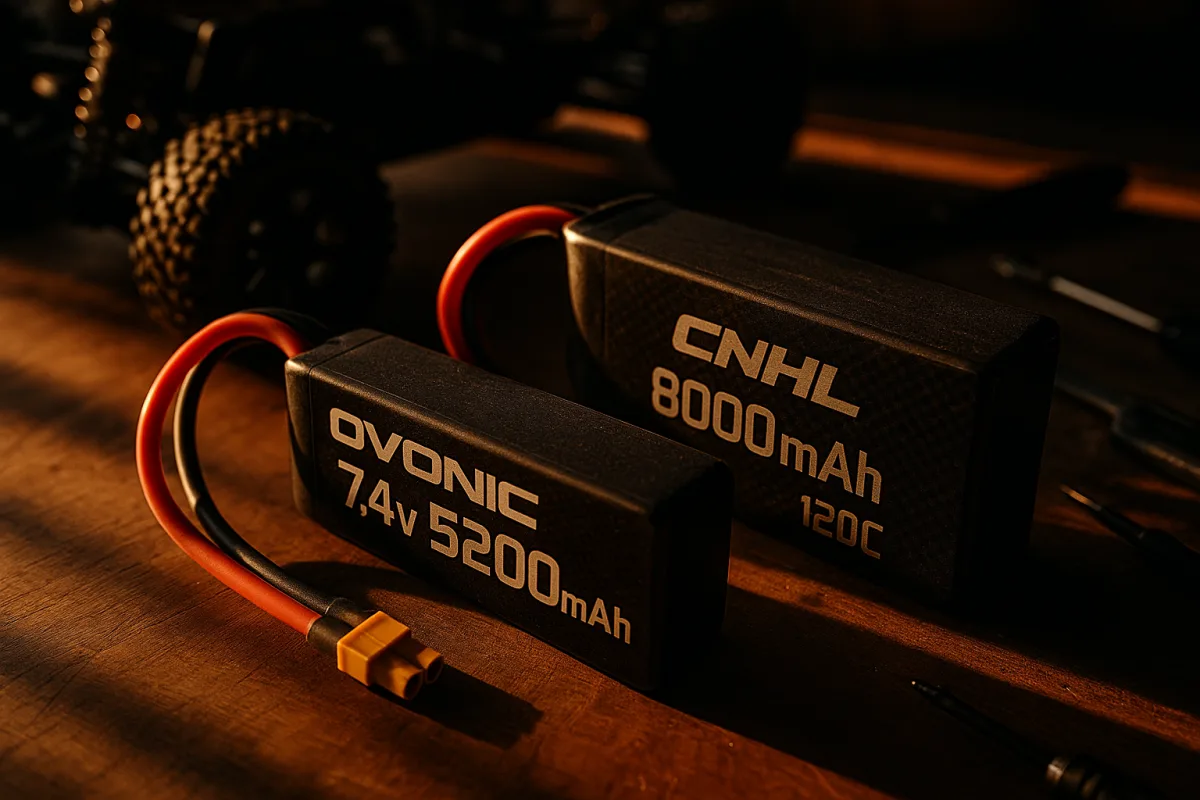
Choosing the Best Batteries for RC Cars: A Head-to-Head Comparison
When it comes to maximizing performance for your RC cars, selecting the right battery is crucial. A battery's voltage, capacity, and discharge rate can significantly affect the handling, speed, and runtime of your vehicle, whether it's a high-flying 1/10 scale buggy or a rugged 1/8 scale truggy. In this article, we'll pit two popular options against each other: the OVONIC 7.4V 5200mAh 100C LiPo Battery and the CNHL 4S 8000mAh 120C LiPo Battery. We'll compare them across several criteria to help you make an informed decision.
Overview of the Batteries
OVONIC 7.4V 5200mAh 100C LiPo Battery (2 Pack)
- Price: $59.99
- Suitability: Ideal for RC enthusiasts seeking high discharge rates for demanding applications, particularly in 1/10 scale vehicles.
- Specifications: This battery features a 100C discharge rate, which is designed to deliver consistent power for high-performance cars. It is a 2S battery, providing 7.4V, which aligns perfectly with the common voltage requirements for many 1/10 scale models.
CNHL 4S 8000mAh 120C LiPo Battery (2 Pack)
- Price: $129.99
- Suitability: Tailored for RC drivers needing high voltage and capacity for larger-scale models, particularly 1/8 scale vehicles.
- Specifications: This battery boasts a 120C discharge rate and comes in a 4S configuration, offering 14.8V. This higher voltage is beneficial for larger and more powerful models, allowing for improved acceleration and top speed.
Performance Criteria
To make an effective comparison, we will evaluate both batteries across the following criteria: Voltage, Capacity, Discharge Rate, Compatibility, and Price.
1. Voltage
In the realm of RC cars, voltage is a primary factor that influences performance. The OVONIC battery, with its 7.4V output, aligns with the voltage requirements for 1/10 scale models. This makes it a solid choice for those racing buggies or touring cars where 2S configurations are standard.
Conversely, the CNHL battery, with a voltage of 14.8V from its 4S configuration, is tailored for larger and more potent 1/8 scale vehicles. This added voltage translates directly into more power and speed, making it an excellent choice for hobbyists who want to push their truggies or monster trucks to the limit.
Verdict: If you're running a 1/10 scale car, the OVONIC is the way to go. For 1/8 scale enthusiasts, the CNHL is better suited.
2. Capacity
Capacity, measured in mAh (milliampere-hours), dictates how long a battery can provide power before needing a recharge. The OVONIC battery has a capacity of 5200mAh, which is adequate for most 1/10 scale applications. It offers decent runtime, especially in competitive racing scenarios.
On the other hand, the CNHL battery boasts a higher capacity of 8000mAh, which provides a longer runtime. This is particularly beneficial for longer race sessions or bashing, where extended periods of power are crucial to avoid frequent pit stops.
Verdict: The CNHL battery takes the lead here with its higher capacity, making it more suitable for longer races or bashing sessions.
3. Discharge Rate
The discharge rate is critical for how quickly a battery can release its stored energy. The OVONIC battery has a discharge rate of 100C, which is excellent for high-performance applications where rapid acceleration and speed are necessary. This makes it a solid choice for racing enthusiasts who need that extra burst of power right off the line.
In comparison, the CNHL battery offers a higher discharge rate of 120C. This means it can deliver even more power on demand, which can be advantageous for larger models that require significant power for acceleration and maintaining speed over rough terrain.
Verdict: The CNHL battery again edges out the OVONIC with its superior discharge rate, making it more suitable for aggressive driving styles.
4. Compatibility
Compatibility is an often-overlooked aspect when choosing batteries for RC cars. The OVONIC 7.4V battery is specifically designed for 1/10 scale vehicles, ensuring that it fits well in terms of both size and connector type. Many popular 1/10 buggies and touring cars can utilize this battery without any modifications.
On the flip side, the CNHL 4S battery is suitable for 1/8 scale vehicles, but it may not be as versatile in the smaller 1/10 scale applications due to its higher voltage and form factor. Using a 4S battery in a vehicle designed for 2S could lead to overheating and potential damage.
Verdict: The OVONIC battery wins here for versatility in the 1/10 scale category, while the CNHL is limited to larger-scale applications.
5. Price
Price is always a consideration, especially for hobbyists looking to maximize their investment in performance. The OVONIC 7.4V battery comes in at $59.99 for a pack of two, which is reasonable for high-performance batteries in the 1/10 scale range.
In contrast, the CNHL 4S battery is priced at $129.99 for a pair, reflecting its higher capacity and discharge rates. While the price may be justified for serious racers or basher enthusiasts, it could be a hefty investment for someone just entering the hobby or racing at a lower level.
Verdict: The OVONIC battery is more budget-friendly for the 1/10 scale crowd, while the CNHL battery's higher price reflects its advanced capabilities for 1/8 scale users.
Conclusion: Which Battery to Choose?
Both the OVONIC 7.4V 5200mAh 100C battery and the CNHL 4S 8000mAh 120C battery have their strengths and weaknesses. If you're racing or bashing with a 1/10 scale vehicle, the OVONIC battery offers solid performance with a good balance of power and runtime at a lower price point. It's an excellent choice for those looking to optimize their setup without breaking the bank.
For those who operate larger 1/8 scale models and require the extra voltage and capacity, the CNHL battery is the clear winner. Its higher discharge rate and capacity provide the necessary power and runtime for serious racing or off-road adventures, justifying its higher price tag.
In the end, the decision comes down to the specific requirements of your RC vehicle and your budget. Each battery suits different needs, and understanding these differences can help you make the most informed choice for your RC adventures.
Frequently Asked Questions
What is the difference between LiPo and NiMH batteries for RC cars?
The article does not provide a direct comparison between LiPo and NiMH batteries. However, it discusses the advantages of LiPo batteries, such as higher discharge rates and better performance for demanding applications, particularly in RC cars.
How does battery capacity affect RC car performance?
Battery capacity, measured in mAh, determines how long a battery can provide power before needing a recharge. A higher capacity allows for longer runtimes, which is particularly beneficial for extended racing sessions or bashing, as seen with the CNHL battery's 8000mAh capacity compared to the OVONIC's 5200mAh.
How does battery voltage affect RC car performance?
Voltage is a primary factor influencing performance in RC cars. The OVONIC battery, with its 7.4V output, is suitable for 1/10 scale models, while the CNHL battery's 14.8V output is tailored for larger 1/8 scale vehicles, providing more power and speed for those models.
Sources
- ProTek RC 2S 150C Low IR Si-G "Stock Spec" LCG Shorty LiPo Battery (7.4V/4800mAh) (ROAR Approved) PTK-5147-26
- ProTek RC Drops 4 New LiPo Battery Packs - RC Driver
- Team EAM 6400mah 150C ULCG ML Graph-X Formula Lipo Battery 2S
- Team EAM multi-layer Graphene LiPo batteries - Circus RC News
- SMC 7600mAh 22.2v 150C G10 6S SC5 LiPo Battery smc76150-6s1psc5 | Mark Twain Hobby Center
- Best LiPo Battery 2026 | Performance Rankings for RC Cars, FPV & Planes, ChinaHobbyLine
- CNHL 5000mAh 3S Lipo Battery 11.1V 30C with traxxas India | Ubuy
- OVONIC 2S LiPo Battery 7.4V 5000mAh 50C Hardcase Deans Plug for 1/10 S, Ampow
- 10 Best RC Car LiPo Batteries of 2026 for Power, Runtime, and Reliable Fit - Sentinel Mission
- RC LiPo Battery Guide: Sizes, Safety & Best Picks (2026) | RC Cars Guide
- Kan ik een accu met een hoger voltage in mijn auto plaatsen?
- RC Battery Storage Voltage Explained, ONYX RC POWER SYSTEMS USA
- How to Choose the Best Remote Control Car Battery: A Complete Buying Guide
- RC Car Batteries | RC Truck Batteries | RC Boat Batteries | Tower Hobbies
- RC Car Batteries | RC Truck Batteries
- RC Car Batteries, Mike's Hobby
- C-Rate Akku-Spezifikation RC Modellbau - RCSKY.de
- RC Model Shop | Best LiPo Battery for RC Car Buyers
- Blog - Why Bigger Batteries Don’t Always Help RC Cars
- Choose the Best Battery for Your RC Car | RC Car Battery Guide
- RC Drift Car Battery Basics - Understanding 1S, 2S, 3S and C-Ratings | RC Drift Parts Upgrade Guides
- 10 RC LiPo Battery Mistakes You Want to Avoid - RChobby Lab
- Temperature effects on batteries - Himax
- Does a Temperature Drop Affect RC Performance?
- FAQ - Intercel
- Lithium Batteries at Extreme Temperatures: Cold, Heat & Ageing | Hellpower Energy
- How does temperature affect battery performance? | Rotronics
- RC Car Scales Explained: A Guide to 1/10, 1/8, 1/6, and 1/5, ChinaHobbyLine
- RC Car Scales Explained, 1:8, 1:10, 1:12, 1:18, 1:24 | RCUK
- Zeee 7.4V 5200mAh 50C LiPo Battery (2 Pack)
- HOOVO 2S 7200mAh 100C LiPo Battery (2 Pack)
- CNHL 4S 8000mAh 120C LiPo Battery (2 Pack)
Related Articles
Best RC Car for Off Road: ARRMA Granite vs Traxxas Slash
Compare the best RC car for off road use: ARRMA Granite vs Traxxas Slash. Get expert advice on terrain fit, battery, and maintenance.
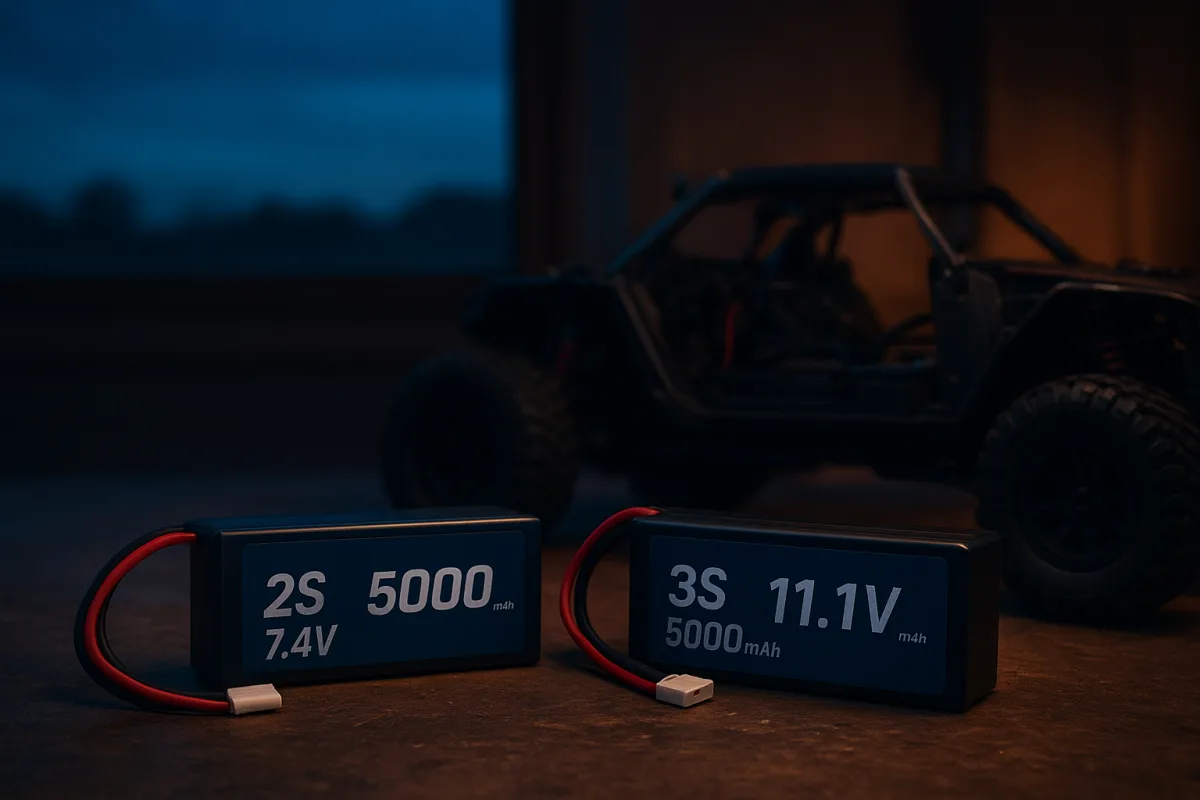
2S vs 3S RC Car Batteries: Which Offers Longer Runtime?
Compare 2S and 3S RC car batteries to learn which provides longer runtime and better performance for your vehicle's needs.
Best RC Car for Winter Conditions: Top Picks and Setup Tips
Discover the best RC car for winter conditions with top models, tire advice, battery care, and setup tips for snow and cold weather driving.

Beginner RC Car Comparison Under 200: Crawler vs Off-Road
Compare beginner RC cars under 200 to find the best crawler or 4WD off-road model with setup and tuning tips for new drivers.