
Best RC Car Type for Beginners: Choosing the Right Model
Discover the best RC car type for beginners, including scale, chassis, motor, and battery choices to fit your terrain and skill level.
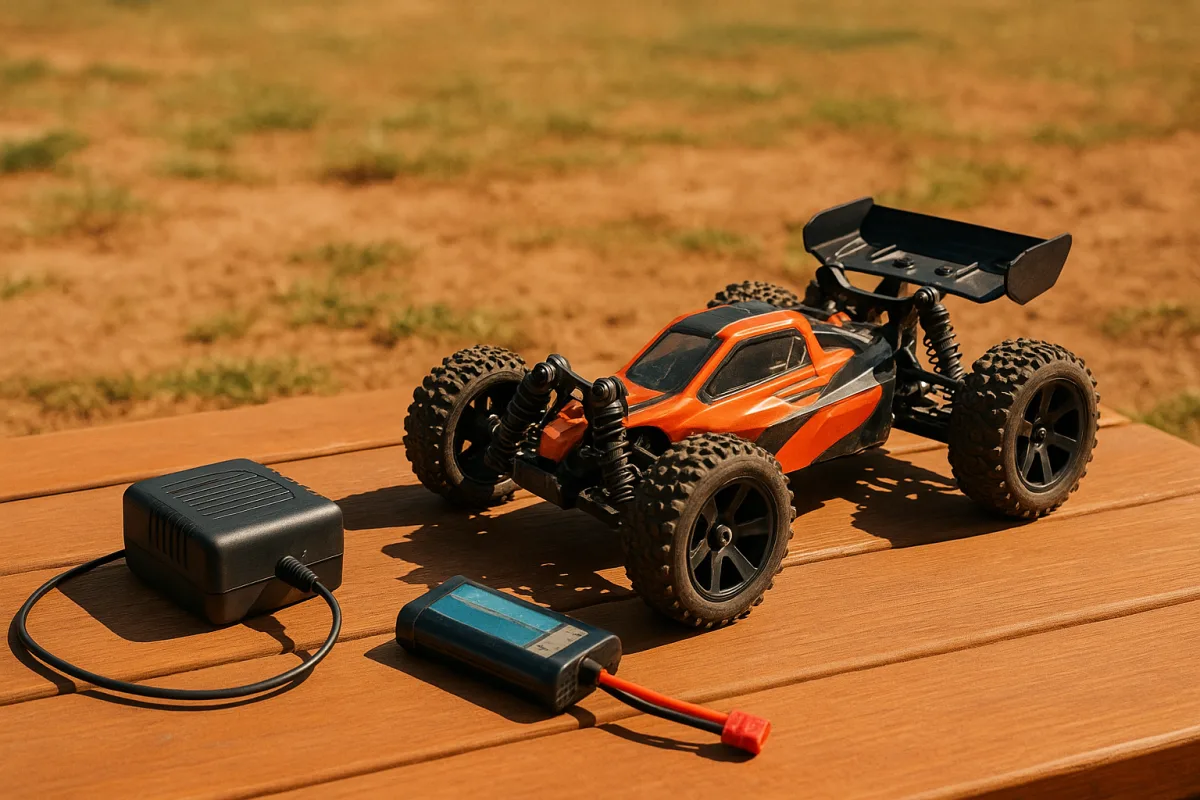
The best beginner RC car is the one that fits its operating envelope
The most useful way to choose a first RC car is not by advertised top speed or brand badge. It is by its operating envelope: the combination of surface, available space, car scale, tire type, power system and driver control.
That sounds more technical than it is. In practical terms, ask one question before shopping: where will this car spend 90 percent of its time running? Get that answer right, and the usual beginner recommendation, a 1/10 electric RTR, starts to make sense.
Get it wrong, and even an expensive model becomes frustrating. A fast on-road car driven through lawn will overheat, drag its chassis and shred its tires. A tall monster truck run only on smooth tennis-court asphalt can feel vague and prone to rolling.
As somebody who thinks in pin tires, ride height and gear ratios, I would still tell a first-time owner not to begin with setup sheets. The first handling adjustment is choosing the correct type of car for the place where it will run.
Why 1/10 scale is usually the sensible middle ground
Scale describes the model’s size relative to a full-size vehicle. A 1/10-scale RC car is roughly one tenth the size of the real vehicle it represents, although RC categories vary enough that two 1/10 models can look quite different.
A 1/10 buggy sits low and narrow, with smaller wheels and a focused off-road layout. A 1/10 monster truck has larger tires, more ground clearance and a taller body. Both are nominally 1/10 scale, but they suit different terrain.
The reason 1/10 keeps appearing in beginner guidance is not that it is magically easier to drive. It is a compromise size: large enough to cross loose dirt and short grass, yet small enough to carry in a car and run in ordinary parks. [1][10]
It also sits in the mainstream electric RC market. That matters more than beginners sometimes realise. Tires wear out, body clips disappear, suspension arms break in crashes, and batteries eventually age. A car with available parts remains a usable hobby purchase.
The research brief identifies 1/10 electric RTR models as the dominant beginner category, generally priced from $100 to $400. [1][7][11] That range is broad because it covers basic brushed vehicles through better-equipped brushless models, not because every $100 car is equivalent.
A lower sticker price can mean a smaller battery, a basic charger or fewer included accessories. Before buying, check the box contents. An RTR usually means the vehicle is assembled, but batteries and a charger are not guaranteed in every package. [11][12]
That is why RTR is the right default, rather than an absolute rule. An RTR gets a beginner driving quickly and avoids making differential oil, slipper clutch adjustment and assembly accuracy into barriers before the first battery pack.
A kit is still a valid choice for someone who specifically wants the build process. Building teaches what a hinge pin, shock shaft and gear mesh do. But it also adds tools, electronics decisions and setup variables, which are costs and complications beyond the kit price.
Match the chassis to the surface, not the marketing speed
For mixed outdoor ground, a 1/10 off-road vehicle is the practical beginner type. A buggy is best where the surface is mostly packed dirt, gravel, hard grass or a prepared RC track. It has a lower centre of gravity than a monster truck.
That lower stance matters in corners. When you steer, lateral grip at the tires creates a force that transfers weight toward the outside wheels. The taller the chassis and softer the grip, the more readily the vehicle rolls rather than turns.
A stadium truck splits the difference. It has more tire volume and clearance than a buggy, but usually feels less top-heavy than a monster truck. It is a reasonable answer for a rough garden, hard-packed park or casual bashing area.
A monster truck is the better fit if the ground genuinely is lumpy, grassy or scattered with roots and loose stones. The larger tires help it climb over obstacles. The trade-off is less precision on smooth surfaces and more chance of traction rolls.
For pavement, a 1/10 on-road car makes more sense than an off-road truck. Its lower ride height, road tires and lower centre of gravity make steering responses cleaner on smooth tarmac. It is not the right tool for tall grass.
Small indoor spaces reverse the recommendation. The research brief points to 1/24 through 1/16 scales for indoor use, particularly on-road cars. [10] A 1/10 vehicle needs more run-off room than many living rooms, driveways and small courtyards provide.
The MJX HYPER GO H16H V3 is one specific 1/16-scale model named in the supplied research. Its listed GPS-module feature may appeal to buyers wanting advanced electronic assistance, but the brief says the value of such features for beginners is contested. [4]
No price for the MJX HYPER GO H16H V3 is provided in the research brief, so it would be dishonest to quote one here. It suits a buyer with a smaller running area who specifically values its compact 1/16 scale and available GPS feature. [4]
The WLtoys 124019 is another named option, listed by RC-Richtercars as a brushed model capable of up to 60 km/h. [2] Again, the supplied material gives no price, so it cannot be placed honestly within a price comparison.
That claimed 60 km/h figure is exactly why top speed should not choose the first car. It may suit an experienced driver with a large, clear running area, but it is too much speed to learn basic steering and braking in a small space. [2]
Speed is determined by more than the motor label. Battery voltage, gearing, tire diameter, vehicle weight and surface all affect it. A car that is controllable on dusty dirt may become much quicker, and harder to stop, on high-grip asphalt.
Electric power is the beginner-friendly choice
Electric RC cars are generally the better first purchase than nitro models. They are quieter, cleaner and require less routine mechanical attention, which means the beginner can focus on driving rather than fuel tuning and engine maintenance. [12][13]
That does not mean every electric power system is the same. The basic divide is brushed versus brushless. A brushed motor uses physical brushes to pass electrical current to its rotating armature. Those contact surfaces wear, creating heat and requiring eventual replacement.
Brushed power remains a sensible entry point because it is cheaper and easier to understand. It generally produces less speed than a brushless system, which can be useful when the driver is still learning throttle discipline and steering timing. [3][5]
Brushless motors use electronic switching rather than brushes rubbing on a commutator. Their advantages include greater efficiency, more performance potential and no brush wear. The brief notes that some sources consider them a better long-term beginner option, especially for racing-minded buyers. [3]
That argument is fair, provided the buyer understands what they are paying for. A brushless model is not automatically easier to control. It may offer smoother usable throttle, but it can also have much more available acceleration than a novice needs.
If the goal is relaxed park driving and learning basic maintenance, brushed power is enough. If the goal is entering club racing, keeping the car for years or avoiding a later motor-system replacement, a modest brushless RTR can be a rational first buy.
The expensive upgrade is still not always the answer. A car that darts, flips or will not drive straight may have a loose wheel nut, damaged tire, bent steering link or poor surface match. More motor merely makes those problems happen faster.
Battery choice changes the real cost and routine
Battery type is part of the operating envelope because it controls vehicle weight, runtime, charging procedure and the amount of attention required after driving. The common starter choices are nickel-metal hydride, or NiMH, and lithium polymer, or LiPo. [8][14]
NiMH packs are heavier and slower to charge than LiPos, but they are comparatively straightforward for a newcomer. They are a defensible choice for the buyer who wants to charge, drive and pack the car away without learning a detailed battery routine. [8][14]
LiPo packs are lighter and can offer stronger performance, longer runtime and faster charging, depending on the pack and charger. [8][9][14] They also require more careful handling: use a suitable charger, follow the pack instructions and do not treat damaged packs casually.
Battery labels explain why two otherwise similar cars can feel different. Voltage affects motor speed potential. Capacity, measured in milliamp-hours or mAh, indicates how much charge a pack stores. More mAh can mean longer runtime, although vehicle load changes the result. [8][9]
C-rating describes a LiPo battery’s discharge capability. A higher C number indicates that the pack is specified to deliver current more readily. It does not guarantee a faster car by itself, because the motor, speed controller, gearing and traction determine the actual outcome.
For a first car, avoid buying battery specifications as if they are performance trophies. Buy the battery system the vehicle is designed to use, confirm that the included or planned charger supports it, and budget for safe charging equipment where LiPo is involved. [14]
A practical first-car shortlist by use
For the widest range of outdoor beginner use, choose a 1/10 electric RTR off-road buggy or stadium truck in the established $100 to $400 beginner bracket. [1][7] It suits hard dirt, gravel, short grass and open parks better than a road car.
For rougher lawns and uneven ground, choose a 1/10 electric RTR monster truck. Its clearance and tires suit that environment, but keep expectations realistic: it will be less precise on pavement and may roll more readily than a lower buggy.
For smooth driveways, car parks and other clean tarmac, choose a 1/10 electric RTR on-road car. It suits controlled steering practice and pavement use, but its low chassis makes it a poor purchase for a garden or rough park.
For indoor or very tight outdoor areas, choose a 1/24 to 1/16 electric car, such as the 1/16 MJX HYPER GO H16H V3 if its compact size and GPS module match the buyer’s priorities. [4][10]
For the buyer tempted by the WLtoys 124019, treat its quoted 60 km/h potential as a reason to secure a large, clear area and develop control gradually, not as the reason to buy it. [2] Its brushed specification does not automatically make that speed beginner-friendly.
The best first RC car, then, is usually not the fastest one or the most upgraded one. It is the electric RTR whose scale, chassis height, tires, motor system and battery routine fit the space where it will actually be driven.
Frequently Asked Questions
What type of RC car is best for beginners?
For most new drivers, a 1/10-scale electric ready-to-run (RTR) off-road car is recommended. This type balances manageable size, outdoor capability, durability, and parts availability, making it a practical and accessible starting point.
Which RC car scale is ideal for new drivers?
The 1/10 scale is usually the sensible middle ground for beginners. It is large enough to handle loose dirt and short grass yet small enough to transport easily and run in common outdoor spaces like parks.
Should beginners choose on-road or off-road RC cars?
Beginners should choose the car type based on the terrain where they will mostly drive. A low on-road chassis suits smooth pavement, while off-road buggies, stadium trucks, or monster trucks are better for grass, dirt, and rough surfaces.
What motor and battery types are best for beginner RC cars?
Brushed motors paired with NiMH batteries are simpler and more affordable for beginners. However, brushless motors with LiPo batteries offer better throttle control and longer-term performance but require more careful battery maintenance.
How to match RC car type to terrain for beginners?
Select the chassis type according to the surface: buggies are best for packed dirt, gravel, and hard grass, stadium trucks offer a middle ground with more tire volume and clearance, and monster trucks suit rougher terrain. Matching the car to the terrain improves handling and reduces frustration.
How we researched this
This article was assembled from 15 cited references.
Nothing here is based on hands-on testing. Where a figure or finding appears, it belongs to the source cited beside it, and the writing says so rather than implying otherwise. Every source is listed below so you can check it.
Sources
- Best RC Cars for Beginners (2026) — Top Picks Compared | RC Car Compare
- RC-Cars WLtoys 124019 - Brushed - 60 km/h - ferngesteuerte Autos
- Best Beginner RC Car 2026: 4WD, Brushless & Budget Picks Tested – FUNYAT
- MJX HYPER GO H16H V3 Upgraded 1/16 RC Car GPS Module | Dronesset
- Best rc cars for beginners: top picks for easy control
- Best RC Car Brands For Beginners: Traxxas, ARRMA, Axial And More
- Best RC Cars for Beginners in 2026 | Speed World Raceway | Speed World Raceway
- RC Car Batteries Explained — Li-ion, NiMH, AA, mAh and Run Time
- How Long Will My RC Battery Last? Runtime, Charging, and Care – RaceNRCs
- RC Car Sizes Explained: Guide to 1/8, 1/10, 1/16, 1/18, 1/24 Scales | VRX Racing
- Beginner RC Car Basics. What you are actually buying.
- Choosing Your First RC Car: A Quick-Start Guide
- Best RC Cars for Beginners: What to Buy First
- How Long to Charge RC Car Battery: Complete Timing Guide for NiMH, LiPo & Li-ion Batteries | EuroRC.com
- RC Model Shop | Best RC Car for Beginners: What to Buy
Related Articles
Beginner RC Car Comparison Under 200: Crawler vs Off-Road
Compare beginner RC cars under 200 to find the best crawler or 4WD off-road model with setup and tuning tips for new drivers.
Common RC Car Motor Mistakes: KV, Battery & Setup Tips
Learn common RC car motor mistakes including KV misunderstandings, battery matching, and setup tips to avoid overheating and poor performance.
RC Car Kit Selection Guide for Beginners
Explore our RC car kit selection guide to learn how to choose the right scale and components for your first rc car.
Upgrade RC Car Speed Controller: How to Choose and Install
Learn how to upgrade your RC car speed controller with tips on matching ESC to motor, battery, and calibration for better performance.