
Prepare RC Car for Rainy Conditions
Learn how to prepare your RC car for rainy conditions with waterproofing tips, battery safety, tire choice, and post-run maintenance.
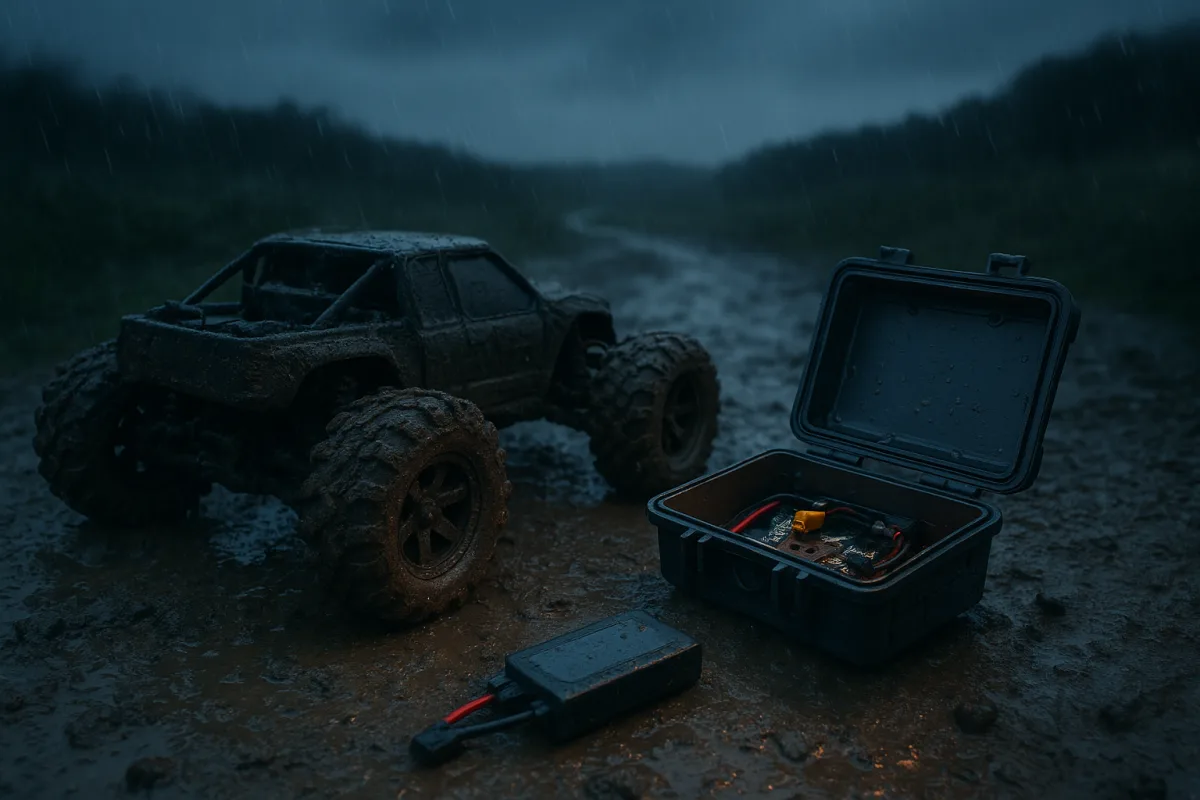
Start by deciding whether the conditions are actually runnable
The first rainy-day problem happens before the car touches the ground. Light drizzle is one thing. Deep puddles, flowing water and mud holes that reach the electronics tray are another, and the sensible call is to avoid deep water regardless of how much sealing you have done. [10]
That matters most with electric cars because water does not need to submerge the chassis to cause trouble. Spray enters through wire exits, receiver-box lids, servo splines, cooling fans and battery-compartment gaps. “Waterproof” electronics improve your margin, but they do not turn a 1/10 buggy or 1/8 truggy into a sealed boat.
For a club race held in damp conditions, I would prepare for splash, wet grass and roost first. For repeated running in heavy rain, especially in a tropical climate, the research supports increasing both the level of sealing and the frequency of maintenance, rather than assuming one quick waterproofing trick will cover everything. [10]
Seal the receiver and ESC before chasing upgrades
The receiver is the first item I would protect because a wet receiver can end a run immediately. EuroRC lists electrical tape wrapping as basic splash protection, while its balloon method puts a low-cost temporary barrier around the receiver or ESC. [11]
A balloon is useful for a short wet session, but it is not a long-term enclosure. It can trap moisture, tear around wire exits and does not make an open chassis suitable for sustained rain. Use it as an extra layer, not as the whole waterproofing plan. [11]
For a more durable prep job, seal openings in the electronics housing and apply a suitable rubber paint or conformal coating to electronics where appropriate. EuroRC recommends coating after openings are sealed, which is the right order because a coating cannot solve water entering through a loose lid or cable port. [11]
RC Visions also recommends silicone sealant for gaps in housings and battery compartments. Apply it sparingly around removable covers and wire entries, leaving yourself a practical route back inside for service. A receiver box sealed permanently is not a maintenance win if condensation or dirt gets trapped inside. [2]
Liquid electrical tape is another targeted option for wire joints and solder points. It is not a substitute for good soldering or heat-shrink, but it adds protection where bare metal and wet grime could bridge a connection. [2]
Before closing the chassis, check the ESC fan and switch arrangement. The supplied research does not establish a standard fan-waterproofing method, so do not assume an exposed cooling fan is rain-safe merely because the ESC case is labelled waterproof.
Protect connectors, servos and metal hardware
Once the electronics box is handled, the next likely failure points are connectors and servo seals. Goodies RC recommends dielectric grease inside electrical connectors to displace water and reduce corrosion. Use a light coating on the connector interface, not a blob that prevents the plug fully seating. [1]
This is especially worthwhile on a 1/10 trail truck or crawler where the battery connector sits low and sees mud spray. On a 1/8 truggy, the same practice matters, but the bigger chassis usually throws considerably more water into the radio tray and around the steering servo.
EuroRC recommends waterproof grease on servo gears, seals and the O-ring around the servo shaft. That is a service job, not an excuse to pack every part of the servo solid with grease. The point is preserving the sealing surfaces and keeping moisture away from gears. [11]
Bearings deserve attention before the run, not only after they feel gritty. EuroRC recommends liquid oils, marine grease or glue on metal parts and bearings to reduce corrosion, while RC Visions similarly identifies grease and sealing work as part of wet-condition preparation. [2][11]
Do not glue a bearing into a hub just to make it rain-ready. That makes later inspection and replacement harder. A light protective lubricant is the practical move, followed by post-run checking for roughness.
Treat the battery as the main safety item
Battery protection is where “it will probably be fine” becomes expensive and potentially dangerous. LiPo packs are not waterproof, and moisture exposure creates a short-circuit and fire risk. A pack exposed to water should be retired rather than dried out and put back into service. [6]
Use a properly sealed battery compartment or waterproof enclosure, but inspect the pack after every wet run anyway. Look for wet leads, damaged shrink wrap, swollen cells, contaminated connector contacts or a compartment that has taken on water. The enclosure buys protection, not immunity. [6]
NiMH packs are generally more robust than LiPo packs in wet use, but they remain vulnerable to moisture damage. That makes NiMH less demanding from a safety standpoint, not waterproof. Dry the pack and contacts, then inspect them before charging. [6]
As soon as the car stops, disconnect the battery. RCCarCalc’s post-run checklist also calls for storing LiPos at about 3.8V per cell storage voltage, so do not leave a wet race pack connected in the chassis while you deal with mud. [5]
There is no clear research-backed answer that says one battery chemistry is universally best for rain. The safer answer is to use whichever pack your class and chassis require, then protect it from water and take any moisture exposure seriously.
Choose a motor and gearing that will not surprise you
The motor decision is more specific than “brushless is waterproof.” Sensorless brushless systems are the safer general choice for wet running because sensored systems have sensor components and wiring that are more vulnerable to water damage. [7]
That does not mean every sensorless motor is sealed, or that a sensored motor can never run in damp conditions. The available guidance is limited, and there is no standard, detailed motor-waterproofing procedure supported by the research brief. Inspect motor bearings and connections after wet use. [7]
If you use a sensorless setup in a 1/10 buggy, 1/10 short-course truck or 1/8 truggy, gear it conservatively for the surface. Radio Control Tips recommends lower gear ratios for more torque and control in slippery conditions. [8]
In practical pit-table language, go down in pinion size or otherwise lower the final drive ratio rather than fitting a hotter motor. A slippery track cannot use sharp wheel-speed delivery. Better throttle control is usually worth more than trying to regain dry-track top speed.
Do not read that as a universal pinion-size prescription. A safe change depends on motor kV, battery voltage, tire diameter, vehicle weight and the transmission ratio. The source supports the direction of the adjustment, lower gearing for control, not a particular tooth count. [8]
Put the correct tire under the correct class of car
Wet traction starts with tread clearance and compound. The established recommendation is aggressive tread with a soft, sticky compound, helping the tire find mechanical grip rather than skating on water and mud. That is useful advice, but it must match the scale and surface. [3]
The INJORA Swamp Claw 1.0-inch M/T tire is listed in 56 x 23 mm and 64 x 24 mm sizes, with an S5 super-soft compound. It suits small 1.0-inch-wheel crawler and scale-trail applications where mud traction matters, not a 1/10 competition buggy. The supplied brief gives no current price.
The INJORA Mud Paw 1.0-inch M/T tire uses directional tread and deep siping. That makes it another small crawler or trail-rig option for soft, loose terrain, where its directional pattern can clear material and find edges. No current price is supplied in the research brief.
The MEUS Racing Mpro Pin 1.0-inch tire is offered with three pin types and friction stripes. It belongs in the same 1.0-inch crawler-scale conversation, with the pin choice allowing surface-specific tuning. The research brief does not provide a price, so I will not invent one.
The TZO Tires C2 Front Racing Tire is a 2.2-inch buggy tire designed around a precision pin layout for carpet and turf. RC Car Action identifies it as an off-road carpet tire, so it may suit damp turf depending on conditions, but it is not the obvious answer for standing-water mud. [3]
That distinction saves money. A 1.0-inch crawler tire cannot be a sensible fit for a 1/10 2WD buggy, and a 2.2-inch buggy tire is not a substitute for a small trail truck’s crawler tire. Most wet-weather traction gains come from appropriate compound, tread and setup, not an expensive random tire purchase.
Make the first maintenance move immediately after the run
The moment the run ends, unplug the battery and keep the car out of a sealed pit bag. RC Paddock recommends using compressed air to remove water from the chassis, suspension and electronics, which is the quickest way to get water out of hinge-pin pockets and awkward chassis braces. [4]
Use controlled compressed air rather than blasting dirt deeper into bearings or under receiver-box seals. Work from the top down, then rotate the wheels and suspension so trapped water can escape from arms, hubs and shock towers.
Open electronics compartments so they can dry thoroughly. RCCrashCrew’s maintenance guidance, reflected in the research brief, calls for drying in a warm, ventilated area for several hours and avoiding sealed containers that hold moisture against the car. [1]
Once dry, inspect connectors and renew dielectric grease where water has washed it away. Check screws and the chassis for looseness or cracks, because a wet impact can hide damage under mud until the next run. [1][4]
Inspect bearings and shocks before the next battery
A wet chassis can look clean after a rinse while the bearings are already starting to corrode. RCCarCalc recommends cleaning and re-oiling bearings, then replacing any that feel rough. Do this wheel by wheel rather than waiting for a seized bearing to eat a hub or drivetrain part. [5]
Finally, inspect shocks for leaks. RC Paddock specifically includes shock checks in post-run maintenance, and wet dirt around a shaft can damage seals quickly. If a shock is leaking, rebuild it rather than masking the handling problem with thicker oil or preload. [4]
That is the rainy-day routine I would prioritize: keep water out where possible, keep LiPos safe, reduce gearing for control, fit tires appropriate to the actual class, then clean and inspect before corrosion turns one wet afternoon into a full parts order.
Frequently Asked Questions
How do I waterproof my RC car for rainy weather?
Waterproofing an RC car involves layered protection: first, seal all openings in the electronics housing using silicone sealant or rubber paint after ensuring lids and cable ports are secure. Temporary methods like wrapping receivers with electrical tape or enclosing them in balloons can help for brief exposure but are not sufficient for sustained rain. Applying conformal coatings to electronics and using liquid electrical tape on wire joints adds further protection. Avoid deep water that can submerge the electronics tray regardless of waterproofing.
What steps should I take to protect RC car electronics in the rain?
Start by sealing the receiver and ESC compartments with silicone sealant and applying conformal coatings to exposed electronics. Use dielectric grease inside electrical connectors to prevent water ingress and corrosion, and apply waterproof grease on servo gears and seals. Check for exposed cooling fans or switches, as these may not be waterproof despite the ESC casing. After running in wet conditions, disconnect the battery immediately to reduce short-circuit risks.
How can I maintain my RC car after running it in wet conditions?
After a wet run, blow water out of all compartments, open sealed areas to inspect and dry electronics and mechanical parts thoroughly with moving air before storage. Check bearings and shocks for moisture and dirt, clean and re-lubricate as necessary. Disconnect batteries promptly, especially LiPo packs, to avoid moisture-induced short circuits or fire hazards.
What tires and gear ratios work best for RC cars in the rain?
Use tires matched to the surface rather than generic “wet weather” tires. Soft, aggressive tread patterns like those on crawler tires help in mud, while 2.2-inch buggy carpet tires suit carpet or turf but not puddled dirt. On slippery ground, lower the overall gear ratio to reduce torque delivery, preventing instant traction loss and improving control.
Is it safe to run LiPo batteries in wet conditions and how to protect them?
LiPo batteries are vulnerable to moisture and pose a fire risk if short-circuited by water exposure. It is crucial to disconnect the battery as soon as the run ends to minimize this risk. Use sealed battery compartments with silicone sealant and avoid submerging the battery in water. There is no clear consensus on battery type safety in wet conditions, so caution and protective measures are essential.
How we researched this
This article was assembled from 11 cited references.
Nothing here is based on hands-on testing. Where a figure or finding appears, it belongs to the source cited beside it, and the writing says so rather than implying otherwise. Every source is listed below so you can check it.
Sources
- How to Waterproof an RC Car: Practical Methods, Materials, and Pitfalls to Avoid -
- RC Car Waterproofing 101: Safe, Tested, and Effective Methods
- TZO Tires C2 Front & Rear 2.2" Buggy Off-Road Carpet Tires - RC Car Action
- RC car maintenance after every run · RC Paddock
- RC Car Maintenance Checklist After Every Run | RCCarCalc
- RC Basics: Batteries, Motors, ESCs, Servos & Radios
- Brushless Motors the Truth About Waterproof - Sensorless Sensored - RCexplained
- How to make your RC Car Faster – Radio Control Tips
- How to Waterproof an RC Car for Mud and Snow – FMS Hobby
- Can You Drive an RC Car in the Rain? · Remote Control Cars Blog
- How to Waterproof RC Cars: 5 Methods + Maintenance Guide | EuroRC.com
Related Articles
Best RC Car for Winter Conditions: Top Picks and Setup Tips
Discover the best RC car for winter conditions with top models, tire advice, battery care, and setup tips for snow and cold weather driving.
Best RC Car Type for Beginners: Choosing the Right Model
Discover the best RC car type for beginners, including scale, chassis, motor, and battery choices to fit your terrain and skill level.
RC Car Winter Storage Maintenance Checklist and Tips
Learn a detailed RC car winter storage maintenance checklist to clean, dry, oil, and prepare your car and batteries for off-season protection.
RC Car Parts Compatibility Guide
Learn how to ensure RC car parts compatibility for chassis, electronics, batteries, wheels, and hardware with this detailed compatibility guide.