
RC Car Battery Troubleshooting
Learn RC car battery troubleshooting steps to identify, test, and fix common battery problems for better performance and longer runtime.
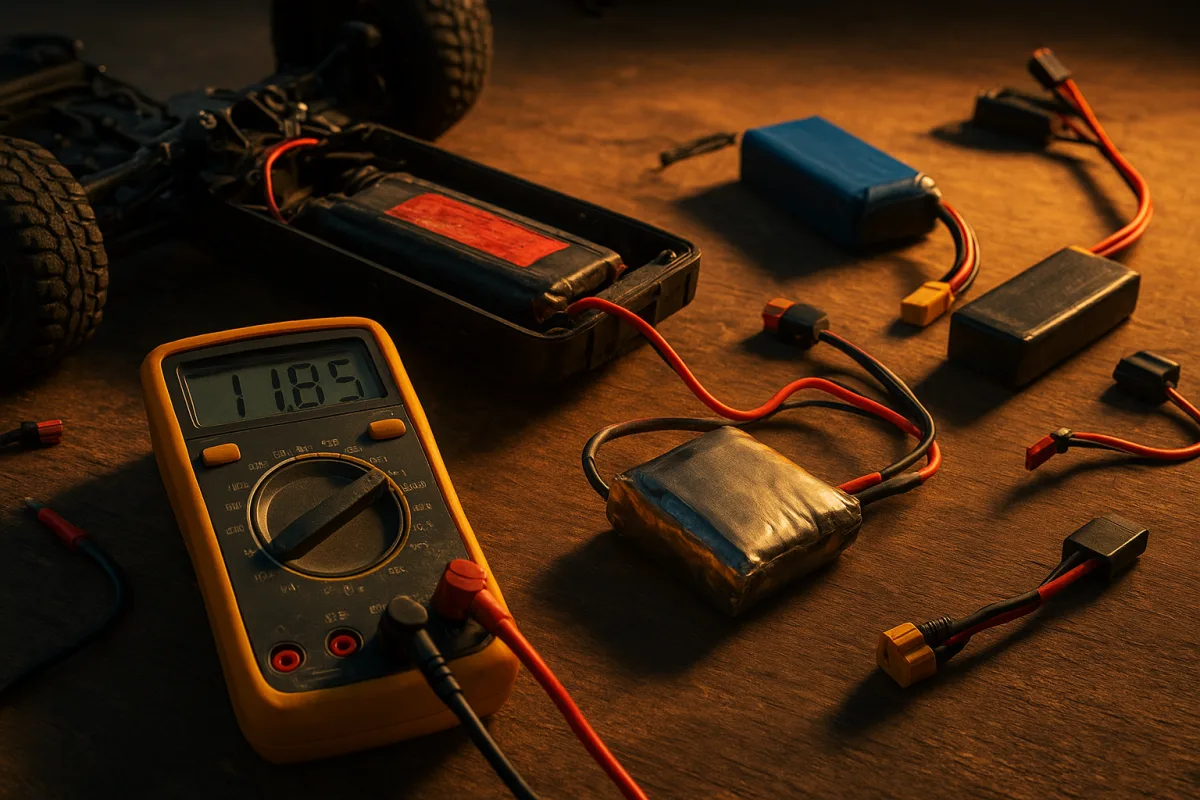
Inspect the pack before plugging it in
A puffy hard-case LiPo, a split shrink wrap, or green corrosion around a connector is enough reason to stop before the next run. Look over the pack, main leads, balance lead, connector housing, and solder joints under good light.
Swelling, leakage, excessive heat, corrosion, and damaged wiring are battery-fault signs, not cosmetic wear. A swollen LiPo must be retired immediately, and a pack that has become hot or visibly distorted should not go back on the charger. [1]
Check whether the battery moves in its tray, too. A pack that slides around can pull on its wires or repeatedly stress the connector, creating an intermittent power loss that feels like an ESC or receiver problem.
Identify the power-loss pattern
Write down what the car does before changing parts. A runtime that used to be 20 minutes and has fallen to eight or 10 minutes points toward degradation, especially when it comes with weak acceleration or inconsistent charging. [1]
A healthy RC car can slow gradually as a pack empties. A suspect pack often feels punchy for a few minutes, then falls flat under throttle, cuts out unexpectedly, or recovers briefly after you lift off.
Normal runtime varies widely, roughly 15 to 40 minutes, because capacity, battery chemistry, driving conditions, and vehicle setup all affect it. [4] Compare a pack with its own previous runs in the same car, not with somebody else’s 1/8 basher or 1/10 race buggy.
Check the transmitter batteries
A car that glitches, loses control range, or seems to cut power may have a radio problem instead of a drive-battery problem. Check the transmitter’s battery level before you condemn the main pack. [10]
Low transmitter batteries can weaken the control signal and produce behavior that resembles a dying vehicle battery. If steering or throttle response comes and goes with signal range, start at the transmitter and radio system before replacing LiPos. [10]
This is a cheap check, and it prevents a frustrating chain of unnecessary purchases. We would change weak transmitter cells first, then repeat the same run with the drive battery you were blaming.
Read the total pack voltage
Use a digital multimeter to measure the battery’s total voltage before and after charging. A 2S LiPo is nominally 7.4V and reaches 8.4V fully charged, while a 3S LiPo is nominally 11.1V and reaches 12.6V fully charged. [1]
For LiPo cells, 3.7V is nominal voltage, 4.2V is full charge, and roughly 3.8 to 3.85V per cell is storage voltage. A low warning around 3.5V per cell gives you time to stop, while below 3.0V per cell is unsafe. [1]
Do not compare a LiPo figure with a NiMH figure and assume the packs are interchangeable. NiMH cells are nominally 1.2V, charge to roughly 1.4 to 1.45V, and reach a low point near 1.0V per cell under load. [1]
LiFePO4 packs use another voltage range: 3.2V nominal, 3.6V full, around 3.2V for storage, and 2.5V as a low warning. SkyRC lists below 2.0V per cell as unsafe. [11] Follow your battery manufacturer’s documentation if it specifies different limits.
Measure each LiPo cell through the balance lead
A pack can show the correct total voltage while one cell is weak. Plug a cell checker or multimeter into the balance connector and record each cell voltage separately after the car has rested.
LiPo cells should be balanced within 0.03 to 0.05V of one another. [1] A larger gap points to imbalance, which can trigger charger errors, shorten runs, and cause the ESC to hit low-voltage protection early.
Do not keep forcing a pack through normal charge cycles when its cells repeatedly drift apart. Use a balance charger for multi-cell LiPos, then check whether the same cell remains low after charging and after a run. [5]
Watch the voltage when the motor loads the pack
Resting voltage tells you charge state, but throttle exposes internal resistance. A tired pack may read close to full on the bench, then lose voltage sharply as soon as the motor asks for current.
Use a wattmeter or inline ammeter to monitor voltage drop under load. A significant drop suggests a weak battery or high internal resistance, though excessive drivetrain load can create the same symptom. [3]
This is where many diagnoses go wrong. If the car has normal motor sound but weak acceleration, or if it bogs hard only on throttle, test under load before ordering a higher-capacity or higher-discharge replacement pack. [1][3]
Test capacity at a controlled discharge rate
A capacity test answers a different question from a voltage test: how much energy the pack can actually deliver. Use a battery capacity tester and discharge at a constant current, such as 1C, to estimate delivered capacity in mAh. [2]
Compare the result with the pack’s labeled capacity and with earlier tests from that same battery. Falling delivered capacity, reduced runtime, and voltage sag together make a much stronger case for replacement than one disappointing run.
Lithium-ion batteries commonly reach roughly 300 to 500 charge cycles before capacity falls to around 70 percent. [4] Cycle count alone is not a verdict, because heat, storage state, charging practice, and load also affect how quickly performance declines.
Check internal resistance
A battery analyzer can measure internal resistance, which rises as cells age or suffer damage. Increased resistance explains the familiar problem where the pack charges normally but cannot hold voltage once the car accelerates. [1]
Use internal-resistance readings as a comparison tool between cells in one pack and among packs you already own. One cell that reads much worse than its neighbors deserves attention, especially if the same pack also balances poorly.
We would not replace a pack solely because one number looks unfamiliar. The convincing pattern is higher resistance combined with shorter runtime, load sag, charging irregularities, or one cell persistently outside the 0.03 to 0.05V balance window. [1]
Inspect the connector and main wiring
Look closely at XT60, Deans, EC3, or whichever plug your vehicle uses. Check for loose terminals, darkened plastic, worn contacts, corrosion, broken strands near solder joints, and wires that flex sharply at the pack exit. [1]
A high-resistance connector can make a sound battery feel weak because it limits current and creates voltage drop under load. Corroded or loose wiring can also cause power to cut in and out over bumps.
Reconnect the pack firmly and make sure the plugs fully engage. If the fault changes when you move a wire or connector, repair that connection before blaming the cells or buying a new ESC.
Spin the drivetrain before blaming the battery
With the car switched off, check for mechanical resistance in the drivetrain. Drivetrain drag increases the load on the battery and can make runtime collapse even though the pack itself remains healthy. [1]
Motor wear can produce similar symptoms, including reduced speed and weak acceleration. [1] If the power system feels lazy but the battery voltages and balance readings look normal, inspect the motor and drivetrain before increasing battery capacity.
Do this before fitting an expensive pack. We would fix binding, wear, or excess load first, because a new battery only masks the cause until it too runs hot and delivers disappointing runtime.
Check for ESC protection behavior
An ESC can reduce or interrupt power when it sees low voltage or excessive temperature. That protection can look exactly like a failing pack, particularly when the car runs normally for a short period and then abruptly slows. [9]
Record whether the problem appears only after several hard minutes, only on full throttle, or immediately after connecting a freshly charged pack. Those details help separate a low-voltage event from a heat-related protection response.
Check the pack voltage after the cutoff and inspect the battery temperature and condition. If voltage is healthy and the pack is balanced, investigate the ESC and the load placed on it before replacing the battery. [9]
Account for the temperature and humidity
A cold pack can feel like a worn-out pack. Below 50°F, or 10°C, battery capacity can fall by up to 30 percent, reducing acceleration, top speed, and runtime. [3]
Keep batteries warm before use in cold weather, then compare performance after they have reached a reasonable operating temperature. Do not diagnose a pack as dead from one winter run when the same battery performs normally in milder conditions. [3]
Heat brings a different risk. High temperatures can contribute to swelling and fire risk, so keep packs out of direct sunlight and hot environments while charging, running, or storing them. [7]
Humidity can allow moisture ingress, corrosion, and parasitic drain. [8] Store batteries in a cool, dry place, and use airtight containers with desiccants where humidity is persistent. [1][8]
Correct the charging routine
Use a balance charger for multi-cell LiPo packs so every cell receives an even charge. [5] Early charge termination, charger errors, or failure to balance are battery warning signs when they repeat across several charging attempts. [1]
Follow the manufacturer’s recommended charge rate, which is typically 1C. [5] Do not leave packs charging unattended, and charge in a fireproof container away from combustible materials. [6]
After a run, check for heat, swelling, loose wires, and cell imbalance before recharging. That quick inspection catches a developing problem before the next outing turns a weak pack into a safety issue.
Store the pack at the right voltage
Do not put a fully charged LiPo away for long-term storage. Set it near 3.8V per cell, or within the commonly cited 3.8 to 3.85V storage range, then keep it in a cool, dry location. [1]
Storage voltage affects the next run as much as the last one. A pack repeatedly left full, deeply discharged, overheated, or stored in damp conditions is more likely to show reduced capacity, imbalance, and unpredictable behavior under load. [1][8]
If the pack has passed visual inspection, balances within 0.03 to 0.05V, holds voltage under load, and delivers normal capacity, keep it in service. If it repeatedly fails several of those checks, retire it rather than asking the car, charger, and ESC to compensate.
Frequently Asked Questions
How do I troubleshoot RC car battery problems?
Start by inspecting the battery for swelling, leakage, corrosion, or damaged wiring, and retire any swollen or damaged packs immediately. Check the connectors, wiring, drivetrain, motor condition, ESC behavior, and transmitter batteries to rule out other causes of power loss. Measure the battery voltage both at rest and under throttle load to detect voltage sag or imbalance. Also, verify the transmitter batteries are fully charged to avoid signal issues that mimic battery problems.
What are the signs of a bad RC car battery?
Signs include a swollen or puffy pack, leakage, corrosion, damaged wires, shortened runtime, weak acceleration despite normal motor sounds, voltage sag under throttle, unexpected power cutouts, and charger errors or failure to balance cells. A pack that becomes hot or visibly distorted should not be used or charged. Runtime dropping significantly from previous runs is also a strong indicator of battery degradation.
How can I test the voltage of my RC car battery?
Use a digital multimeter to measure the total pack voltage before and after charging. For example, a 2S LiPo should read about 7.4 volts nominal and 8.4 volts fully charged. For LiPo packs, check each cell’s voltage through the balance lead; cells should be balanced within 0.03 to 0.05 volts of each other. Measuring voltage under load is also important, as a pack may show good resting voltage but sag badly when the motor is running.
Why does my RC car battery lose power under throttle?
Voltage sag under throttle load often indicates a weak or aging battery with high internal resistance. A battery may appear fully charged at rest but drop voltage quickly when the motor demands current, causing weak acceleration or power cutouts. This behavior can also result from poor connectors, wiring issues, or drivetrain drag, so these should be checked as well.
How do I check if my RC car LiPo battery is balanced?
Measure each cell’s voltage through the battery’s balance lead using a cell checker or multimeter after the battery has rested. The voltages of individual cells should be within 0.03 to 0.05 volts of each other. Larger differences indicate imbalance, which can cause charger errors, reduced runtime, and early activation of ESC low-voltage protection. Use a balance charger to maintain proper cell balance during charging.
How we researched this
This article was assembled from 11 cited references.
Nothing here is based on hands-on testing. Where a figure or finding appears, it belongs to the source cited beside it, and the writing says so rather than implying otherwise. Every source is listed below so you can check it.
Sources
- How to Tell If RC Car Battery Is Bad: Signs, Tests, and Next Steps -
- How to Test Battery Cells With a Multimeter - ScienceInsights
- How to Measure RC Car Motors? - Rc Things
- How Long Does an RC Car Battery Last? Run Time and Lifespan
- Choose RC Car Battery Charger
- RC Battery Safety & Charging Guide | TECH1RC
- Why is temperature so important with batteries?
- How Weather Affects RC Car Performance | Hearns Hobbies
- Troubleshooting Common RC Problems: From Power Loss to Steering Issues, RC Models Hub
- Why Is My RC Car Glitching or Losing Signal? | RC Setup Lab
- RC Battery Lineup: Voltage Ranges by Chemistry Types, SkyRC Blog
Related Articles
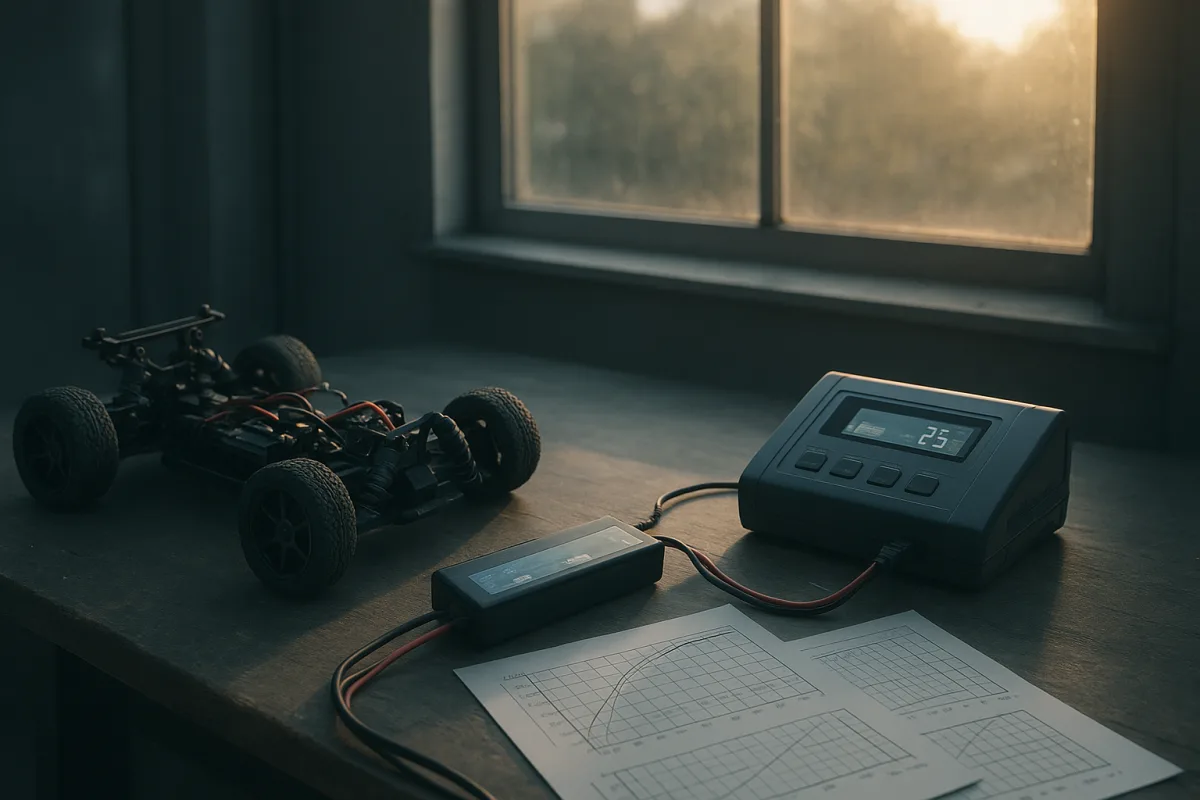
How to Upgrade RC Car Battery for Better Runtime and Performance
Learn how to upgrade your RC car battery safely, improve runtime, and ensure compatibility with your ESC and motor for optimal performance.
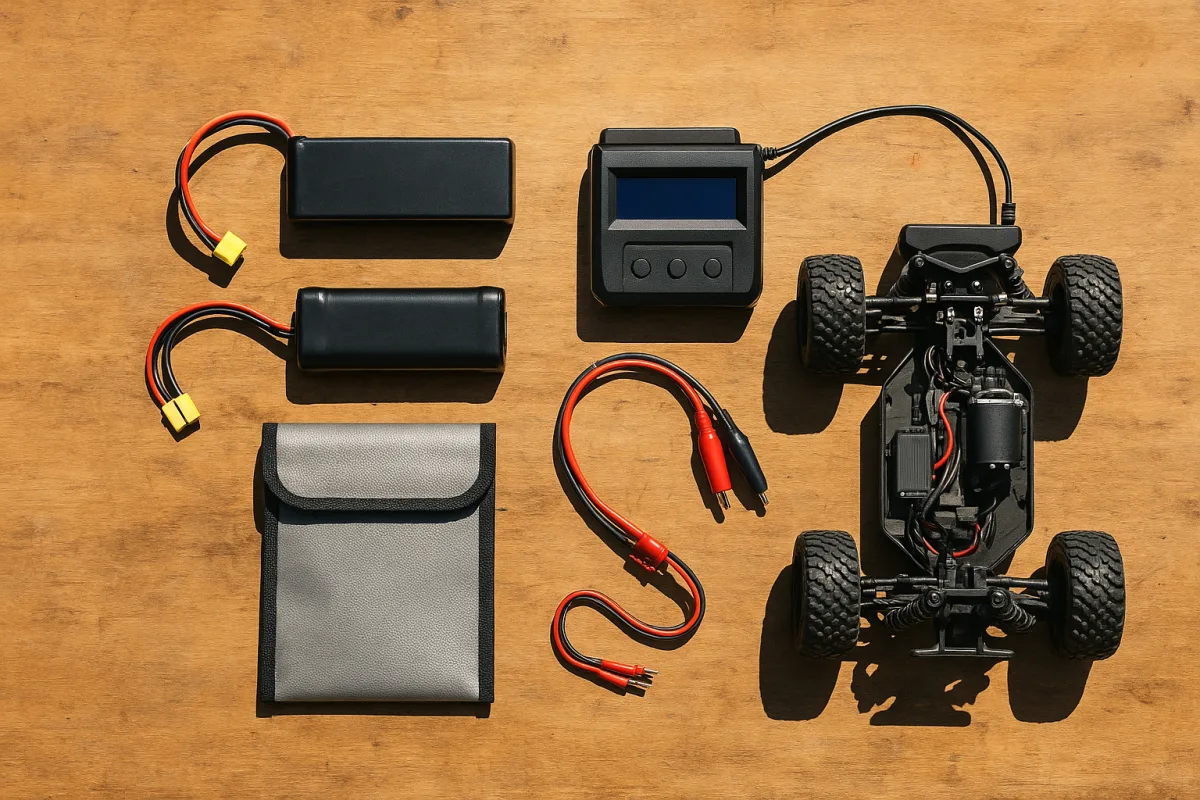
RC Car Battery Types Explained: LiPo vs NiMH and More
Learn about RC car battery types, including LiPo and NiMH, voltage, capacity, and C-ratings to choose the right battery for your RC car.
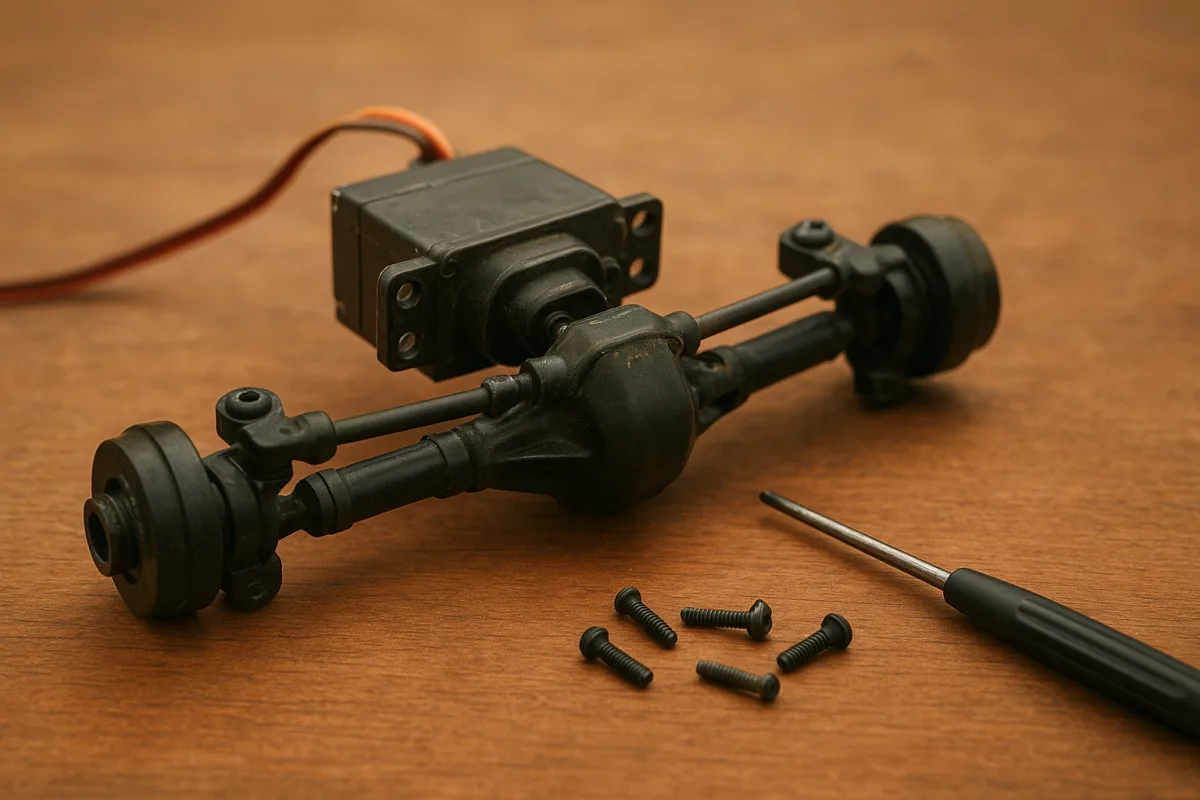
Fix RC Car Steering Issues: Troubleshooting and Repair Tips
Learn how to fix RC car steering issues with step-by-step troubleshooting and repair tips for servos, linkages, and power problems.
Troubleshooting RC Car Not Responding: Causes & Fixes
Learn troubleshooting RC car not responding issues with step-by-step fixes for radio, battery, ESC, and receiver problems.