
Best Terrain for RC Cars: Matching Surface to Your Setup
Learn the best terrain for RC cars and how to match your car’s setup for optimal performance on different surfaces.
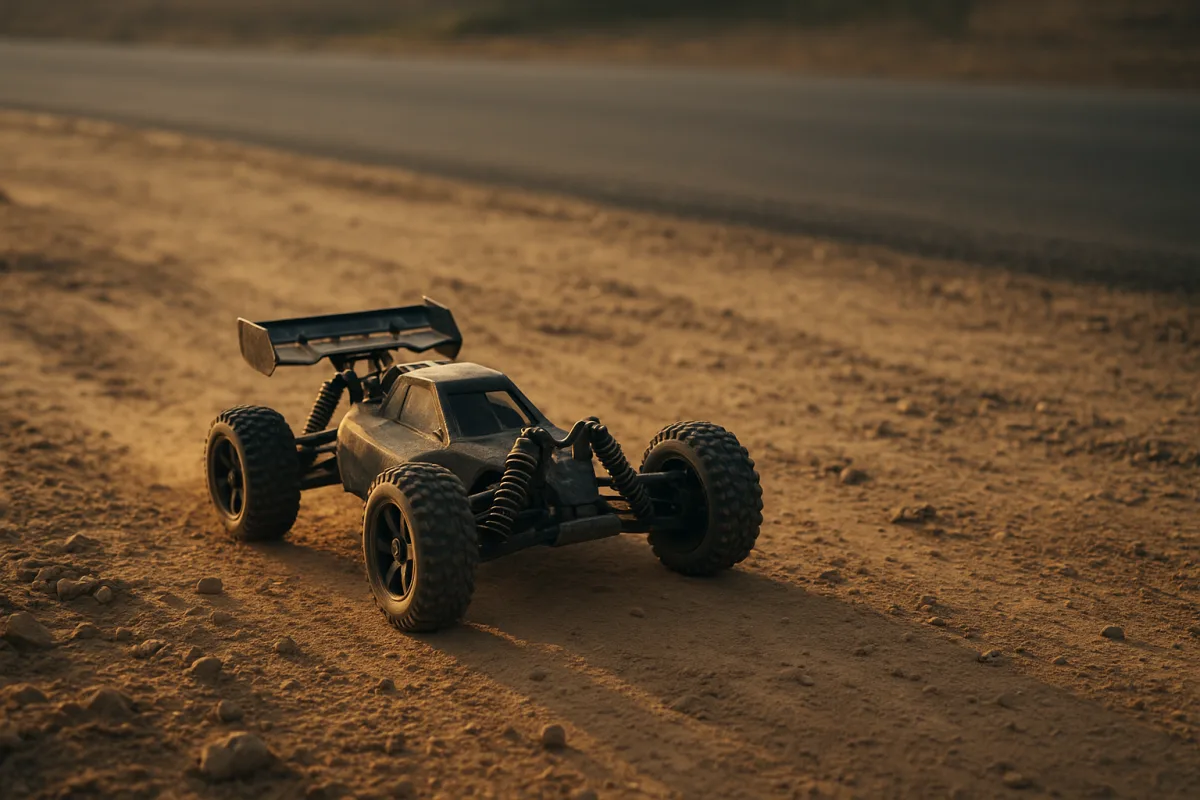
The best terrain is the terrain your RC car can carry
Ask, “What is the best terrain for RC cars?” and you will get the usual answer: dirt for buggies, pavement for touring cars, rocks for crawlers, grass for trucks.
That is directionally right, but it misses the useful bit. The best terrain is not a single surface. It is the surface whose rolling resistance, bumps, slope and traction your particular car can handle without asking the motor, battery, tyres and suspension to do jobs they were never built to do.
That is the system to understand before buying a car or picking a running spot.
A 1/10 electric buggy can look like an all-terrain machine beside a 1/10 touring car, yet a field with long wet grass can still overload it. A 1/8 truggy has more tyre, clearance and power to work with, but that does not mean it will be happy on a tight rock trail. A crawler can climb obstacles that would stop either one, but at crawler speed it is a poor answer to a big open park. The terrain has to match the class, then the setup has to match the terrain.
Most of the time, when an RC car feels slow, hot, bouncy or unpredictable, the fix is not an expensive motor or a fancy aluminium part. It is tyres, ride height, shock setup and gearing.
Start with resistance, not with “off-road”
Every terrain places resistance into the driveline. On smooth asphalt, the tyres roll easily and the chassis stays relatively level. The motor spends most of its effort accelerating the car and overcoming aerodynamic drag. On loose dirt, grass, sand or rocks, the tyres sink, slip, climb and repeatedly accelerate over bumps. That takes more torque.
This is why a terrain that looks harmless at walking pace can be hard work for an RC car.
A smooth car park is low resistance. Hard-packed dirt is moderate resistance. Loose soil, long grass and sand are high resistance. A rocky trail is not necessarily the highest rolling-resistance surface, but it has big intermittent loads as tyres wedge against rocks and the drivetrain is asked to pull the car up ledges.
The car needs four things to cope:
- Enough ground clearance that the chassis is not ploughing the surface.
- Tyres that can produce grip without digging themselves into a hole.
- Suspension that keeps those tyres in contact with the ground.
- Gearing and battery power that let the motor make torque without overheating.
That is why “off-road” is too broad a label. Dirt, grass, sand and rocks are all off-road, but they load a vehicle in completely different ways.
Asphalt is best when the car is low and precise
On-road cars, including touring cars, drift cars, pan cars and Formula-style chassis, are designed around smooth asphalt, concrete and indoor tracks. Their low ground clearance, relatively stiff suspension and slick or semi-slick tyres work because the surface does not demand much suspension travel. [1]
For a 1/10 touring car, a clean car park or prepared asphalt track is generally the right environment. The tyres stay flat enough to work, the chassis does not slap the ground, and the steering remains predictable. Medium-compound slicks are commonly recommended for asphalt, with belted tyres useful where high-speed stability matters. [1]
The setup logic is straightforward. Asphalt gives the motor an easy time compared with grass or sand, so you can usually run slightly taller gearing than you would on a high-resistance surface. [6] Taller gearing means more potential speed, but it also increases the load on the motor when acceleration is hard. On pavement, that trade-off makes sense. In tall grass, it often does not.
You also need to pay attention to tyre wear and motor temperature on asphalt. [6] A hot motor is not a badge of honour. It means the gearing, tyre load, timing or driving conditions are asking too much. If the car is geared for a big open car park and you move it to a tight, stop-start lot, check temperatures again. Same car, same battery, different load.
This is where newcomers often get caught out. They see an on-road car hit huge speed on a clean surface, then take it onto rough pavement, gravel or grass. Low bumpers catch, foam or slick tyres lose their contact patch, and the car becomes a pinball. That is not a lack of power. It is the wrong environment.
Dirt is the useful middle ground for a buggy
If one class gets closest to an all-round answer, it is the buggy, not because it masters every surface but because it is designed for the middle ground: dirt, packed gravel, short grass and reasonably light off-road use. Buggies combine medium ground clearance with all-terrain tyres and suspension that can absorb ordinary track roughness. [1]
A 1/10 buggy belongs on a dirt track, compacted BMX-style ground, dry park grass cut short enough not to drag on the chassis, or a prepared off-road course. It is not automatically a sand car, a rock crawler or a long-grass monster.
For hard-packed dirt and gravel, pin tyres are the usual direction. The small pins key into the surface without making the car feel vague. For loose or mixed dirt, a block tread gives the tyre more edge to bite with. [1] If the dirt is soft and dusty, a softer compound can find more grip, though it will wear faster. Harder compounds trade some traction for durability on abrasive ground. [1]
Suspension should follow the surface. Rough dirt needs enough ride height to keep the chassis clear and enough compliance that the wheels follow holes instead of skipping over them. Terrain with larger obstacles generally calls for softer suspension and deeper-tread tyres, while more irregular surfaces call for higher ride height and appropriate suspension adjustment. [2][3]
That does not mean dumping the softest oil in every shock. A buggy that is too soft rolls, bottoms out and throws itself forward under braking. A buggy that is too stiff skates across bumps and gives away traction. The point is to use the suspension travel you have, not to lock it out with heavy oil or blow through it with no damping.
For dirt, Speed World Raceway recommends softer suspension and lower gearing alongside soft-compound aggressive tread such as pins or step-pins. [4] Lower gearing is important because loose dirt and bumps make the motor work harder during acceleration. Dropping the pinion a tooth or two, or choosing a numerically lower final drive ratio where available, is cheaper than replacing a cooked motor.
Grass and sand expose bad gearing quickly
Grass is where the phrase “it is only a park” gets expensive.
Short, dry grass can suit a buggy or truck with adequate clearance. Long, dense or wet grass is another category entirely. It wraps around driveshafts, drags on the chassis, loads the tyres and makes every acceleration pull more current from the battery. Large knobby tyres with deep, widely spaced knobs are recommended for grass because they can bite and clear material better than a close-packed tread. [1]
Grass also calls for shorter gearing and sufficient ground clearance. [6] The shorter gearing gives the motor more mechanical advantage, so it can turn the tyres under load instead of bogging down. That matters even more if you install larger tyres. Bigger tyres effectively make the gearing taller because each revolution covers more ground. Fit oversized wheels without changing the pinion or spur relationship, then run in grass, and you have loaded the drivetrain twice: more rotating mass and taller effective gearing.
That is one of the common avoidable mistakes in RC. High-resistance terrain, oversized tyres and unchanged gearing are a recipe for motor heat and weak acceleration. Battery and motor compatibility also matters because a battery that cannot deliver the required current will feel flat under acceleration. [8]
Sand takes that same problem and turns it up another notch. Paddle tyres are recommended because their paddle-shaped tread helps the tyre float and drive forward rather than simply dig downward. [9] Lower gearing is again the sensible baseline, and weight distribution matters because a nose-heavy vehicle can bury its front end instead of skimming over the surface. [9]
A desert-racer style platform can make sense for dry dunes, and the research brief places that class around dunes of roughly 25 to 30 degrees. But it also warns that these vehicles struggle in wet grass or thick mud because they lack useful low-speed torque there. That is the key distinction: a fast vehicle that works on sand is not automatically a good utility off-roader.
Rocks are a crawler problem, not a truck problem
Rock terrain is where vehicle class matters most.
A proper crawler needs a low centre of gravity, substantial suspension articulation, solid or portal axles, and locked or selectable differentials to keep torque going to the tyres that still have grip. [1] A fast 1/10 short-course truck can bounce over loose stones, but that is not rock crawling. A crawler is built to place tyres carefully, maintain traction at very low speed and avoid unloading a wheel on uneven faces.
The research brief identifies crawlers as specialised tools for static climbs beyond 45 degrees, while also making the obvious but important point that their very low top speed makes them impractical for open-field play. If your ideal running area is a big sports field, a crawler is the wrong answer no matter how impressive it looks on a scale trail.
Short-course trucks sit between the two extremes. They can work well on compact dirt, gravel and modest inclines, with the brief suggesting roughly 15 to 20 degree slopes as their comfortable territory. Their limitation is rocky descents and ledges, where limited suspension travel can lead to bottoming out. That does not make them bad vehicles. It means a short-course truck should be chosen for rough, flowing ground, not as a substitute for a crawler.
Terrain choice includes the work after the run
The rougher the terrain, the more time you spend at the bench.
Rocky trails and dirty off-road surfaces drive grit into bearings, driveshafts, suspension pivots and the drivetrain. The available guidance recommends regular cleaning, suspension and drivetrain checks, plus differential maintenance where needed. [5] Rough terrain also increases component stress. [7]
There are no useful standard figures for maintenance cost or exact service intervals because they vary too much by model, terrain severity and driving style. [7] That is worth saying plainly. Anybody offering a precise universal annual cost is guessing.
The practical rule is simpler: if the car ran in dust, grass, mud, sand or rocks, inspect it before putting it away. Check for wrapped grass, gritty bearings, loose wheel nuts, bent turnbuckles, leaking shocks and abnormal drivetrain drag. On asphalt, the focus shifts toward tyre wear, motor temperature and steering condition. [6]
Choose the environment before the car
If your local spot is smooth asphalt, buy or set up an on-road car. If it is a compact dirt track or short dry grass, a buggy is the sensible starting point. If it is a loose field with bigger bumps, choose a truck with clearance and travel, but gear it for the load. If it is dunes, use paddles and accept that sand is hard on power systems. If it is technical rocks, buy a crawler because nothing else becomes one through bolt-on parts.
Weather complicates all of this, but the research is thin on exact regional or seasonal rules. Humidity, temperature and rainfall clearly affect traction, electronics care and battery behaviour, yet there is no solid universal table that says which class is safe or ideal in every climate. Local RC clubs and forums are more useful than generic claims here.
The best terrain is the one that lets your chassis use its tyres, suspension and gearing as intended. Get that match right first. Then tune. The shiny upgrade can wait.
Frequently Asked Questions
What is the best terrain for different types of RC cars?
On-road RC cars like touring and drift cars perform best on smooth asphalt, concrete, or indoor tracks due to their low ground clearance and slick tires. Buggies are suited for dirt, packed gravel, and short grass, offering a versatile middle ground. Rock crawlers excel on steep, rocky terrain but are slow and impractical for open fields, while trucks and truggies handle rougher off-road surfaces with higher ground clearance and aggressive tires.
How does terrain affect RC car performance?
Terrain influences rolling resistance, traction, and suspension demands. Smooth asphalt offers low rolling resistance, allowing motors to focus on acceleration and speed, while loose dirt, grass, sand, or rocks increase resistance by causing tires to slip, sink, or climb obstacles. This leads to higher torque requirements, motor heat, and suspension stress, affecting speed, handling, and component wear.
Which terrain requires specific RC car setup adjustments?
Different terrains require tailored setups: asphalt favors low ride height, stiff suspension, and slick or semi-slick tires with taller gearing; dirt and gravel need medium ground clearance, softer suspension, and treaded tires like pin or block patterns; rocky trails call for higher ride height, softer suspension, and deeper tread tires to maintain contact and avoid chassis damage. Adjustments in gearing and tire compound also depend on surface resistance and traction needs.
Why is matching RC car setup to terrain important?
Matching setup to terrain prevents overloading the motor, battery, tires, and suspension with demands they are not designed to handle. Proper ride height, tire choice, suspension tuning, and gearing ensure the car maintains traction, avoids chassis damage, and runs efficiently without overheating or excessive wear. Without this match, cars can feel slow, hot, bouncy, or unpredictable despite having adequate power.
What terrain causes the most wear on RC car motors and tires?
High-resistance terrains like loose dirt, sand, long grass, and rocky trails cause more wear due to increased torque demands, slipping, and impacts. Rocky terrain also stresses suspension and drivetrain components through intermittent heavy loads. In contrast, asphalt causes wear mainly through tire abrasion and motor heat if gearing or driving conditions are not well matched.
Sources
- Types of RC Cars Explained: On-Road vs Off-Road for Beginners - TRVBABY
- RC Truck Tuning Tips: How to Optimize Performance for Different Terrains
- RC Suspension Tuning Guide: Optimize Handling & Performance
- RC Car Suspension Tuning Guide for Better Handling | Speed World Raceway
- Brushless RC Cars - RCexplained
- How to Set Up an RC Car for Pavement | RC Setup Lab
- Do RC Cars Break Easily? Here's Everything You Need To Know -
- Blog - Why RC Car Batteries Feel Weak Under Acceleration
- How to Choose the Right Tires for Off-Road RC Cars -
Related Articles
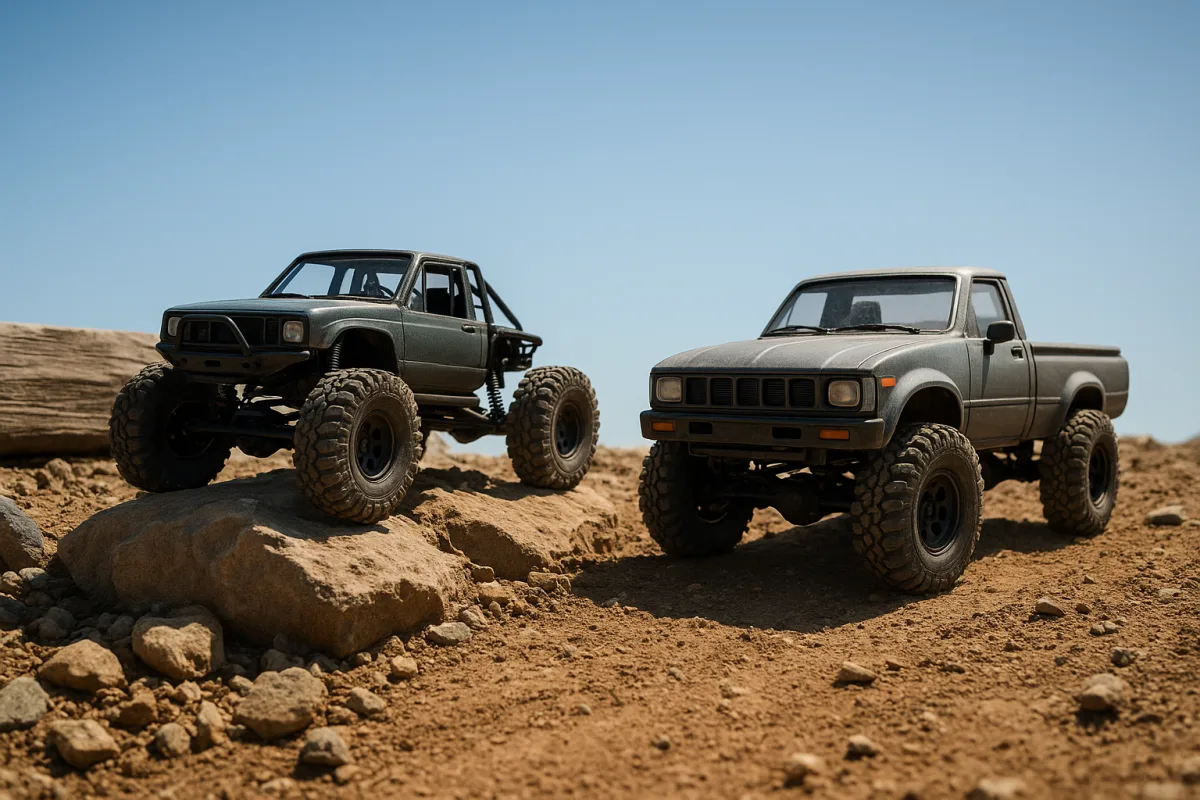
Beginner RC Car Comparison Under 200: Crawler vs Off-Road
Compare beginner RC cars under 200 to find the best crawler or 4WD off-road model with setup and tuning tips for new drivers.
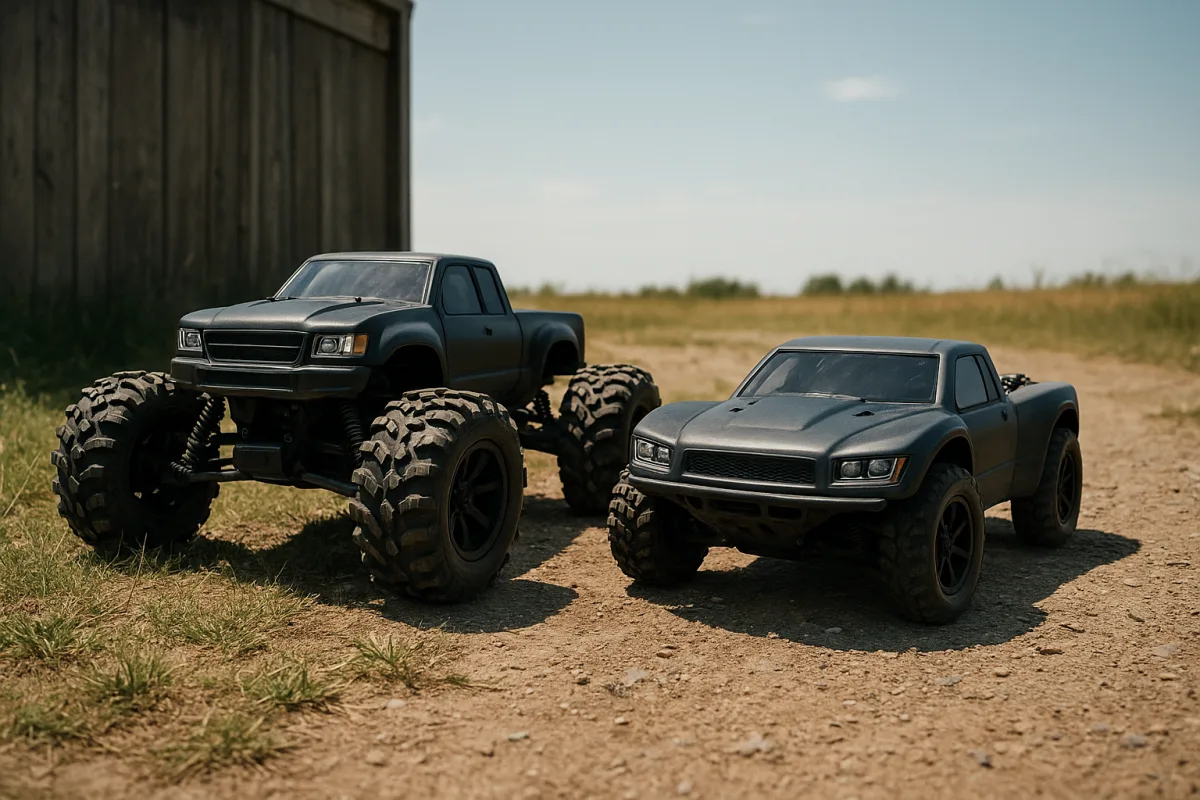
Best RC Car for Off Road: ARRMA Granite vs Traxxas Slash
Compare the best RC car for off road use: ARRMA Granite vs Traxxas Slash. Get expert advice on terrain fit, battery, and maintenance.
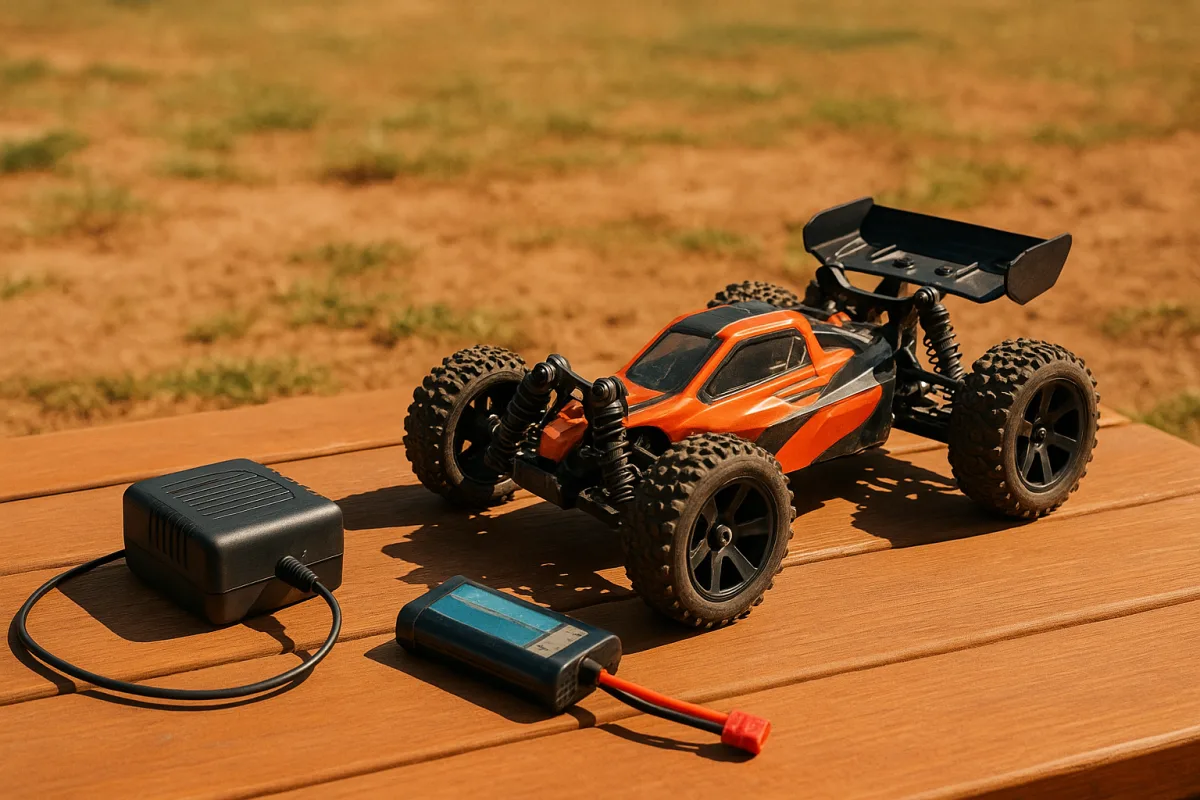
Best RC Car Type for Beginners: Choosing the Right Model
Discover the best RC car type for beginners, including scale, chassis, motor, and battery choices to fit your terrain and skill level.
Best RC Car for Winter Conditions: Top Picks and Setup Tips
Discover the best RC car for winter conditions with top models, tire advice, battery care, and setup tips for snow and cold weather driving.