
How to Choose RC Car Tires for Racing
Learn how to choose RC car tires for racing by matching compound, tread, and size to your track surface and conditions for optimal grip and performance.

Start with the grip problem, not the tire wall
When a car lacks grip, the easy move is buying the softest tire on the shop wall. That can work for one qualifier, then leave you with overheated tread, a vague car and a worn-out set before mains.
First identify where the car is losing traction. Is it pushing at corner entry, spinning the rear on throttle, traction-rolling in the sweeper, or skating everywhere because the track is cold and dusty?
Those are not all the same tire problem. A front push on a dirt buggy may call for a ribbed front or a different front insert, while rear wheelspin may need a softer rear compound or more suitable pins. [5][6]
Before changing tires, confirm the basics. A bent wheel, loose glue bead, worn insert or tire that has ballooned away from the rim will imitate a bad compound choice and make ordinary setup changes look useless. [9]
Do not assume a premium tire is automatically the answer. Higher-priced racing tires are generally associated with better compounds and grip, but the relationship is not linear, and a mid-priced option matched to the surface can be the smarter choice. [3]
First job at the track: read the surface
On asphalt and carpet, maximum contact patch matters. Slick tires are the usual starting point because they put more rubber on a consistent, high-grip surface and tend to give stable handling. [4]
That recommendation is for a prepared racing surface, not every paved car park. If the asphalt is broken, dusty or mixed with loose debris, a slick may not behave like it does on a clean circuit.
For dirt racing, look at pin or step-pin tread before worrying about fashionable compounds. Pins provide forward bite, while step-pin designs are intended to retain useful drive and durability as the surface works up. [4][2]
A 1/10 off-road buggy on loose dirt generally needs that kind of tread to dig into the surface. Bolting slicks onto the same buggy because they worked at an indoor carpet track is a reliable way to create wheelspin and a nervous rear end.
Ribbed front tires are a specific dirt-track steering tool. They are used to improve front-end steering, so they make sense when a 2WD buggy will not rotate into turns, not automatically when the rear lacks forward drive. [5]
All-terrain tires are the compromise choice for a mixed surface. They offer versatility where the track changes between packed dirt, loose sections and general outdoor running, but that versatility is not proof they will be the fastest race tire everywhere. [4]
The mistake is treating tread as decoration. An inappropriate tread pattern reduces handling, and no amount of expensive shock oil, motor timing or diff-fluid swapping will fully rescue a tire that cannot engage the surface. [10]
Then choose compound for grip and temperature
Once the tread matches the surface, choose rubber hardness according to available grip, temperature and abrasiveness. Softer compounds are recommended for low-grip or technical tracks because they conform more readily and generate traction. [1]
The cost of that extra compliance is wear. On abrasive dirt, rough asphalt or a hot track, a soft tire can wear rapidly, lose its edge and change balance during a race day. [1][9]
Harder compounds are the sensible direction when the surface is abrasive or temperatures are high. They give up some immediate stick compared with a soft tire, but they better suit conditions that would quickly punish soft rubber. [1]
There is no universally best compound. A tire that gives a 1/10 buggy good rear traction on a cool, dusty morning can feel too soft or disappear too quickly after the track heats up.
Temperature is not a small detail. Below 10°C, or 50°F, tire compounds stiffen and grip falls, while high-density polyethylene compounds are recommended in the research for cold conditions. [3]
Above 30°C, or 86°F, rubber and the track surface soften, generally increasing grip. That can create a different problem: the car may gain so much bite that it becomes harder to slide or initiate a drift cleanly. [3]
For electric race cars, hot weather also changes the rest of the package. The available guidance recommends considering gearing and battery management alongside tire choice, because elevated track temperatures add load and heat to the whole car. [3]
Do not change compound halfway through diagnosing a handling issue without noting track temperature. Write down the surface, ambient conditions, tire set, wear and whether the car pushed or stepped out. That notebook beats guessing from tire color or brand reputation.
Make sure the tire actually fits your class
Correct dimensions come before tuning. A 1/10 2WD buggy typically uses a narrow front tire around 50 mm wide and a wider rear around 65 mm, reflecting the different steering and drive jobs at each end. [11]
A 1/8 buggy is a different package again, with tires around 84 mm in diameter. Do not transfer a 1/10 setup idea directly to an 1/8 buggy and expect the same response from the much larger rotating mass. [11]
Crawler sizing is broader still. Common 1.9-inch crawler tires are around 96 mm, while 2.2-inch options can run roughly 125 to 132 mm, depending on the model and intended terrain. [3]
Those numbers matter even if you are focused on grip. Oversize tires alter effective gearing, clearance and load on the drivetrain, while the wrong width can move the balance enough that you misdiagnose the result as a compound issue.
Check the wheel specification and race rules before ordering. A tire can be excellent for the surface yet useless for your class if its diameter, wheel fitment or approved tread does not meet the local rule set.
Use the insert to control the tire carcass
RC racing tires with foam inserts are not pneumatic tires, so think in terms of foam support rather than air pressure. The research does not provide useful pressure settings or evidence for pressure tuning in this context.
Closed-cell foam is the standard racing insert type. Softer foam is recommended for low-grip conditions, where it helps the tire conform, while firmer foam is better suited to high-grip conditions that need more support. [6]
If the tire folds over in fast corners, feels delayed on direction change or makes the car traction-roll, do not immediately blame the compound. A firmer insert may support the carcass and calm the car without giving away the tire’s basic surface match.
If the track is dusty, cool or slick and the car skates across the top, a softer insert can help the tread work. Change one end at a time when possible, otherwise you will not know whether front or rear support fixed the problem.
Dual-stage inserts add another option. They combine a firm inner layer for support with a softer outer layer for compliance, aiming to retain steering precision without making the tire too rigid over bumps. [3]
Open-cell, closed-cell and dual-stage inserts are all categories worth understanding, but do not assume one is inherently faster. The correct insert has to work with the tire compound, tread, vehicle weight and actual level of track grip. [7][6]
Prep the tire before it becomes a race failure
A new tire is not race-ready simply because it is mounted. Inspect the glue all the way around both beads, because poor gluing allows deformation and can eventually let the tire detach from the wheel. [9]
That failure looks dramatic, but small glue problems matter too. A partly loose bead changes the tire shape under load, creates inconsistent steering and can send you chasing shock springs or diff settings that were not the cause.
Humidity and moisture also change the decision. Wet or humid conditions reduce grip, particularly with hard plastic tires, so do not expect a hard drift-style tire to find traction on a damp racing surface. [3]
The available research does not provide tested additive protocols or quantified gains from tire sauce. If your club permits additives, get the local procedure from experienced racers rather than inventing soak times from unrelated classes.
Warmers are similarly a class-specific tool, not a universal cure. They may help bring a tire toward its operating range, but they cannot turn an incorrect tread into a dirt tire or make a too-hard compound work on a cold, low-grip layout.
Spend money where it changes grip
Touring-car tire sets are quoted at roughly $80 to $150 for four tires, while drift tire sets are commonly around $20 to $30 for four. Those figures are for the tires themselves, not wheels, inserts, glue, warmers or race entry costs. [3][8]
That price difference reflects the demands of the classes. Touring cars need controlled grip and consistent behavior on prepared surfaces, while drift cars commonly use harder plastic-style tires designed to slide rather than maximize cornering traction. [3][8]
For a racer trying to improve grip, budget for more than one compound or insert option only after identifying the usual local surface. A small, documented tire selection is more useful than a box full of random tread patterns.
Ask fast local racers what works on that specific layout, especially when the surface changes through the day. Their recommendation is a starting point, not a substitute for checking wear, temperature and balance on your own car.
Most importantly, do not mask a setup issue with rubber. If the car has an obviously wrong ride height, binding suspension, leaking shock, poor camber setting or damaged diff, the expensive tire upgrade will not make it consistently fast.
Frequently Asked Questions
How do I choose the right RC car tires for racing?
Start by identifying where your car is losing traction and the type of surface you will race on. Match the tread pattern to the surface—slicks for asphalt or carpet, pins or step-pins for dirt, and ribbed fronts for improved steering on dirt tracks. Then select a compound suited to the grip level and temperature, and choose foam inserts that complement the tire and surface grip.
What tire compound is best for RC car racing?
There is no single best compound; it depends on track conditions and temperature. Softer compounds work well on cool, low-grip tracks but wear quickly on abrasive or hot surfaces. Harder compounds last longer on abrasive or warm tracks but provide less grip in cooler conditions.
Which tread pattern should I use for different RC racing surfaces?
Use slick tires on clean asphalt or carpet for maximum contact and stable handling. For dirt tracks, pin or step-pin treads provide forward bite and durability, while ribbed front tires help with steering on dirt. All-terrain tires offer versatility for mixed or changing surfaces but may not be the fastest option on any specific track.
How does temperature affect RC car tire choice?
Temperature influences rubber hardness and grip. Softer compounds perform better below about 70°F (21°C), while medium or harder compounds suit temperatures above 80°F (27°C). High temperatures soften tires and track surfaces, increasing grip but requiring adjustments, whereas low temperatures stiffen tires and reduce grip.
What size tires are best for 1/10 scale RC racing buggies?
For 1/10 scale 2WD buggies, front tires are typically around 50mm wide and narrow, while rear tires are wider, about 65mm. Tire size should be chosen according to the racing class before tuning compound, tread, and inserts.
How we researched this
This article was assembled from 11 cited references.
Nothing here is based on hands-on testing. Where a figure or finding appears, it belongs to the source cited beside it, and the writing says so rather than implying otherwise. Every source is listed below so you can check it.
Sources
- What Are Tire Compounds on an RC Car? Setup & Tuning Guide | So Dialed
- RC tires: which setup for asphalt, dirt, track, and bashing? - Next Model RC
- RC Crawler Tires Guide: 1.0, 1.9 & 2.2 Sizes Explained (2026) | RC Cars Guide
- How to Choose Tires for RC Car Models: The Ultimate Guide to Grip and Performance - Riverhobby Tech (Shenzhen) Co., Ltd.
- RC Car Tire Types Explained - Asphalt vs Dirt (What Actually Works) - TRVBABY
- Best RC Car Tires: Compounds, Treads & What to Buy for Every Surface | MinutesofThunder
- What Are Foam RC Tires For? Foam Insert Uses, Types, and Fit – RaceNRCs
- Drift Tires, How Much Do They Cost? Buying Guide
- Tires: Compounds, Tread, and the Foam Inserts Nobody…
- RC Tires: Find the Perfect Tires for Your Race Car
- RC Tire Size Chart: Choosing Right Wheels & Tires | EuroRC.com
Related Articles
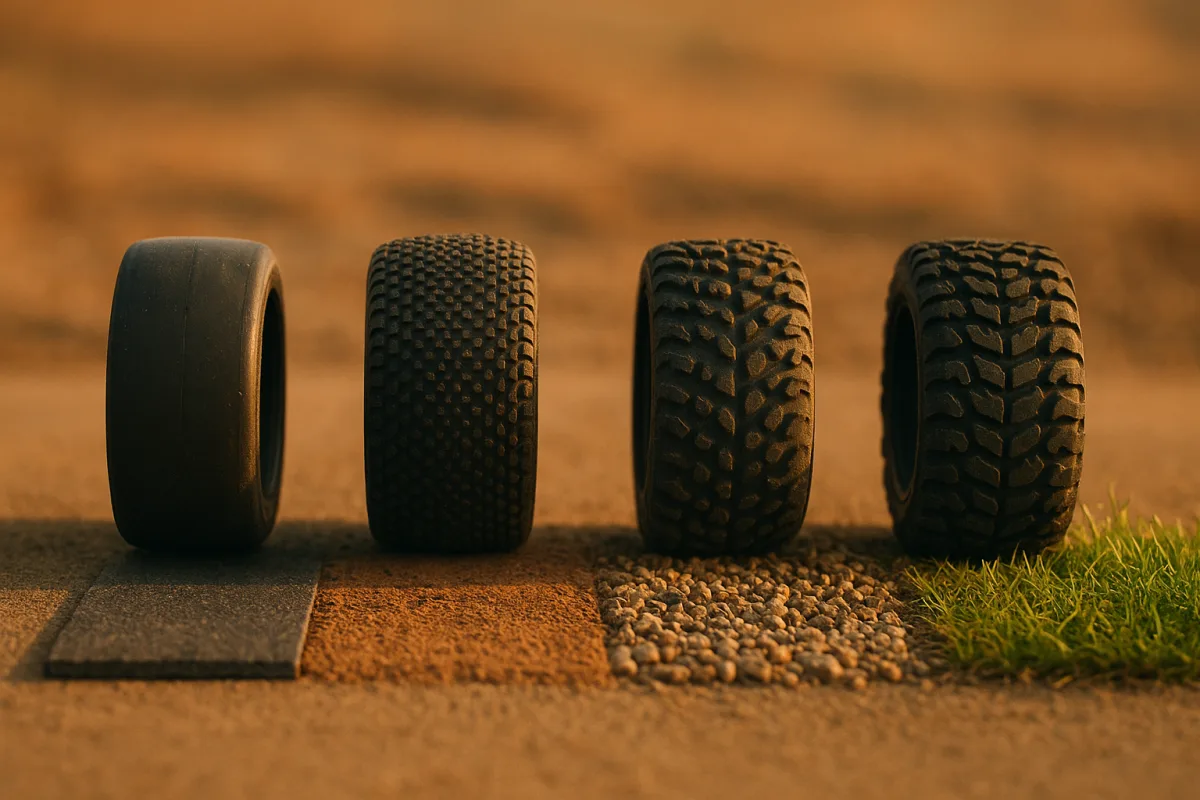
How to Choose RC Car Tires for Different Surfaces
Learn how to choose RC car tires by surface, tread, compound, and size for optimal grip and performance on asphalt, dirt, gravel, and grass.
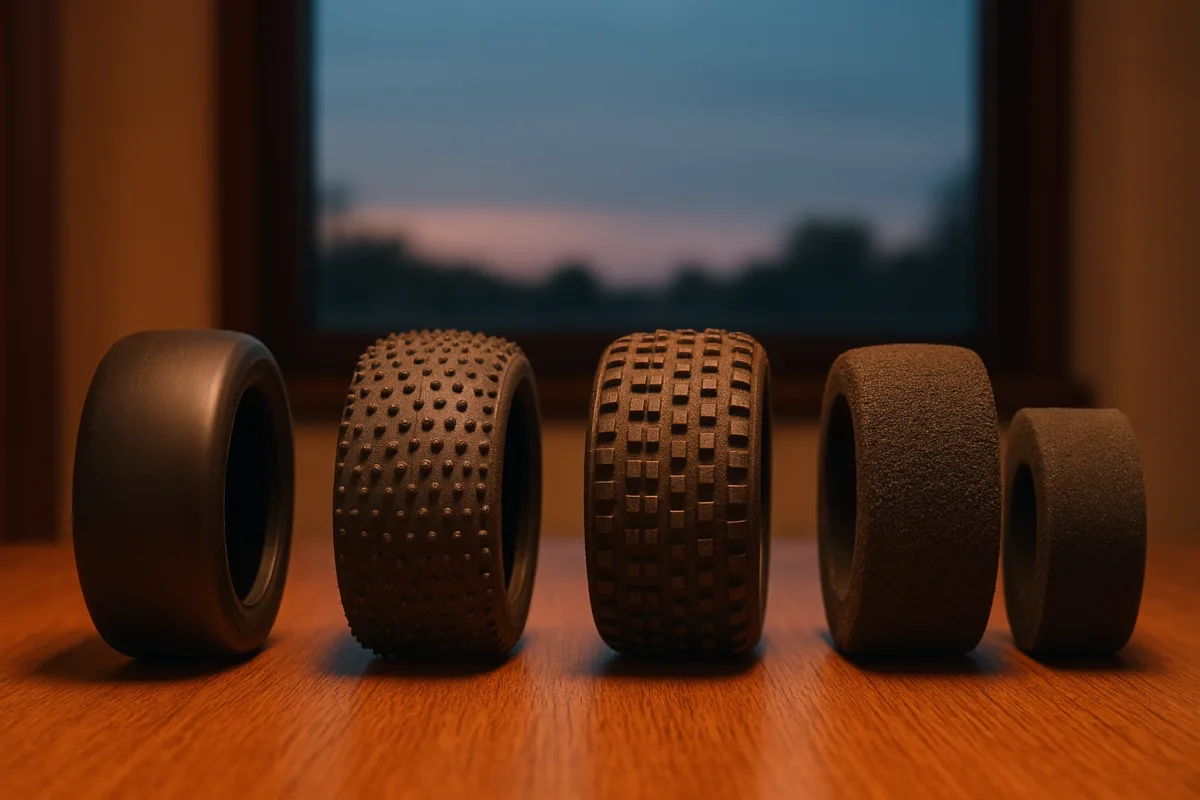
How to Choose RC Car Tires for Different Surfaces
Learn how to choose RC car tires for asphalt, dirt, grass, and more to maximize traction and handling on every surface.
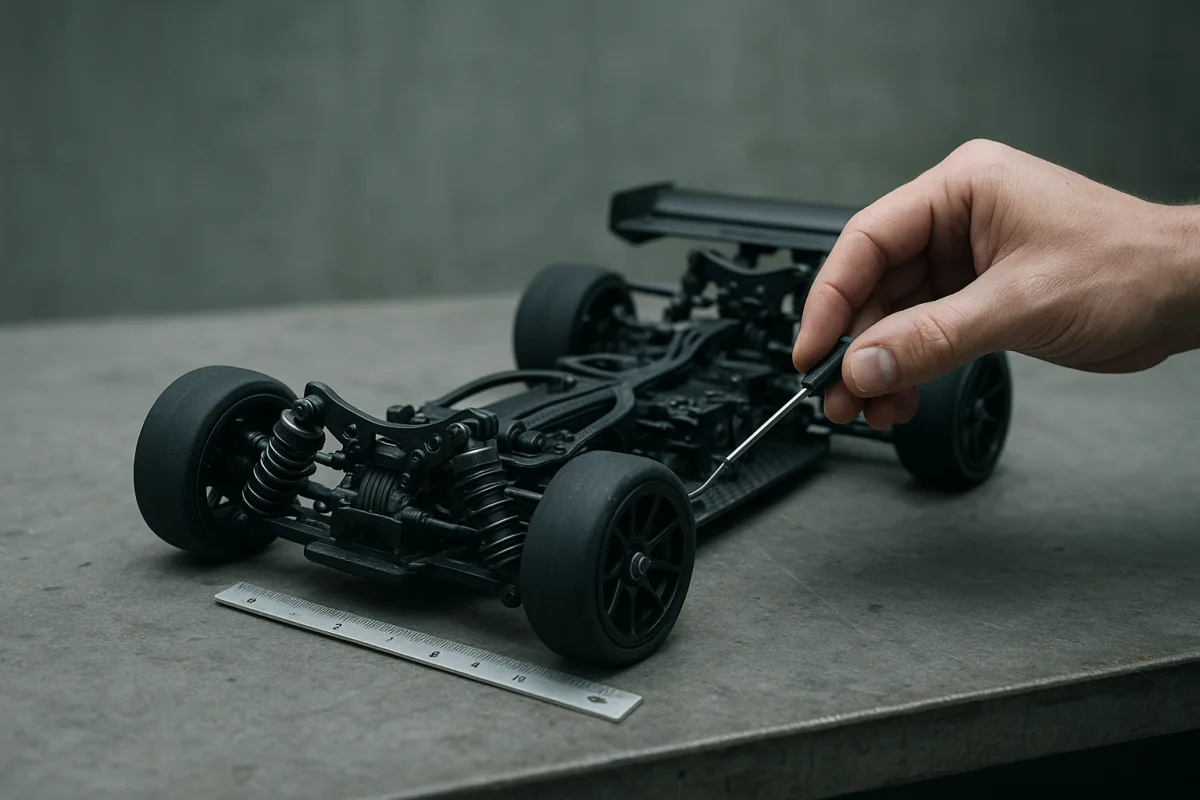
How to Set Up RC Car for Racing: Baseline, Tires & Tuning
Learn how to set up your RC car for racing with tips on baseline setup, tire choice, suspension tuning, and gearing for consistent performance.
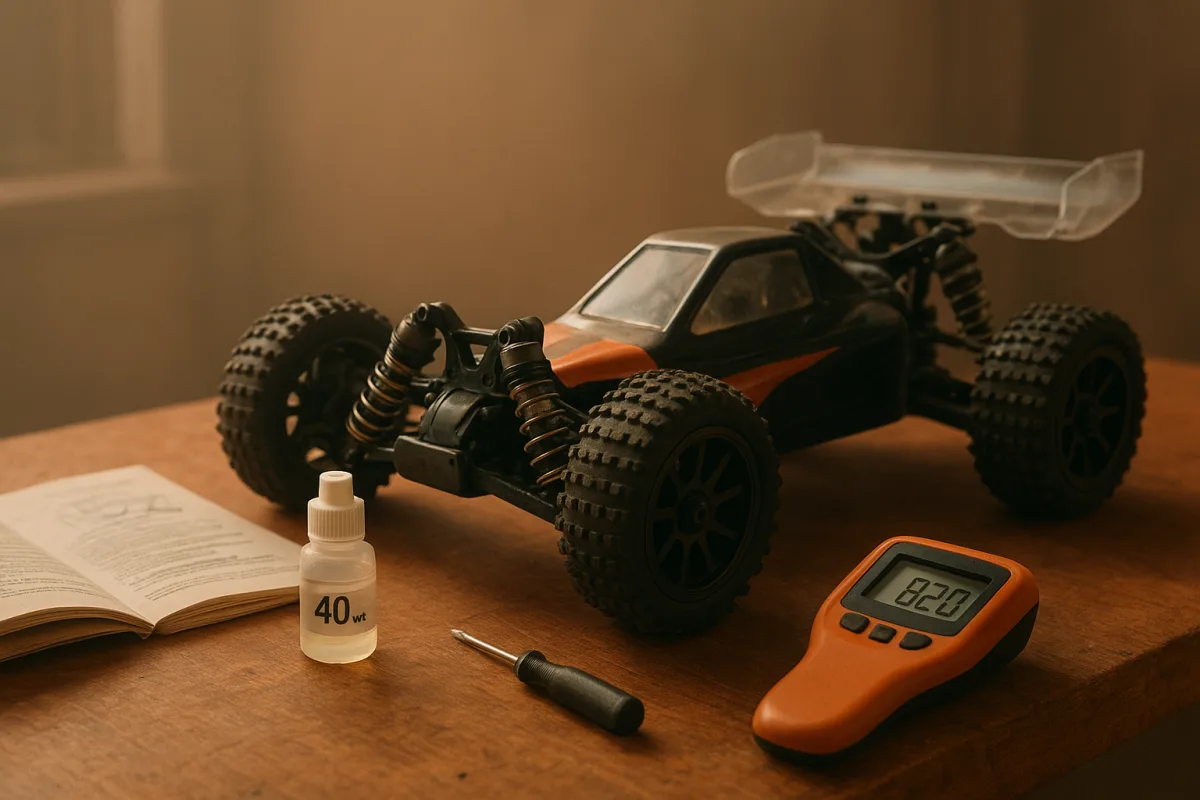
How to Set Up RC Car for Beginners: Complete Starter Guide
Learn how to set up your RC car for beginners with tips on battery, tires, suspension, and motor for a smooth first drive.