
Prevent RC Car from Flipping: Setup and Tuning Tips
Learn how to prevent RC car from flipping with setup tips on ride height, suspension, weight distribution, and driving techniques for better stability.
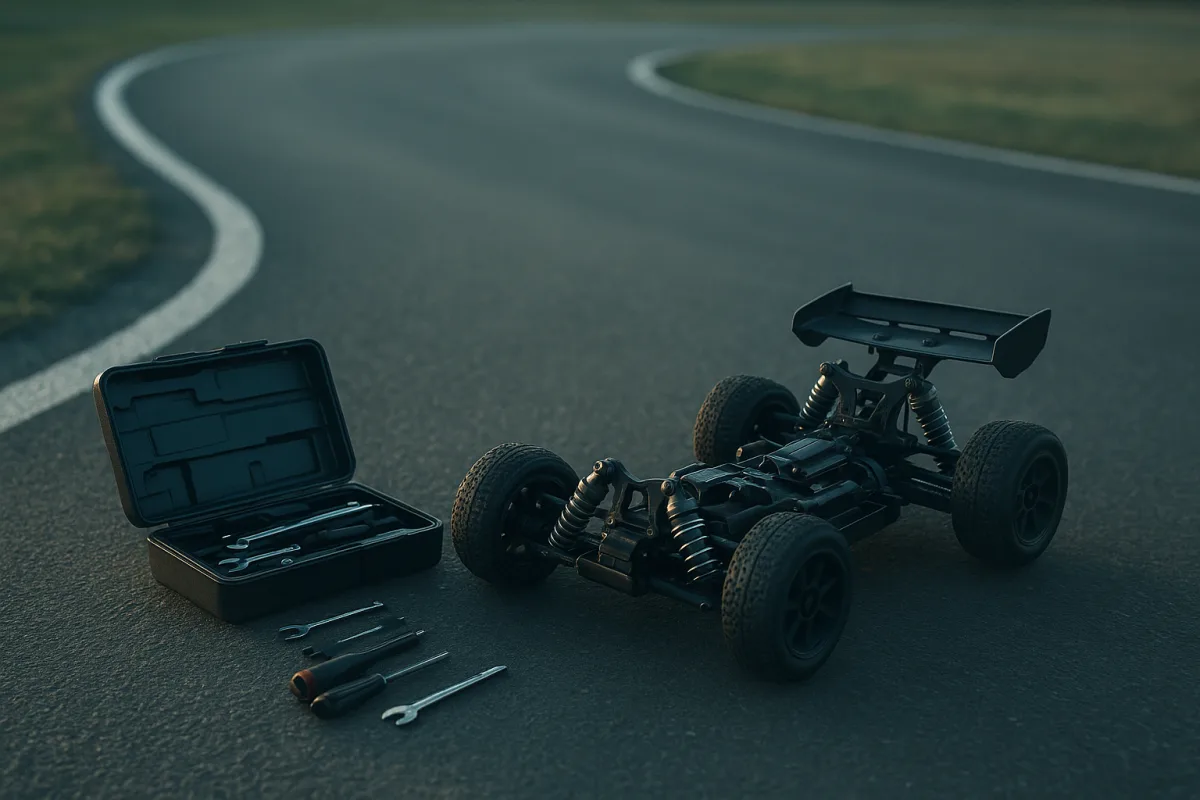
First, identify when the car flips
A car that flips entering the corner needs a different fix from one that traction-rolls at apex, wheelies onto its roof under power, or cartwheels over rough ground. Watch the car closely before reaching for parts.
If it rolls as soon as you turn in, the front end may be too reactive, the rear may lack stability, or the battery position may be too far forward. If it rolls halfway through the turn, suspect excess side bite, high ride height or too much body roll.
A car that tips over bumps is usually not asking for stiffer springs. On a rough outdoor track, an overly stiff car skips instead of following the surface, which can unload a tire and initiate a rollover. [3][10][12]
This guide is aimed at race-style 1/10 on-road cars, 1/10 buggies and short-course trucks, with notes where the advice is surface-specific. Do not copy a 1/10 touring-car ride-height number onto a 1/8 truggy and expect a useful result.
Fix the free problems before changing setup
Put the car on a flat setup board or the flattest surface available. Check that all four wheels touch, the suspension arms move freely, shocks rebound consistently, and no bent hinge pin, seized ball end or leaking shock is making one corner work differently.
Worn suspension parts are a recognised rollover cause because they create inconsistent handling from corner to corner. [12] A car with slop in one front hub or a binding rear arm cannot be tuned accurately with camber, oil or electronics.
Check the wheel nuts, hexes and tire glue as well. A loose wheel, a ballooning tire or a partially unglued bead can feel like a mysterious setup problem, especially when the car flips only in one direction.
Then reduce your steering input for a few laps. Aggressive steering is listed among common flipping causes, and it matters most when the chassis already has too much grip. [12] If the car stays upright with smoother steering, do not mistake a driving correction for proof that it needs expensive hardware.
Get the centre of gravity low, but keep the balance
Mount heavy items low in the chassis. A lower centre of gravity reduces the leverage that tries to roll the chassis over, making it a sound first principle for any class that is traction-rolling. [12]
Battery placement is not simply a case of shoving the pack as low and far forward as possible. Moving the battery forward can sharpen steering, but it may reduce rear traction. Moving it rearward improves acceleration traction, but softens corner-entry response. [16]
For a 1/10 buggy or touring car with a movable shorty-pack position, make small fore-and-aft moves rather than jumping from one extreme to the other. If it flips at turn-in, a rearward move may calm entry, provided the car does not become too lazy to rotate.
There is no reliable published number saying that lowering a battery by a certain number of millimetres produces a certain reduction in rollover risk. Treat lower CG as a qualitative advantage, then judge the change by lap-to-lap behavior rather than expecting a magic measurement. [12][16]
Keep left-to-right weight distribution sensible as well. Uneven weight distribution is another documented cause of instability. [12] Route wiring neatly, secure the receiver and speed control, and avoid adding a heavy accessory to one side just because it fits there.
Set ride height for the surface, not for looks
Ride height is one of the quickest ways to make an RC car less tippy. Lowering it reduces weight transfer and can increase corner speed on smooth surfaces, but a chassis set too low loses bump compliance and may hook or trip over surface imperfections. [15]
For 1/10 touring cars, RCWin’s starting range is 5.0 to 6.0 mm on carpet and 6.0 to 7.0 mm on asphalt. [15] These are touring-car figures, not universal settings for a 1/10 stadium truck, 1/8 buggy or crawler.
On smooth indoor carpet, start near the appropriate lower end only if the chassis is not dragging. On rough outdoor asphalt or a bumpy dirt layout, run enough height and droop for the wheels to follow the terrain rather than skating across it.
If your car flips after landing or over ripple sections, raise it slightly before fitting stiffer springs. You are looking for clearance and compliance, not the lowest possible chassis. A stable car that rides bumps cleanly is faster than a low car that traction-rolls.
Use camber and toe to calm the chassis
Negative camber helps a tire maintain useful contact as the chassis rolls in a corner. So Dialed gives starting ranges of minus 1.5 to minus 3 degrees at the front and minus 1 to minus 2 degrees at the rear. [1]
Start conservatively within those windows, especially if your tires are already generating a lot of bite. More negative camber is not an automatic anti-rollover cure. It can change the balance, tire temperature and wear pattern, so check what the car does rather than copying a number blindly.
Toe is a more direct stability adjustment. Front toe-out in the 0 to 0.5-degree range improves steering response, while 2.5 to 3.0 degrees of rear toe-in improves straight-line and corner-exit stability. [4]
If the rear steps out before the rollover, or the car feels nervous under power, use the rear toe-in range as a baseline. If it darts into turns and then traction-rolls, reduce excessive front toe-out before deciding it needs a gyro or a wider stance.
Match springs and shock oil to the track
Shock setup is where racers often create the problem while trying to eliminate body roll. On smooth tracks, stiffer springs and heavier shock oil can improve stability. On rough tracks, softer springs and lighter oil improve grip by letting the tires follow the ground. [3]
That sounds contradictory until you look at the surface. A smooth indoor track lets a firm platform work. A rutted outdoor track makes that same platform skip, unload a wheel and occasionally flip. Stiff is not synonymous with stable. [3][10]
There is no universal shock-oil weight or spring rate that prevents rollovers across classes. The correct oil for a 1/10 2WD buggy on loose dirt will not necessarily suit a 1/8 e-buggy, and neither setting transfers cleanly to a touring car.
Make one change at a time. If the car traction-rolls on smooth, high-grip carpet, try a controlled increase in damping or spring support. If it cartwheels over rough ground, back away from that firm setup and restore wheel movement.
Roll centre deserves the same restraint. A higher roll centre can increase initial grip, but it can also increase flipping risk when corner speed is too high. A lower roll centre is generally safer, though it may reduce grip. [2]
Do not chase an “ideal” roll-centre number because no universal value exists. If your kit offers link-height inserts or adjustable hubs, use them only after ride height, toe, tires and shocks are in a sensible range.
Stop treating more tire grip as more stability
Tires are the first setup item that meets the track, so they can turn a manageable car into a rollover machine. Wider tires increase the contact patch, but they also add rotating mass. [7] That is a trade-off, not a free stability upgrade.
Soft compounds increase grip but wear faster, and tread plus foam insert choice need to match the terrain. [7] On loose dirt, more appropriate tread and a compliant insert may help the car track consistently. On high-grip carpet or sealed asphalt, too much bite can make it trip over the outside tire.
RC Ratings specifically identifies excessive grip from soft tires on high-traction surfaces as a flipping cause. [12] If your car flips without sliding, try reducing grip before adding steering response, harder springs or an anti-roll bar.
There is no price data in the research for low-profile tires specifically, and no sourced threshold for how much extra width begins to hurt acceleration. Choose the correct size, rim fitment, hex and offset for your class rather than buying a random wider wheel. [7][9]
For crawling, tire advice is separate again. A 1.0, 1.9 or 2.2 crawler tire is selected around wheel scale and terrain requirements, not as a direct answer to a 1/10 race-car traction roll. [5][8]
Account for track conditions before every run
Indoor tracks are generally smoother and can support firmer suspension. Outdoor tracks are rougher and usually need softer suspension to maintain tire contact. Wet conditions reduce grip and raise the chance of unpredictable slides and flips. [3][10]
When grip changes during the day, revisit tires and damping before rebuilding the whole car. A setup that was calm in the morning can become too aggressive when the line rubbers in, especially on carpet and prepared asphalt.
Do not respond to low-grip, wet conditions by turning the steering harder. Reduce speed earlier, make smoother inputs and let the car settle before applying throttle. The research identifies aggressive driving and incorrect gyro setup as rollover contributors, although it does not provide a precise gyro-setting recipe. [12]
A gyro can mask some steering mistakes, but it cannot repair a high CG, poor rear toe setting, seized shock or wildly over-gripped tire. Set the mechanical package first, then use any electronic aid conservatively and verify it is not causing abrupt corrections.
Spend money only after the baseline is repeatable
If the stock dampers leak, bind or offer no useful adjustment, adjustable shocks are a practical upgrade category. Retail listings cited in the research place sets at roughly $53 to $85. [13] They suit racers who need repeatable oil, spring and damping changes.
A chassis brace can be worthwhile when a known weak chassis flexes or when replacing a damaged component. Prices range from about $2 to $25 depending on vehicle and brand. [14] The Traxxas low-CG Rustler 4X4 and Slash 4X4 brace kit is one model-specific example, not a universal fit. [14]
Neither category guarantees a less tippy car. A brace does not lower CG, and premium shocks set too stiff can worsen flipping on rough terrain. Buy them when the existing parts limit consistency or adjustment, not because a roll-over automatically means the car needs alloy.
I have not physically run the kits or parts named in the underlying sources, so these are category recommendations based on the cited setup guidance and listings, not personal product tests. Start with the free checks, record changes, and let the car tell you what it needs.
Frequently Asked Questions
How do I prevent my RC car from flipping during turns?
Prevent flipping by lowering the ride height within recommended ranges (5.0–6.0 mm on carpet, 6.0–7.0 mm on asphalt) and ensuring the suspension and tires are properly set up for the surface. Avoid aggressive steering inputs, as excessive steering can cause flips, especially when the car has high grip. Also, watch when the car flips—if it happens at turn-in, consider adjusting battery position or rear toe-in to improve stability.
What suspension settings help stop RC cars from rolling over?
Use surface-matched shocks and modest negative camber to improve stability. Softer springs and lighter shock oil help maintain tire contact on rough tracks, while stiffer springs and heavier oil improve stability on smooth surfaces. Adjust one setup item at a time to identify what reduces rollovers effectively.
How does ride height affect RC car stability?
Lower ride height generally improves cornering speed and reduces the risk of rollovers by lowering the center of gravity, but it can cause the chassis to bottom out on bumpy tracks. Recommended starting points are 5.0 to 6.0 mm on carpet and 6.0 to 7.0 mm on asphalt, with adjustments made if the chassis contacts the track or if the surface is rough.
Where should I position the battery to reduce RC car flipping?
Mount the battery low in the chassis to lower the center of gravity, which reduces rollover risk. Fore-and-aft battery placement affects handling trade-offs: moving the battery forward sharpens steering but may reduce rear traction, while moving it rearward improves acceleration traction but can soften corner-entry response. Make small adjustments rather than large moves to find the best balance.
What are common causes of RC car rollovers and how to fix them?
Common causes include worn suspension parts causing inconsistent handling, excessive grip combined with aggressive steering, high ride height, and improper battery placement. Fix these by checking and replacing worn components, lowering ride height, using rear toe-in and modest negative camber, adjusting battery position, and reducing aggressive steering inputs.
How we researched this
This article was assembled from 16 cited references.
Nothing here is based on hands-on testing. Where a figure or finding appears, it belongs to the source cited beside it, and the writing says so rather than implying otherwise. Every source is listed below so you can check it.
Sources
- What Is Camber on an RC Car? Setup & Tuning Guide | So Dialed
- Setup Advice — HamiltonRC
- RC Car Suspension Tuning Guide for Better Handling | Speed World Raceway
- RC Racing Truck Tuning: 4WD Setup & Speed Best Practices
- RC Crawler Tires Guide: 1.0, 1.9 & 2.2 Sizes Explained (2026) | RC Cars Guide
- RC Car Parts Guide: Wheels, Motors & Transmitters - Zbotic
- Tires: Compounds, Tread, and the Foam Inserts Nobody…
- How To Choose RC Crawler Tires – FMS Hobby
- How RC Car Tires Are Measured: Rim Width, Hex Size & Offset – RaceNRCs
- Beginners Guide to RC Car Suspension Tuning – Radio Control Tips
- RC Car Suspension Setup Basics - Caster, Camber, Toe, Oil, Springs - RCexplained
- How to Stop RC Car from Flipping? - RC Ratings
- RC Cars & Trucks - Accessories - Shocks & Shock Accessories / Parts - Page 1 - Nitro Hobbies
- Traxxas Chassis Brace kit, Blue (Low-CG Rustler/Slash 4X4) TRA6730X | [Cars & Trucks] - Larry's Performance RC Online lprcs
- RC Touring Car Race Setup
- RC Car Setup Guide: 6 Settings That Actually Improve Handling | EuroRC.com
Related Articles
RC Car Weight Distribution Tips for Better Handling
Learn RC car weight distribution tips to balance corner weights, lower center of gravity, and improve handling and stability on various surfaces.
How to Set Up RC Car for Racing: Baseline, Tires & Tuning
Learn how to set up your RC car for racing with tips on baseline setup, tire choice, suspension tuning, and gearing for consistent performance.
How to Set Up RC Car for Beginners: Complete Starter Guide
Learn how to set up your RC car for beginners with tips on battery, tires, suspension, and motor for a smooth first drive.

Prevent RC Car Battery Swelling
Learn how to prevent RC car battery swelling with safe charging, proper storage, and maintenance tips to extend your LiPo battery life.