
How to Store RC Car for Winter: Essential Preparation Tips
Learn how to store your RC car for winter safely with tips on cleaning, battery care, and maintenance to protect your car during off-season.
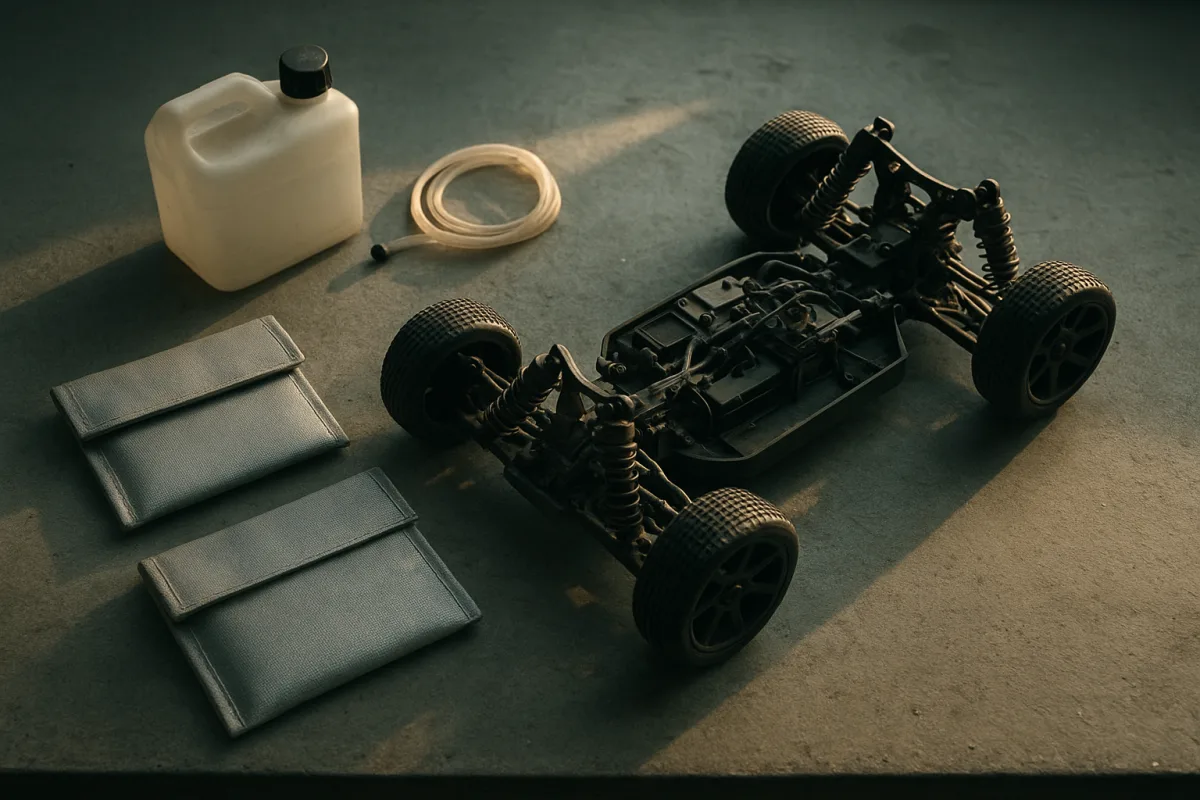
Start with the dirt you brought home from the last run
The first winter-storage problem is usually the least glamorous one: the car is filthy, the season is over, and it is tempting to put it on a shelf exactly as it came off the track. That is how moisture stays trapped around bearings, screws and suspension hardware. [2][9]
A 1/10 off-road buggy that ran dry clay needs a different level of cleaning from a 1/8 truggy that was running wet grass or a muddy basher truck. The principle is the same, though: remove dirt first, then make sure no water remains anywhere. [3][9]
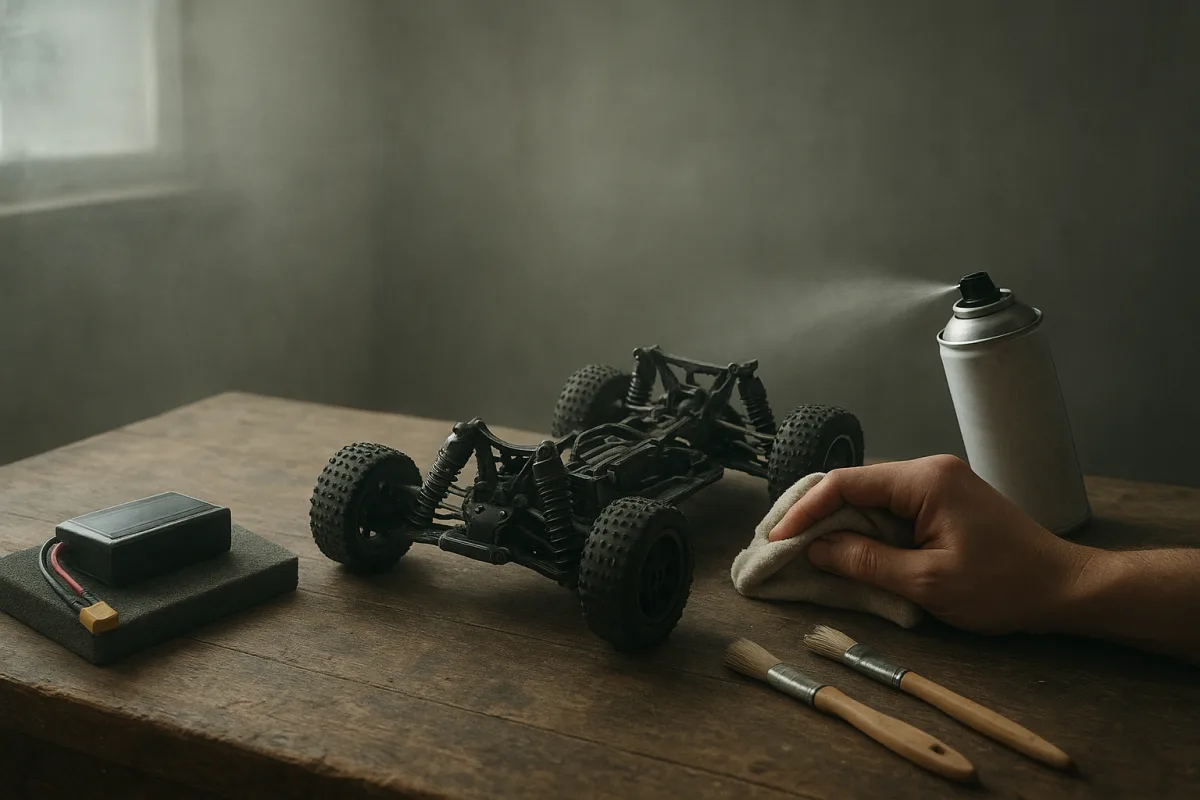
Use a soft brush and compressed air to clear loose dust from the chassis, suspension arms, gearbox exterior, motor area and steering assembly. RC Tech Tips recommends warm soapy water for stubborn grime, but the important part is thorough drying afterward. [9]
Do not attack a car with harsh cleaning methods just because the chassis is dirty. The winter-storage guidance consistently puts the emphasis on cleaning and drying, not on soaking electronics or forcing water into bearings, diffs and connectors. [2][3][9]
Pay close attention to the areas racers tend to ignore after a rushed pack-down: wheel hexes, hinge-pin braces, turnbuckles, outdrives, spur gear covers and the underside of the chassis. Mud packed beside a bearing holds moisture against it for months. [2][9]
Once the chassis looks clean, let it dry fully before it goes under a cover or into a bin. A car can look dry on top while water remains inside wheel bearings, around shock shafts or underneath a receiver box lid. [1][3]
Fix the small faults while they are still obvious
The next problem is convincing yourself that a car can wait until spring. It can, but a rough bearing, leaking shock or damaged gear will not improve while parked, and the first outing tends to become an avoidable bench session. [2][3]
Give the car a basic inspection after cleaning. Check for worn bearings, damaged gears, bent hardware, loose fasteners, cracked arms, leaking shocks and anything that felt inconsistent during the final runs of the season. [2][3]
This is not the moment to buy every alloy hop-up on the wall. Most winter work is maintenance: replace the actually rough bearing, address the stripped gear, and deal with the shock that is visibly leaking rather than changing the whole suspension package.
For the drivetrain, clean bearings with motor spray before applying bearing oil. The maintenance guidance also separates grease by gear material: ceramic grease for plastic gears and molybdenum grease for metal gears. [2]
Use those greases where they belong, rather than packing every moving part with whatever is on the bench. Excess grease attracts dirt once the car returns to service, and winter storage is about protecting components, not creating a mess for spring. [2]
Shocks deserve a quick check even if the car is staying assembled. The cited maintenance guidance identifies silicone shock oil, typically in the 300 to 600 cSt range, as the appropriate shock fluid category. [2]
That range is not a setup prescription. A 1/10 2WD buggy, a 1/10 SCT and a 1/8 truggy can need very different shock packages, so do not change oil weight simply because the car is being stored. Fix leaks and keep the setup intentional.
Pull the packs before they become the expensive problem
Leaving a battery installed is the winter mistake with the biggest downside. Remove packs from the car before storage, both to avoid unwanted discharge and to prevent a battery problem from becoming an electronics or chassis problem. [1][3]
For LiPo packs, put the charger in storage mode and bring the pack to roughly 3.8 to 3.85V per cell. Friendly Hobbies and other RC battery-storage guidance use that storage-voltage neighborhood, though sources vary slightly between 3.7 and 3.85V per cell. [1][7][11]
The sensible target is not “as empty as possible.” A LiPo stored fully charged for months is not being stored correctly, while a deeply discharged pack can fall into an unsafe or unrecoverable state. Storage charge is the middle ground. [1][7][11]
Store LiPos in a fire-resistant bag or case, separated from the car and kept in a cool, dry indoor location. That is a safety measure, not a claim that a LiPo bag makes any damaged pack safe to ignore. [1][7][11]
Inspect each pack before storage. A swollen, damaged, overheated or otherwise questionable LiPo should not be treated like a normal winter pack just because it still powers a 1/10 stadium truck for five minutes. LiPo safety guidance calls for caution around damaged batteries. [7][11]
Cold storage needs one extra distinction: a pack may be stored in a cool place, but ViBMS Battery warns against charging LiPos below 10°C because low-temperature charging can cause lithium plating. Bring a cold pack indoors and let it stabilize before charging. [5]
The brief supports storing batteries around 10 to 25°C, or 50 to 77°F, but there is no solid basis for pretending one exact temperature or humidity number is universal. Aim for cool, dry and stable, away from freezing and heat extremes. [1][5][7]
For NiMH packs, the recommended stored charge varies by source. ScienceInsights places NiMH storage at roughly 40 to 60 percent, while other guidance extends the upper end toward 70 percent. [6]
That means a sensible NiMH winter plan is partial charge, not a full charge and not a dead pack. Check and recharge periodically, with the available guidance suggesting roughly monthly checks or a recharge about every three months. [6][8]
NiCd packs follow similar partial-charge logic, generally around 40 to 60 percent, with periodic recharging during storage. Do not apply LiPo voltage rules to NiMH or NiCd packs, because their storage requirements are not the same. [6][8]
Drain a nitro car before fuel causes spring trouble
Electric owners can move from battery storage to the chassis shelf. Nitro owners have another job first: drain the fuel from the vehicle rather than leaving fuel in the tank and system for the whole off-season. [3]
RaceNRCs specifically identifies draining fuel as a winter-storage step to help prevent engine damage. That applies whether the car is a 1/10 nitro touring chassis or a larger 1/8 nitro buggy, because the concern is stored fuel in the system. [3]
Do this before the car goes into its final storage location, not after it has been covered and stacked behind bins. Winter prep works best as one complete job: clean, inspect, lubricate where appropriate, remove power, drain fuel, then store. [2][3]
Choose the shelf before you choose the container
The storage location matters more than a fancy container. The consistent advice is a cool, dry, stable indoor environment, because moisture and repeated temperature swings encourage corrosion and condensation on metal parts and electronics. [1][3]
An unheated garage or shed can be workable only if it stays genuinely dry and stable, but it is not the preferred option in the available guidance. Freezing conditions and fluctuating temperatures raise the condensation risk. [1][3]
If the car must live in a garage or shed, use a breathable cover rather than sealing dampness against the chassis. The storage guidance recommends breathable covers to block dust while still allowing air circulation. [3]
Airtight plastic bins are commonly suggested for dust and pest protection, but the research does not provide authoritative advice on bin dimensions, brands or the best container for every scale. Do not buy a “storage system” expecting magic from the box alone. [3]
For a 1/10 buggy, touring car or crawler, a clean shelf or sensible bin can be enough once the car is dry and battery-free. A 1/8 truggy may simply need a larger shelf, because forcing it into a tight container can stress wings, tires and suspension.
Keep the transmitter, charger, batteries and car separate enough that a loose connector or damaged pack cannot sit against the chassis. This is basic organization, but it also makes the spring inspection faster and reduces the temptation to leave packs installed.
Do one mid-winter battery check
The car itself can usually sit once it is clean, dry and protected. Batteries need more attention, particularly NiMH and NiCd packs, which the available guidance says should be checked and recharged periodically. [6][8]
For LiPos, check voltage monthly during a long layoff and make sure packs remain near storage charge. If a pack has drifted significantly, correct it with an appropriate charger rather than leaving it to sit for another two months. [7][11]
Do not charge a cold LiPo straight from an unheated shed. As ViBMS Battery notes, charging below 10°C is the issue to avoid, so allow the pack to warm naturally in a stable indoor space first. [5]
When spring arrives, inspect before charging and running. Look for corrosion, swollen packs, sticky bearings, shock leaks, loose hardware and any sign that winter moisture got past your storage plan. That five-minute check is cheaper than a smoked ESC or seized bearing. [2][3][11]
If your local winter is unusually damp, coastal, freezing or prone to big daily temperature swings, ask a local RC club or experienced racers what works in that specific climate. The available guidance is strong on clean, dry and stable storage, but thin on region-specific container solutions.
Frequently Asked Questions
How do I prepare my RC car for winter storage?
Start by thoroughly cleaning the chassis to remove all dirt and grime, using soft brushes, compressed air, and warm soapy water for stubborn spots. After cleaning, make sure the car is completely dry, paying special attention to wheel bearings, shock shafts, and underneath the receiver box lid. Inspect the car for worn bearings, leaking shocks, bent pins, and stripped gears, and repair any faults before storing.
What is the best way to store LiPo batteries during winter?
Remove LiPo batteries from the vehicle and discharge them to about 3.8 to 3.85 volts per cell before storage. Store them indoors in a cool, dry place inside fire-resistant bags or cases to reduce risk. Avoid charging LiPo batteries below 10°C to prevent damage.
Should I drain fuel from my nitro RC car before winter?
Yes, drain the fuel tank and fuel lines completely before storing your nitro RC car for winter. This helps prevent fuel-related engine damage during the storage period.
Where is the ideal place to store an RC car over winter?
Store your RC car indoors on a cool, dry, and stable shelf away from temperature swings that cause condensation. Avoid unheated garages or sheds, as temperature fluctuations there can lead to moisture buildup on metal parts and electronics.
How do I prevent rust and corrosion on my RC car during winter storage?
Prevent rust and corrosion by thoroughly cleaning and drying the car before storage to remove dirt and trapped moisture. Lubricate moving parts such as bearings and gears with appropriate oils or greases after cleaning. Store the car in a dry, stable environment to minimize exposure to moisture and temperature changes.
How we researched this
This article was assembled from 11 cited references.
Nothing here is based on hands-on testing. Where a figure or finding appears, it belongs to the source cited beside it, and the writing says so rather than implying otherwise. Every source is listed below so you can check it.
Sources
- How to Store RC Cars and LiPo Batteries for Winter – Friendly Hobbies
- RC Car Maintenance Guide: Routines That Actually Keep Your RC Running (2026) | RC Cars Guide
- How To Store RC Cars: Prep, Battery Storage, and Best Practices – RaceNRCs
- How to Store Power Wheels Over Winter | PowerWheels HQ | PowerWheels HQ
- Can LiPo Batteries Be Stored in the Cold? - ViBMS Battery
- How to Store NiMH Batteries Without Damaging Them - ScienceInsights
- RC Battery Storage Guide – How to Store LiPo Batteries Safely
- Golf Cart Battery Maintenance Guide at Batteries Plus
- How to Clean Your RC Car: Complete Maintenance Guide - RC Tech Tips
- Storing a Classic Car. The Honest 2026 Guide | Autotransport
- Safe LiPo Battery Charging & Storage Guide
Related Articles
RC Car Winter Storage Maintenance Checklist and Tips
Learn a detailed RC car winter storage maintenance checklist to clean, dry, oil, and prepare your car and batteries for off-season protection.
Best RC Car for Winter Conditions: Top Picks and Setup Tips
Discover the best RC car for winter conditions with top models, tire advice, battery care, and setup tips for snow and cold weather driving.

Best RC Car for Off Road: ARRMA Granite vs Traxxas Slash
Compare the best RC car for off road use: ARRMA Granite vs Traxxas Slash. Get expert advice on terrain fit, battery, and maintenance.
Prevent RC Car Battery Swelling
Learn how to prevent RC car battery swelling with safe charging, proper storage, and maintenance tips to extend your LiPo battery life.