
What to Look for in RC Car Kits: Key Buying Factors
Learn what to look for in RC car kits including chassis, drivetrain, suspension, and battery to choose the right kit for your needs.
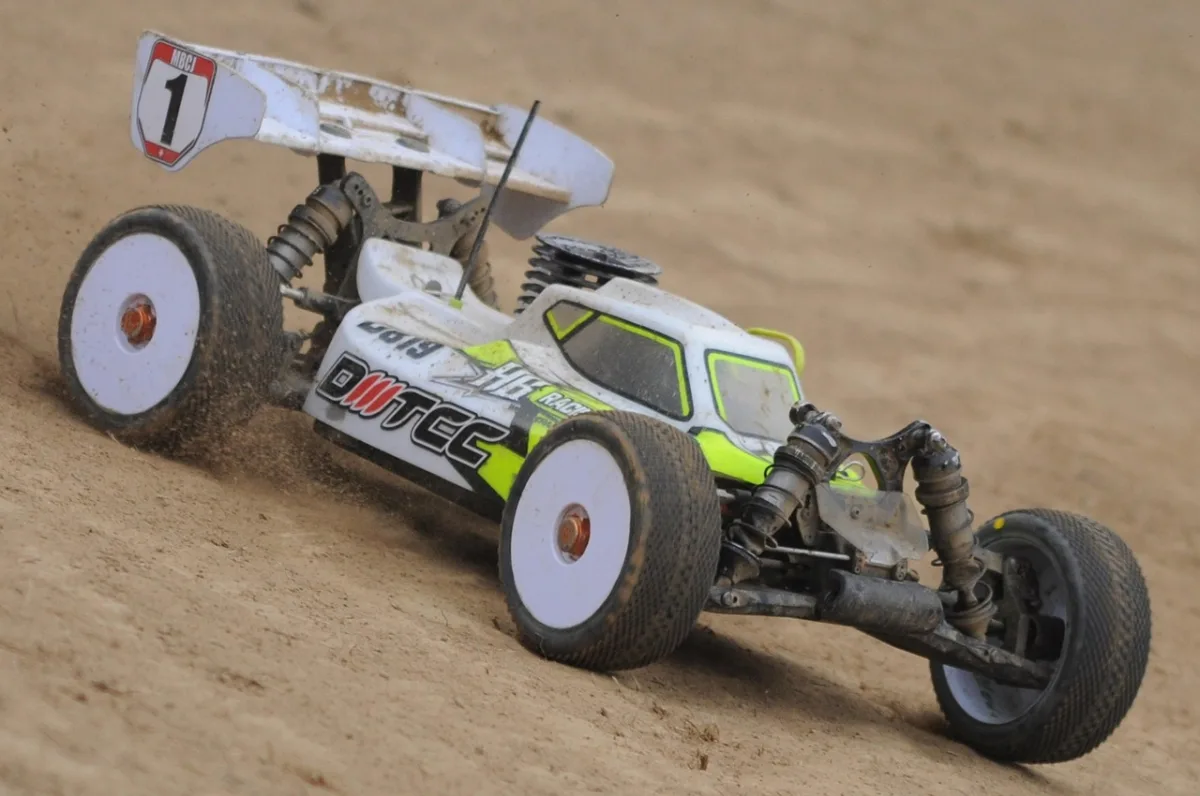
Photo: Bicouli via Pixabay
Start with the empty battery tray
The battery tray tells you a great deal about an RC kit before you even look at its body shell. It tells you what pack fits, how much weight the chassis carries, and whether the advertised price gets you running or leaves more shopping.
That is the central idea behind a good kit purchase: every part has to work with the rest. Chassis, drivetrain, motor, electronic speed control, battery, tires, suspension, terrain, and local parts support form one system.
A 1/10-scale buggy with a fast brushless motor but an undersized battery is not a fast package for long. A crawler with a carbon-fiber racing chassis may look exotic, yet stiffness and low weight can work against its intended terrain.
The expensive mistake is buying individual specifications. “Brushless,” “3S capable,” “carbon chassis,” and “upgrade-ready” all sound like improvements, but each one changes the demands placed on every other part.
We would begin with the surface you will actually drive. Loose dirt, mowed grass, pavement, skate-park concrete, rocks, and indoor carpet ask different things of a car before motor speed enters the picture.
The chassis sets the job description
The chassis is the structure that holds the suspension, drivetrain, electronics, and body together. Its shape and material determine how the car absorbs impacts, transfers weight in a turn, and survives the ground you put under it.[9]
Molded composite plastic chassis dominate entry-level kits because they are durable and absorb shocks well. That flex is not a defect on a rough field or a driveway with expansion joints, it helps the car survive mistakes.[9]
A tub chassis, where the sides rise around the electronics and drivetrain, suits many bash-oriented cars. It gives protection and impact resistance, which is usually a better starting point for a first 1/10 off-road machine than a delicate racing layout.[11]
Flat-plate chassis designs are common in racing because they can be light, rigid, and easy to arrange around track-focused components. On a smoother surface, that stiffness helps the suspension react consistently and makes setup changes easier to feel.[10]
Carbon fiber and aluminum are common advanced choices because they add stiffness and can reduce weight. Carbon fiber can also delaminate in a hard crash, however, so it is less forgiving than molded composite when the car cartwheels across a parking lot.[9]
Crawlers often use ladder frames, while some off-road designs use tube or space frames.[11] Those layouts are not styling exercises, they support a different balance of clearance, suspension movement, protection, and weight placement.
This is why scale alone tells you very little. Two 1/10 vehicles can share an approximate size while using different wheelbases, suspension mounts, gearboxes, battery trays, body mounts, and driveline parts.
Choose traction before horsepower
The drivetrain carries motor power to the wheels. A 2WD car drives either the rear or front axle, while a 4WD car delivers power to both, adding parts but also adding traction and a different handling balance.[2]
For a newcomer, 2WD has a major advantage: fewer gears, shafts, and driven wheels mean less maintenance and fewer places for dirt or a bad landing to create trouble.[2] It also makes the car’s weight transfer easy to understand.
A 4WD kit gives stronger traction and more secure handling, especially on loose surfaces where all four tires can contribute. It is often the better arrangement for an experienced driver chasing lap consistency or driving high-power brushless equipment.[2]
That does not make 4WD an automatic upgrade. More drivetrain parts add cost and service work, and extra traction can let a car carry enough speed to break suspension or driveline pieces harder in a crash.
Match the drivetrain to the ground. A 2WD 1/10 buggy can be a satisfying, straightforward choice for learning on packed dirt or pavement, while 4WD can better suit loose dirt, grass, and high-grip conditions that expose traction limits.
Tires belong in this same system. Terrain suitability is a frequent buyer mistake, because a car can have an impressive motor and still be frustrating when its chassis, drivetrain, and tire choice do not suit the surface.[18]
Suspension is where handling problems usually live
Suspension keeps the tires in contact with the ground while the chassis moves over bumps, braking zones, and cornering loads. Basic kits often use simpler plastic components, while advanced kits add oil-filled shocks and more adjustment range.[2]
Oil-filled shocks control suspension movement by forcing oil through internal passages. Their advantage is consistency and tunability, not a magic increase in grip. A poorly matched shock setup can make a premium chassis feel worse than a basic car.
Stiffer chassis materials tend to suit smoother surfaces, where precise suspension response is an advantage. More flexible plastics are often better on rough terrain because the chassis can absorb part of the hit instead of passing everything into suspension arms and shock towers.[9]
Do not treat adjustment as a reason to buy a competition roller first. More tuning range requires you to identify what the car is doing, change one setting, and judge the result, while a basic RTR arrives with a workable baseline.
We would change tires, shock condition, and the surface-specific setup before buying aluminum arms or decorative parts. Upgrading several components at once makes it hard to identify what helped and can introduce new fitment problems.[12]
RTR versus roller, what the price leaves out
An RTR, or ready-to-run package, commonly includes the car, basic radio system, motor, ESC, and steering servo. Entry-level 1/10 RTR vehicles generally cost $150 to $250 in 2026, and some include a battery and charger while others do not.[3]
The words “some include” are doing real work there. Before ordering, check the box contents for the battery, charger, transmitter batteries, and any required tools, because a low sticker price may not represent a complete driving package.
Mid-range cars run about $250 to $500 and can include brushless power, but batteries and chargers may still be excluded.[3] That can be a good place to spend if you already understand battery care and want stronger acceleration.
High-end competitive kits commonly cost $500 to $1,200 or more and are often sold without electronics.[3] These rollers usually need a motor, ESC, servo, radio gear, battery, charger, tires, and sometimes additional setup equipment before their first run.
A roller is not incomplete by accident. It lets an experienced racer select electronics, gearing, servo speed, and battery equipment for a specific class and surface. For a new owner, it can turn one purchase into several compatibility checks.
Traxxas, Arrma, and Tamiya have reputations tied to quality, parts availability, and price.[18] We would favor the brand your local hobby shop and track community can support, because a readily available suspension arm beats a clever online bargain.
Motor and battery must agree
Brushed motors use physical brushes to transfer current, while brushless motors use electronic commutation. Brushless systems dominate 2026 kits because they are efficient, low-maintenance, and capable of very high speeds, with some RC cars exceeding 60 mph.[7]
Speed is not automatically beginner-friendly. Brushed motors remain relevant because they cost less and can offer smoother low-speed control, qualities that suit a first car or a crawler where careful throttle inputs matter.[19]
A brushless conversion or brushless RTR also needs an ESC and battery able to supply the required current. The motor alone does not determine speed, temperature, or durability, and more power can expose weak gears and driveline components.
LiPo battery packs are lighter and offer higher discharge rates than NiMH packs, but they require careful handling. Typical RC LiPos run from 7.4 to 11.1 volts, or 2S to 3S, with 2,000 to 5,000mAh capacity.[6]
NiMH packs commonly run 7.2 to 8.4 volts with 3,000 to 5,000mAh capacity. They are heavier but robust, typically take two to four hours to charge, and can provide roughly 15 to 25 minutes of runtime.[4]
LiPo packs typically charge in one to two hours and may run for 15 to 30 minutes, depending on capacity and the demands of the car.[6] Capacity, voltage, discharge rate, driving style, gearing, and terrain all affect the final runtime.
The mAh number describes capacity. A higher-capacity pack generally runs longer, but it can also be larger and heavier, so it must fit the tray and not upset the chassis balance.[5]
The C rating describes how fast the pack can safely discharge. Multiply capacity in amp-hours by C rating: a 5,000mAh, 20C pack equals 5Ah multiplied by 20, for a 100-amp continuous discharge figure.[5]
Voltage raises potential speed, but a 3S pack can also increase current draw and shorten runtime under hard use. Do not buy 3S solely because the car accepts it, especially if you want longer sessions and easier throttle control.[6]
Upgrade only when you can name the failure
“Upgradeable” is often used as a selling point, yet aftermarket compatibility is not universal. A part that fits one 1/10 platform may not fit another 1/10 platform, even when both are made by the same manufacturer.[20]
Model revisions create another trap. Revised gearboxes, suspension mounts, wheel offsets, electronics cases, and body posts can make a part listing that looks correct turn into a return, or worse, a damaged drivetrain.[20]
Compatibility errors can cause system failures and drivetrain damage. Check the exact model, version, part number, motor mount, gear pitch, battery connector, voltage rating, and space available before ordering a performance part.[20]
Avoid upgrades chosen only for appearance. Aluminum can add stiffness where the original plastic part was intended to flex, and a higher-power motor can move the failure point into gears, driveshafts, or differentials.[12]
A broken part gives you a diagnosis point. Repeatedly bent steering links, overheated electronics, stripped spur gears, or a battery that cannot supply enough current each point toward a different correction, not a full-cart shopping spree.
Weather and local support belong in the purchase
Cold weather reduces battery performance and makes plastics more brittle.[14] A car that survives summer running can break more easily in winter, while the same LiPo pack may feel weaker and provide less runtime.
Moisture can damage electronics, so sealed receiver boxes and dielectric grease help protect vulnerable connections.[14] Weatherproofing does not make every component invulnerable, but it is part of the system if wet grass, slush, or puddles are normal around you.
For storage, batteries should be kept at roughly 40 to 60 percent charge and between 15 and 25 degrees Celsius.[15] That is another reason to include battery care in the purchase plan, not treat the pack as a disposable accessory.
Local availability changes the ownership experience. A kit with parts on the hobby-shop wall and advice from nearby owners is easier to maintain than a cheaper platform whose arms, gears, and body mounts must be hunted down after every break.[18]
We would buy the durable 1/10 RTR with a matched battery option, available spares, and a chassis suited to your ground. Learn its tires, suspension, and throttle response first, then spend on power only when the whole system is ready.
Frequently Asked Questions
What factors should I consider when buying an RC car kit?
Consider the surface you will drive on, your battery plan, and your ability to maintain the car. Match the chassis, drivetrain, motor, ESC, battery, tires, and suspension as a system rather than focusing on individual specs. Also, verify if the price includes necessary items like battery and charger to avoid unexpected extra costs.
How does chassis material affect RC car performance?
Chassis material influences durability, weight, stiffness, and how the car handles impacts and terrain. Molded composite plastics are common in entry-level kits for shock absorption and durability, while carbon fiber and aluminum offer stiffness and lightness but are less forgiving in crashes. The chassis design (flat plate, tub, ladder frame) also affects protection and suspension behavior.
Should I choose 2WD or 4WD for my RC car kit?
2WD kits are simpler, easier to maintain, and better for beginners, especially on packed dirt or pavement. 4WD provides stronger traction and more secure handling on loose or high-grip surfaces but adds complexity, cost, and maintenance. Choose based on your driving surface and experience level.
What suspension features are important in RC car kits?
Suspension keeps tires in contact with the ground during bumps and turns. Basic kits use simpler plastic components, while advanced kits include oil-filled shocks and adjustable setups for better tuning and handling. Suspension quality and adjustability directly affect how well the car handles different terrains and driving styles.
What is included in an RTR versus a kit RC car?
RTR (Ready-To-Run) kits typically come with the car fully assembled, including the motor, electronic speed control, servo, radio system, and sometimes battery and charger. Kit RC cars often require assembly and may not include electronics or batteries, allowing for more customization but requiring more time and knowledge to complete.
How we researched this
This article was assembled from 20 cited references.
Nothing here is based on hands-on testing. Where a figure or finding appears, it belongs to the source cited beside it, and the writing says so rather than implying otherwise. Every source is listed below so you can check it.
Sources
- RC Car Kits to Build for Adults: Expert Guide & Reviews
- Beginner vs. Advanced RC Cars: Where to Start & When to Upgrade, Random Recon
- Best RC Car Kits (2026): Real Cost to Finish + Tool
- RC Car Batteries Explained, Li-ion, NiMH, AA, mAh and Run Time
- RC Battery mAh Explained: Runtime, Size and Weight | RC Setup Lab
- RC Car Battery Types: LiPo vs NiMH vs Li-Ion | VRX Racing
- Brushed vs Brushless RC Motors Explained | RC Cars Guide
- Brushed vs brushless RC motors · RC Paddock
- Ultimate Guide to RC Car Chassis Materials: Find Your Ideal Solution | DMS CNC Turned Parts Supplier
- HOW TO: UNDERSTAND CHASSIS TECH, RC Car Action
- RC Car Chassis Types Explained
- Which upgrade parts are worth adding to an RC car | SuntekStore
- What are Radio Control (RC) Cars? - HPI Racing
- How Weather Affects RC Car Performance | Hearns Hobbies
- RC Car Winter Storage Maintenance Checklist and Tips
- Buying your first RC car: a beginner's guide | Cheap RC Cars
- How Much Does an RC Model Car Really Cost?
- RC Car Buying Guide, What to Look for 2026 | Access Models
- Brushed vs Brushless RC Cars: Which Do You Need?
- RC Model Shop | Are RC Car Parts Universal? What Every RC Owner Needs to Know Before Buying Spares
Related Articles
How to Upgrade RC Car Battery for Better Runtime and Performance
Learn how to upgrade your RC car battery safely, improve runtime, and ensure compatibility with your ESC and motor for optimal performance.
How to Set Up RC Car for Beginners: Complete Starter Guide
Learn how to set up your RC car for beginners with tips on battery, tires, suspension, and motor for a smooth first drive.
Best RC Car Type for Beginners: Choosing the Right Model
Discover the best RC car type for beginners, including scale, chassis, motor, and battery choices to fit your terrain and skill level.
RC Car Scale for Racing Tracks: Choosing the Right Size
Learn how to choose the right RC car scale for your racing track size, local classes, and power needs to optimize your racing experience.